Remus Malware Steals Gmail via Fake Sheets Extension
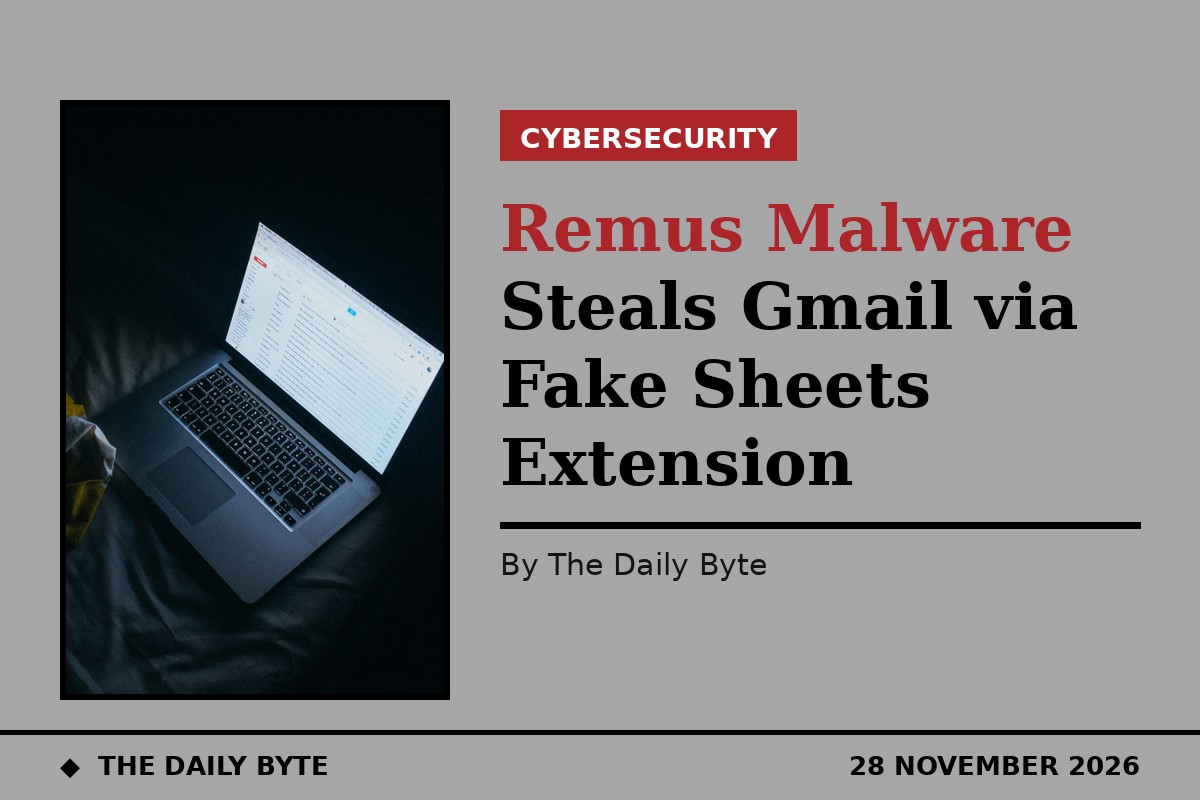
The operators of the Remus infostealer claimed they had found a Gmail zero-day that could keep reading victims' emails even after passwords were changed and sessions revoked. Independent researchers who took the malware apart say there is no such flaw, and Google agrees. The capability is a malicious Chrome extension, quietly installed by the malware, that reads mail through the victim's own signed-in session.
Remus began advertising the supposed Gmail zero-day on underground forums on 8 November, telling customers it could collect emails without stolen cookies and keep working after a password reset. Threat intelligence firm Hudson Rock looked into the claims but could not prove a zero-day was involved. Then GenDigital's Gen Threat Labs and Invoke RE published independent findings this week, after reverse-engineering the malware, and both reached the same conclusion: the email theft comes from an add-on, not a vulnerability in Gmail.
GenDigital found the trick in a native Windows DLL that Remus downloads as part of its configuration. The DLL has one job: to install a malicious extension in Google Chrome, the only browser it targets. The extension sits inside the DLL as an unencrypted ZIP archive. Because Chrome 137 removed the command-line switch malware once used to load extensions, and Chrome 134 made Developer Mode a requirement for unpacked extensions, Remus takes a longer route, editing the victim's Chrome profile files to register the add-on and switch Developer Mode on.
The extension calls itself Google Sheets, version 0.5.4, and copies the description of Google Docs Offline. It asks for access to all websites, plus storage and alarms permissions, and it has no spreadsheet features. Once running, it checks the unread Gmail feed every minute, across up to 10 signed-in account slots, pulls each message in full, and sends the sender, subject, body, the victim's email address and a campaign identifier to the attackers' server. It also reads attachment filenames, although researchers say it does not send those on, suggesting that part is unfinished.
The important detail is why password resets do not stop it. The extension does not break Google's sign-in. It rides on the browser's existing Gmail session, so collection stops when the victim signs out and starts again as soon as they sign back in on the infected computer. That also means it can capture verification codes and password-reset links sent to the inbox. Google told Cybernews there is no Gmail or Google vulnerability at play here, a statement reported in an update published on 28 November.
Users should check chrome://extensions for an unpacked Google Sheets entry or for Developer Mode they did not switch on. Researchers advise treating a hit as a full endpoint compromise: change passwords and revoke sessions from a trusted device, check mail forwarding rules, filters and connected apps, and remove the extension and the underlying malware before signing back in. Downloading software only from trusted sources remains the basic defence against infostealers such as Remus.


