Resident doctors strike 14-19 November in England
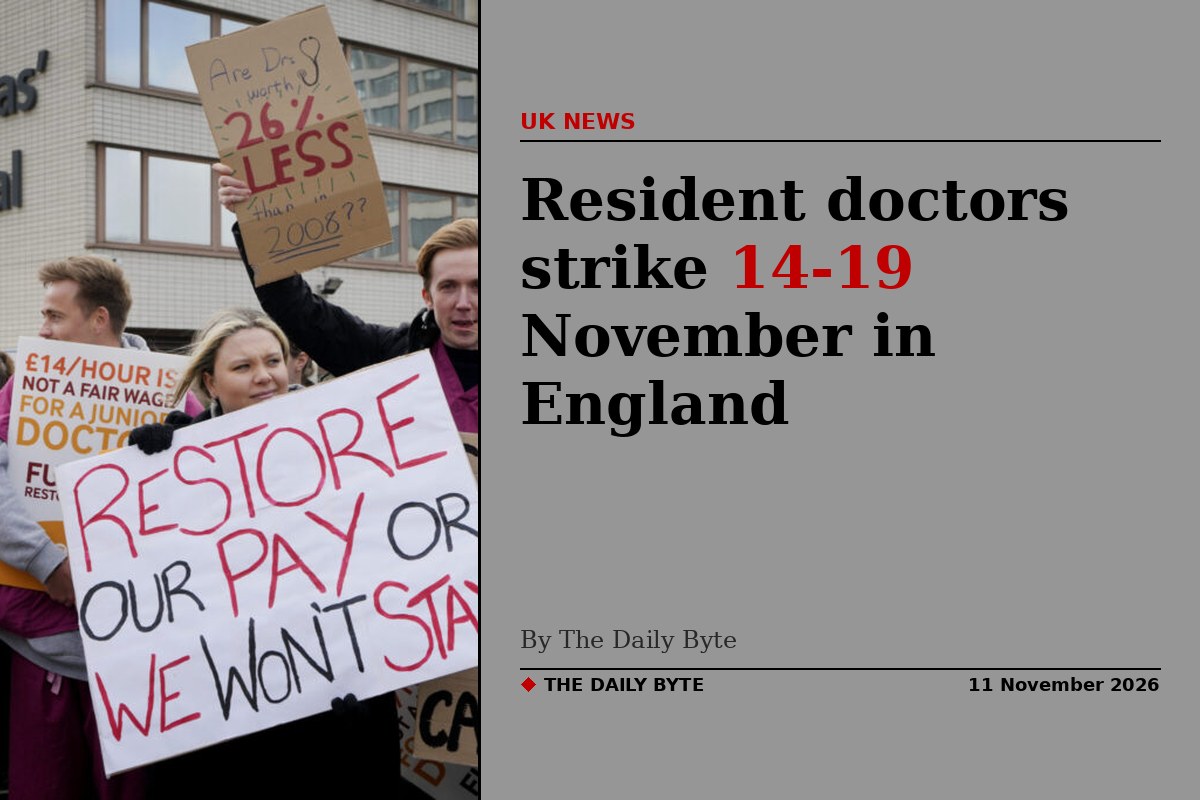
Resident doctors in England will go on strike for five days from Friday 14 November, the British Medical Association (BMA) has announced, after talks with the Government on jobs and pay failed to produce what the union calls a credible plan.
The strike will run from 7am on Friday 14 November to 7am on Wednesday 19 November. Resident doctors, previously known as junior doctors, make up a large part of the medical workforce in NHS hospitals, from doctors who have recently finished medical school to those with several years of experience.
Why resident doctors are striking
The BMA said the decision followed a week of talks with the Government in which it pressed ministers to end what it described as the scandal of doctors going unemployed. The union said its own survey found that half of second-year doctors in England are struggling to find jobs, while hospital shifts go unfilled and millions of patients wait for treatment.
Dr Jack Fletcher, chair of the BMA's resident doctors committee, said the union had put forward a deal that would gradually reverse cuts to pay over several years, including a pay increase of one pound an hour for newly trained doctors for the next four years. He said the union had hoped the Government would see that its demands were reasonable and in the best interests of patients, and would help stop doctors leaving the NHS.
Dr Fletcher said a last-minute letter from the Health Secretary made only vague promises of some change to jobs and training two years from now, showing little understanding of the crisis facing doctors at present. He added that better employment prospects and restoring pay would work for doctors, for the Government and for patients, and called on the Health Secretary to come forward with a proper offer on jobs and pay.
What it means for patients
NHS trusts across England have published advice for patients ahead of the walkout. The Royal Surrey NHS Foundation Trust said a small amount of planned care, including appointments, procedures and operations, may be postponed so that safe urgent and emergency care can continue. Patients who have not been contacted should attend their appointments as planned.
Wrightington, Wigan and Leigh Teaching Hospitals NHS Foundation Trust said protecting life, limb and sight-saving services would remain paramount during the strike, including emergency treatment, intensive care, newborn care, maternity and trauma services, alongside some limited planned care. GP practices will continue to be open during the strike.
Hospitals have said emergency departments will remain open around the clock and that senior doctors will be drafted in to provide cover. Patients with an urgent health need are being advised to use NHS 111 online or by phone first, and to call 999 only in a life-threatening emergency.
Talks could still avert the walkout
Dr Fletcher said the strike was not where the union wanted to be and that it still wanted a deal. He said the Health Secretary had inherited an NHS weakened by decades of underinvestment, but that restoring pay over several years, together with concrete plans to create more jobs and training places, would go a long way towards building a better health service.
For now, patients with appointments between 14 and 19 November are advised to attend unless their hospital contacts them to reschedule. Trusts have said they will rebook any postponed appointments as soon as possible.