Resident Doctors Strike Explained: Dates and Pay Row
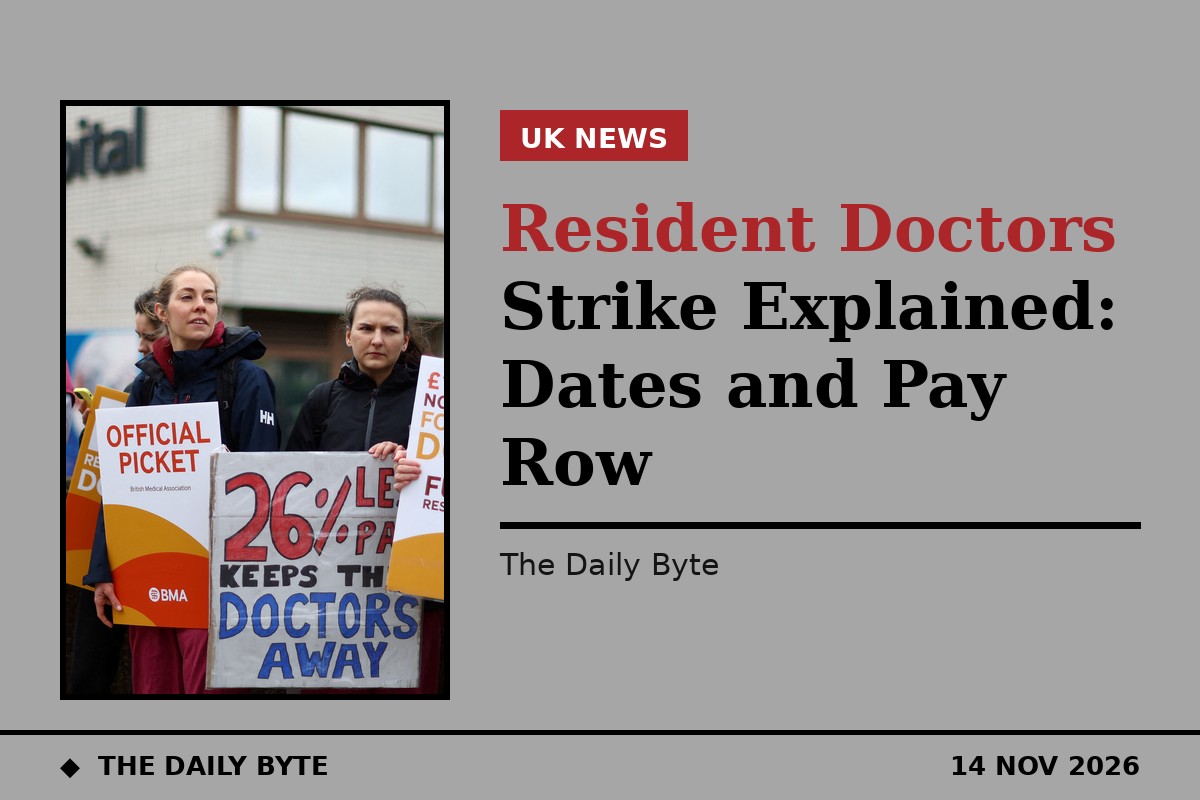
Resident doctors in England began a five-day strike at 7am on Friday 14 November, and the walkout runs until 7am on Wednesday 19 November. The British Medical Association (BMA) called the action after talks with the government failed to produce what it called a credible plan on jobs or pay. Hospitals are keeping urgent and emergency care running, with senior doctors providing cover, but some planned appointments and operations may be postponed. The BMA announced the strike dates after a week of talks with Health Secretary Wes Streeting.
Who are resident doctors?
Resident doctors are the doctors formerly known as junior doctors. They range from newly qualified medics to doctors with up to a decade of experience, and they make up almost half of the NHS medical workforce in England. The name changed in 2024, but the role is the same: resident doctors staff wards, clinics and emergency departments across the country, and this strike covers hospitals throughout England.
Why are resident doctors striking?
The dispute began over pay, and it has since widened to jobs and training. The BMA says that even after recent pay rises, resident doctors still earn around 20 per cent less in real terms than they did in 2008. The government points out that resident doctors have already received pay rises of nearly 29 per cent since 2023, which it describes as the largest increase in the public sector. The BMA had asked for a multi-year deal that would gradually restore pay over several years, including a pay increase of about a pound an hour for newly trained doctors over the next four years.
Jobs are now just as central to the dispute. The BMA says its own survey found that half of second-year doctors in England are struggling to find jobs, with their skills going to waste while patients wait for treatment and hospital shifts go unfilled. Its chair, Dr Jack Fletcher, said 30,000 doctors applied for 10,000 training places this year, and argued that the government’s offer would still leave thousands of doctors without jobs.
What did the government offer?
Shortly before the strike, the Health Secretary sent the BMA a proposal that included funding for costly exam and membership fees, plus a plan to double the number of specialist training places to 2,000, with half of those available next year. Streeting described it as a deal that would put more money in doctors’ pockets and deliver more training places. The BMA’s resident doctors committee rejected it, saying it did not go far enough. Dr Fletcher said the Health Secretary’s letter made only vague promises about jobs and training two years from now, and showed little understanding of the crisis facing doctors here and now. Full details of the rejected offer are reported here.
Streeting has insisted he cannot offer more money because of the enormous financial pressures facing the country, and has said no amount of strike action will change that. He has also argued that each round of strikes costs the NHS around £240 million. The BMA, for its part, says the situation is not irredeemable, and that restoring pay over several years alongside concrete plans for more jobs and training places would go a long way.
What does the strike mean for patients?
Some planned care, including appointments, procedures and operations, may be postponed so hospitals can keep urgent and emergency care safe. NHS trusts say patients should attend their appointments unless they hear otherwise, and ask people not to call to check whether an appointment is going ahead, as the trust will get in touch directly if anything needs to change. NHS patient guidance for the strike is published here.
Emergency departments remain open 24 hours a day, and anyone who needs urgent medical care should still come forward as normal, especially in an emergency or life-threatening situation. People who are unwell but unsure where to go can use NHS 111 online or call 111 for advice on the most appropriate service. Hospitals are likely to be busier than usual, so patients are asked to use A&E only for serious accidents and emergencies.
What happens next?
This is the 13th round of industrial action in the dispute since March 2023. Talks between the BMA and the government ran through the summer and early autumn after the last walkout at the end of July, but broke down again this month. Both sides say they want a deal, but they remain far apart on pay and on how quickly new jobs and training places can be created. Until one side moves, further strike dates remain possible, and patients with appointments during the current walkout should watch for direct contact from their hospital.