Riad Seif, Syria Reformist, Dies at 80 in Damascus
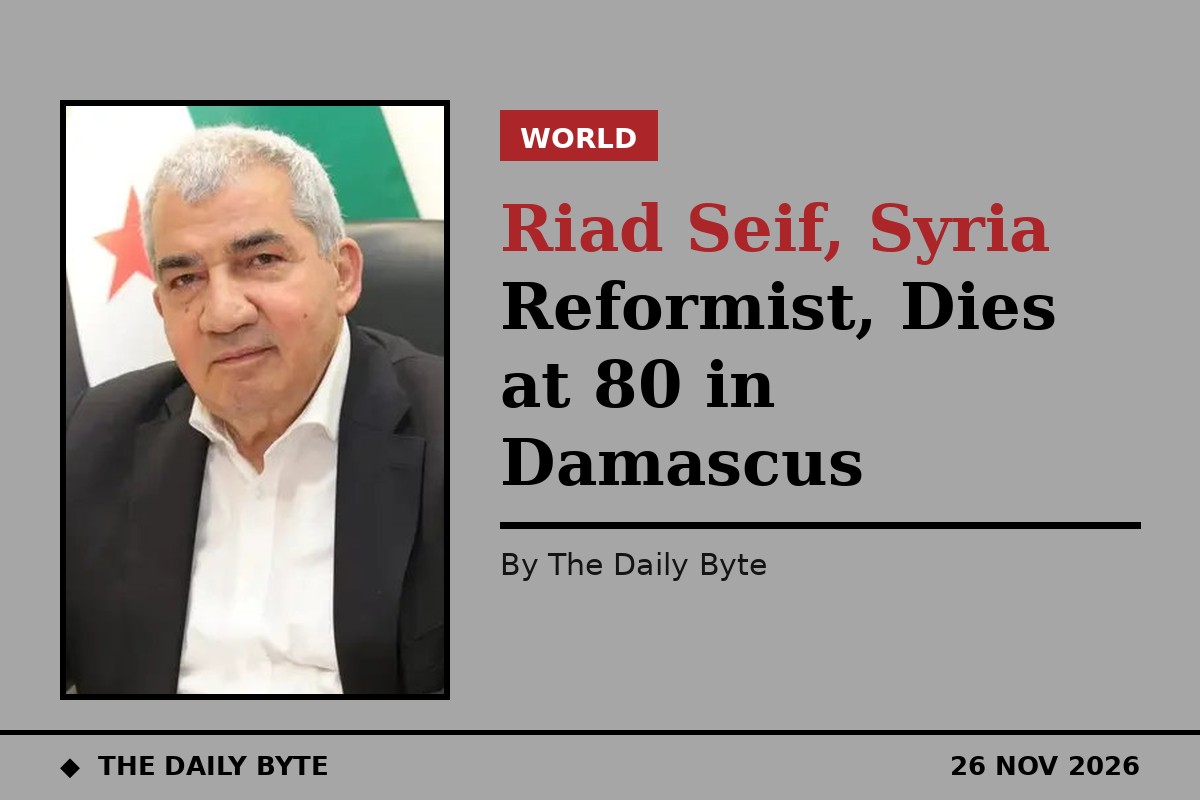
Riad Seif, the Syrian industrialist turned opposition leader who spent about eight years in prison under the Assad regime and later led the Syrian National Coalition, has died in Damascus at the age of 80.
Seif died on Wednesday, 25 November, his eightieth birthday, after an illness, according to Arab News and the Syrian Observer. The Syrian Observer spells his first name Riyad.
Born in Damascus in 1946, Seif built a career in garment manufacturing before entering politics in the early 1990s. He was elected as an independent to the People's Assembly in 1994 and won a second term in 1998, using his position to criticise government economic policy, demand structural reforms and expose corruption.
His confrontation with the regime intensified when he challenged the granting of a mobile telecommunications monopoly to a company owned by Rami Makhlouf, a cousin of Bashar Assad. Seif demanded transparency in telecommunications contracts, warning that economic monopolies undermined competition and damaged the national economy. The authorities retaliated by imposing heavy fines on his company over fabricated tax-evasion charges, eventually driving the business into bankruptcy.
After the death of Hafez Assad in 2000, Seif became a leading figure in the Damascus Spring, a movement calling for constitutional and political reforms, greater public freedoms and an end to the Baath Party's monopoly on power. In September 2000 he established the National Dialogue Forum, hosting weekly meetings at his Damascus home. On 6 September 2001, intelligence agents arrested him after stripping him of his parliamentary immunity, and the Damascus Criminal Court later sentenced him to five years in prison.
Released in 2006, Seif resumed his political activities through the Damascus Declaration for Democratic National Change, launched in October 2005 to advocate a peaceful democratic transition. A principal drafter and one of the Declaration's first signatories, he was subsequently elected its secretary-general. In January 2008, intelligence agents arrested him again, despite his battle with cancer, and the authorities prevented him from travelling abroad to seek medical treatment. He remained in detention until July 2010. Across his two periods of imprisonment, Seif spent approximately eight years behind bars.
When the uprising began in 2011, Seif joined the peaceful protest movement, and in October that year he was injured when security forces assaulted demonstrators in Damascus. In 2012 he launched the Syrian National Initiative, seeking to reorganise and unite opposition groups, which helped pave the way for the National Coalition of Syrian Revolution and Opposition Forces in Doha in November 2012. Seif served as the Coalition's vice president during its founding term before being elected president on 6 May 2017. He resigned in March 2018 because of deteriorating health.
Following the fall of the Assad regime in December 2024, Seif returned to Damascus and revived the National Dialogue Forum, nearly 25 years after the authorities had shut down the original forum and imprisoned its founder. Only weeks before his death, his daughter Joumana read a statement on his behalf at the launch of his memoirs in Damascus, after failing health prevented him from delivering it himself.
Tributes followed from across Syria's new political establishment. Foreign Minister Asaad Hassan Al-Shaibani paid tribute on X, describing Seif as a politician and businessman who had waged a long struggle against the injustice of the Assad regime, paying for his convictions with his freedom while remaining steadfast in his principles and his demand for freedom and dignity for Syrians. Speaker of the People's Assembly Abdul Hamid Al-Awak mourned the former parliamentarian, saying his presence and positions represented an important milestone in Syria's national history and that he had confronted the ousted regime and endured imprisonment for opposing corruption.
In a tribute, the Syrian Observer said Seif's death comes at a moment when Syria faces questions every bit as profound as those that shaped his political life: building institutions, securing justice, protecting minorities and restoring trust. Those were the causes to which he devoted his life, it said, and they remain unfinished.


