Robot Vessels Take On Dangerous Mine Hunting
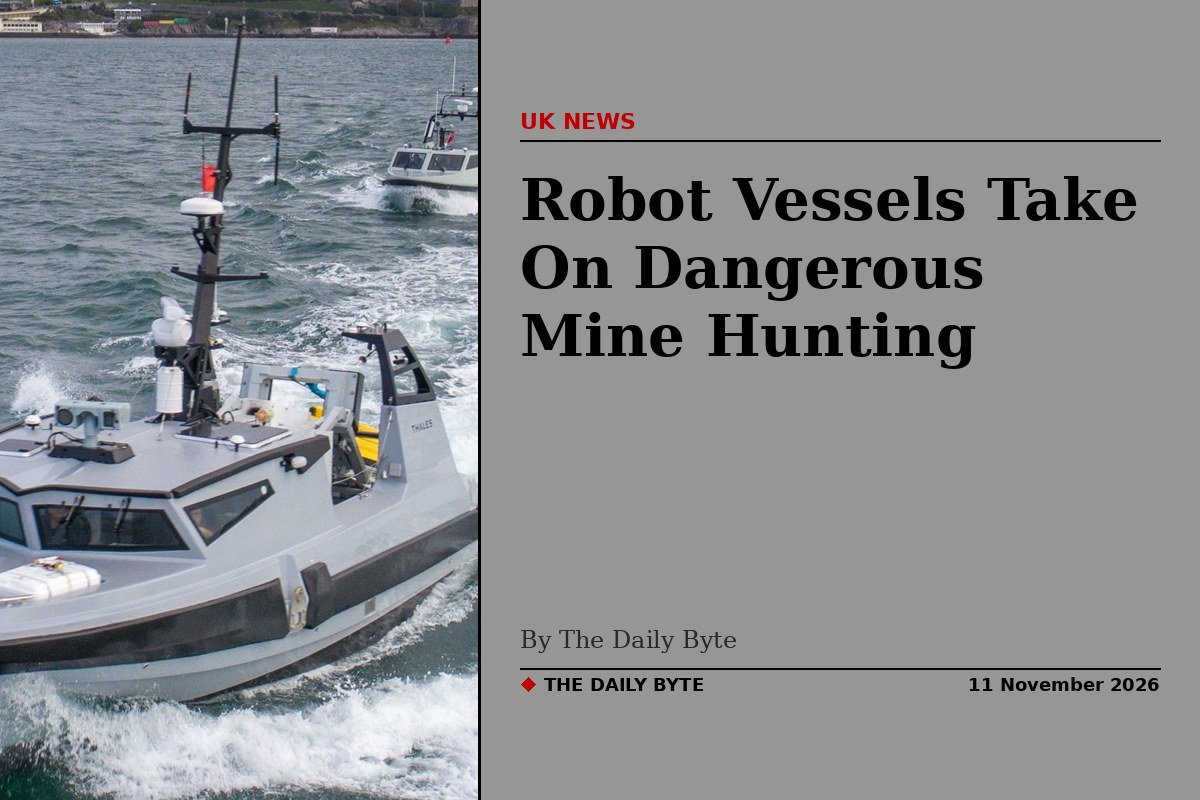
Robot vessels are taking on one of the most dangerous jobs at sea: hunting for mines in the Strait of Hormuz. With missiles and drones threatening shipping from above and mines possibly sitting on the seabed below, navies are turning to uncrewed craft so that sailors no longer have to sail into the minefield themselves.
Passing through the Strait of Hormuz has become one of the riskiest voyages in world shipping. Tankers still use the narrow channel, but merchant vessels have been attacked even with American warships in the area, and every transit has become a decision weighed by captains, crews and insurers.
Steve Cameron, a former merchant navy officer who now works as a maritime consultant, said a transit needs agreement between the captain and the crew to take the risk, war-risk insurance, and the captain’s final decision. Missiles and drones are a threat from the air, but under the surface, mines may also be lurking.
A cheap weapon with a heavy cost
Modern mines rest on the seabed and detonate when they detect the sound or magnetic field of a passing hull, sending a pressure wave that can break a ship’s keel. Others can drift in shallow water, float, or move under their own power towards a target. The devices are neither complicated nor expensive to build, yet the mere suspicion that they are present can be enough to halt a whole fleet of tankers.
“Mines are a very cheap way of waging a naval war, as the Royal Navy is acutely aware,” said Ian McFarlane, a naval architect with French defence group Thales who has spent years studying mine warfare.
Finding sea mines has traditionally been the job of specialist mine-hunting vessels with crews of around 80 sailors, who must sail directly into waters where explosives are believed to be. Uncrewed systems, watched and controlled from shore, can do much of the searching with only about 20 people working in shifts on land. For NATO navies facing recruitment and retention problems, the portable systems are an obvious attraction.
Twenty years in the making
The technology has been under development for two decades. During the 2003 Iraq war, the US Navy searched the seabed with a torpedo-shaped robot called the Remus 100, working at depths of around 100 feet and sparing divers a difficult and dangerous task.
The latest conflict in the Gulf is testing far more capable systems. In early September, Iranian forces hauled an uncrewed US autonomous submarine out of the waters of the Strait of Hormuz. The Pentagon said the craft, an Extra Large Uncrewed Underwater Vehicle built by US defence technology company Anduril, was a malfunctioning older device carrying no classified equipment. Whatever its mission had been, no sailor was put in danger when it was seized.
William Lupton, a naval analyst with the Shephard Group, described the loss as a small matter compared with the prospect of crew members being taken prisoner. NATO navies are reluctant to discuss what happens when one of their robots is captured, but computer drives on board can be wiped or destroyed remotely, and that may have happened to the craft taken by Iran.
The Thales robot boat
Thales, working with the Royal Navy and France’s Marine Nationale, has produced a robot motor launch packed with sensors. Its sonar, originally developed for the oil and gas industry, searches for mines, while the craft tows a five-metre device shaped like a large torpedo that scans the seabed in high resolution and builds a three-dimensional picture, refined by artificial intelligence.
The systems are cheaper than a conventional mine-hunting ship and can be flown to a crisis zone along with containerised control centres. Steve Prest, an associate fellow at the RUSI defence think tank who introduced uncrewed mine hunting to the Royal Navy and became its first fleet robotics officer in 2014, said a robot hunter can either destroy a mine or mark its position so ships can steer around it. He expects artificial intelligence increasingly to analyse data from the vessels as it arrives.
The Royal Navy recently announced its concept of a hybrid navy, mixing drones with conventional warships. Prest argues the vision will only succeed if the fleet operates as one distributed force, sharing data across the whole force.
For now, fear of the unknown remains the most powerful part of the weapon. Neil Roberts, who speaks for insurers at Lloyd’s of London on marine matters, said the United States believes it has cleared the Omani route and the mine threat is being managed, with shipments running at about 75 percent of pre-conflict levels. If robot vessels can prove a route is clear, the strait may become safer to cross.