Robusta coffee hits 2.5-year low on Vietnam supply
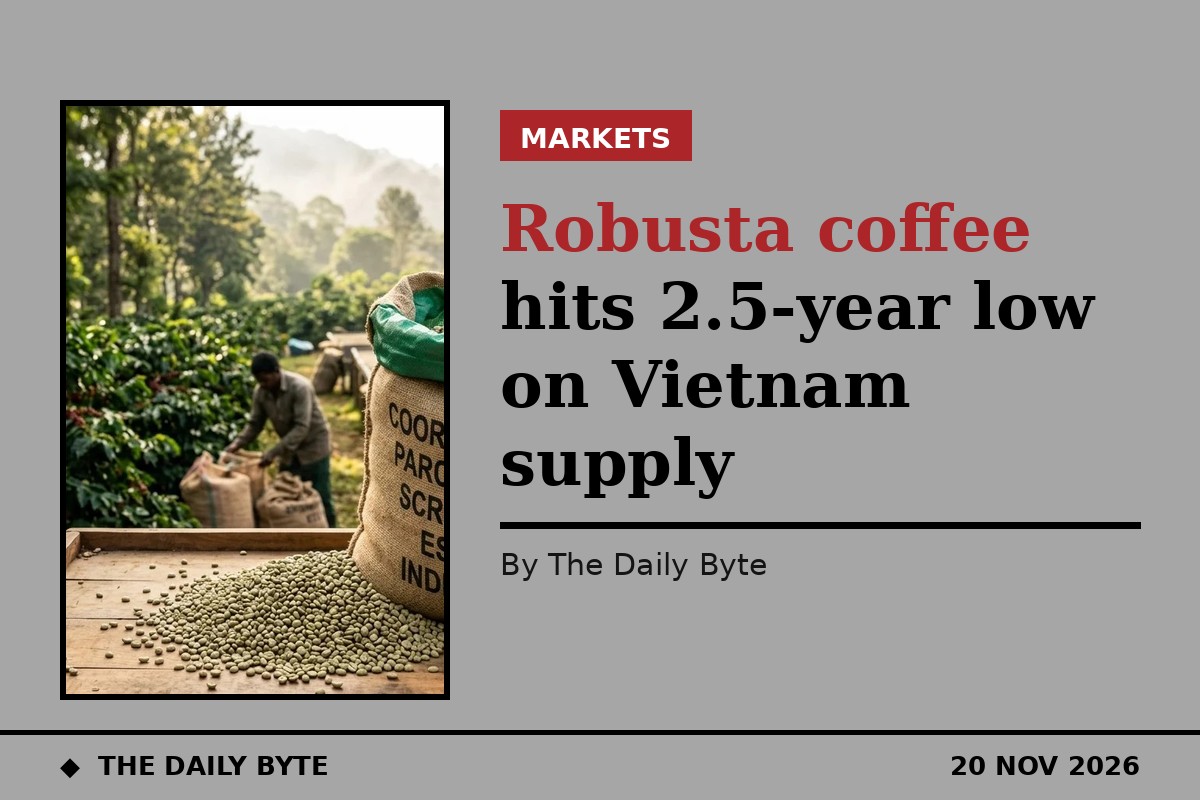
Robusta coffee fell to its lowest level in about two and a half years on Friday as a bigger harvest forecast from Vietnam and rising inventories weighed on prices.
ICE robusta fell 0.9% to 2,993 dollars per tonne in morning trading, after touching 2,972 dollars per tonne at one point, its lowest level in about two and a half years. The January ICE robusta contract later fell 2.69% to a two-and-three-quarter-year low, according to Barchart, as selling gathered pace across commodity markets.
Robusta is the cheaper, hardier bean used in instant coffee and espresso blends, and its slide stands in sharp contrast to the tightness in the arabica market, where certified stocks fell to a 27-year low earlier in the week.
Vietnam harvest forecast rises
The main pressure on robusta is supply. The Vietnam Coffee and Cocoa Association projected on Monday that Vietnam's 2026/27 robusta production will rise to 2.1 million metric tonnes, up 5% on the previous year. Vietnam is the world's largest robusta grower, and its harvest is now under way.
Inventories have also climbed. ICE robusta stocks rose sharply from early October to a one-and-a-quarter-year high of 6,809 lots on 29 October. They have since eased back to a one-month low of 5,776 lots, but traders say the stock build has removed the sense of scarcity that supported prices earlier in the year.
The outlook for stronger exports from Brazil is adding to the pressure. Brazilian shipments rose in October, and a 19-month low in the real is encouraging dollar-denominated sales, according to market analysis.
Arabica also weaker
Arabica was not spared on Friday. The March arabica contract fell 1.36% to a one-week low, even though certified arabica stocks held in ICE warehouses have fallen to their lowest in 27 years.
The split between the two beans tells the story of the coffee market this week. Arabica is tight because warehouse stocks are scarce, while robusta is under pressure because a large new crop is coming and exporters are selling. For roasters that can switch between beans, the widening gap makes robusta the cheaper option, which in turn keeps a lid on arabica prices.
Robusta's fall came on a day when gold, silver, copper and oil also fell, as investors sold almost everything except government bonds. But while the metals sell-off was driven by bets on higher US interest rates, coffee's decline has a simpler cause: growers are producing more of it than buyers currently need.
Traders will now watch whether Vietnam's harvest lives up to the forecast. If the crop comes in as expected, robusta is likely to stay under pressure into the new year. If weather disrupts the harvest, the two-and-a-half-year low could mark the bottom.