Romero Asks Court to Block Newsom Death Row Commutations
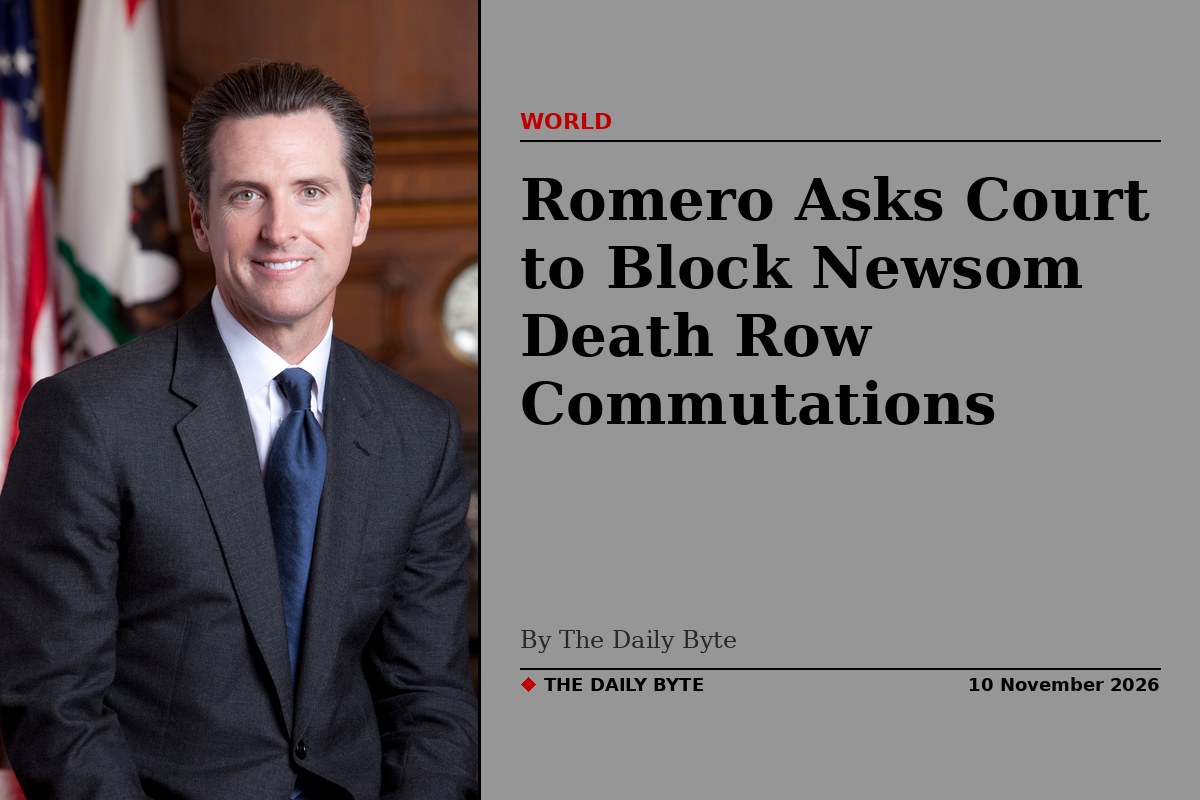
Former California Senate Majority Leader Gloria Romero has asked the California Supreme Court to block Governor Gavin Newsom's sweeping commutation of all 548 death sentences in the state, arguing that most of the cases cannot be commuted without the court's approval.
Mr Newsom announced last Thursday that he would commute every death sentence in California to life in prison without the possibility of parole, clearing the largest death row in the United States. The commutations cover 529 men and 19 women, according to figures from the governor's office.
Under Article V, Section 8 of the California Constitution, the governor may not grant a pardon or commutation to a person twice convicted of a felony except on the recommendation of the Supreme Court, with four judges concurring. That provision covers 382 of the 548 cases, meaning the court must sign off on about 70 per cent of the commutations before they become final.
Romero challenges the blanket order
Mrs Romero, who served 12 years in the California Legislature and was the first woman to lead the state Senate as majority leader, has launched a petition urging the court to reject every commutation that requires its approval. The petition had collected more than 1,000 signatures as of Monday.
“I am asking the California Supreme Court to reject every commutation that requires its approval,” she wrote in her petition.
Mrs Romero accused the outgoing governor of abusing his clemency powers to burnish his national political ambitions, calling the decision a calculated political stunt. Mr Newsom is termed out and leaves office in January, and has publicly mulled a run for the White House in 2028.
Court asked to rule by the end of the year
Mr Newsom has asked the justices to weigh in by the end of the year, before his term ends. Governor-elect Xavier Becerra takes office on 4 January. The governor described the decision as one of the most difficult of his career and defended it in a letter to Californians as a righteous action.
Supporters and critics remain sharply divided. The American Civil Liberties Union praised the commutations, with executive director Anthony Romero calling them an end to a “racist, error-prone, and inhumane punishment.”
Opponents have pledged their own legal challenge. Anne Marie Schubert, a former Sacramento County district attorney who now runs the Criminal Justice Legal Foundation, said Mr Newsom “cannot do this as a blanket” and argued that each case must be judged on its own merits. Her group has pledged to challenge the commutations in the state Supreme Court.
Death penalty remains in place
Mr Newsom is not repealing the death penalty. Prosecutors can still seek it in new cases, and the commutations do not affect future sentences. The Board of Parole Hearings has drawn up new commutation and resentencing regulations to address concerns about people sentenced to life eventually being released.
The court has not yet said when it will rule on the 382 cases that require its recommendation.


