Russia-Africa summit agrees three-year cooperation plan
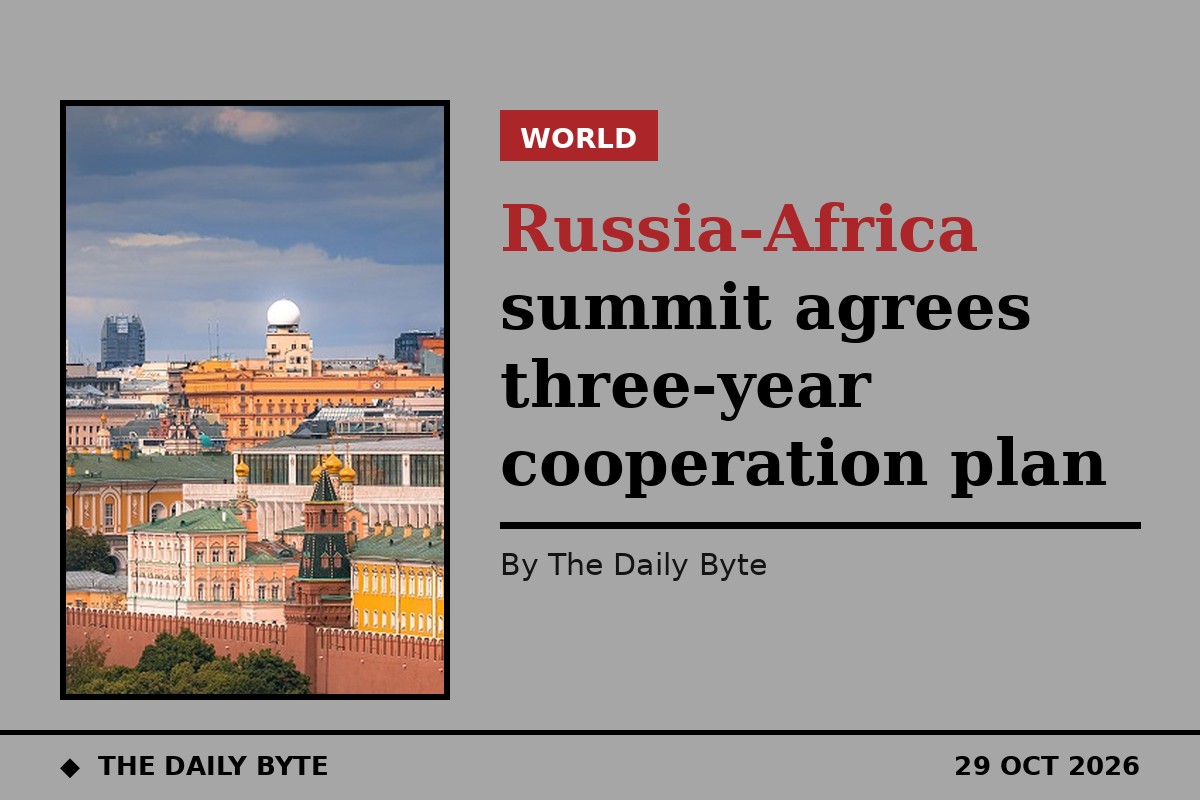
The third Russia-Africa Summit closed in Moscow on Thursday 29 October 2026 with a new three-year partnership plan among its principal outcomes. The two-day meeting brought together political talks at the Kremlin and an economic and humanitarian forum covering investment, infrastructure and technology.
Putin's plenary address and the action plan
Delegations from 48 African countries took part, 22 represented by their heads of state or government, according to BBC figures cited in summit coverage. The summit was co-chaired by Russian President Vladimir Putin and African Union Chairperson and Burundian President Évariste Ndayishimiye. Kenya's President William Ruto attended on his first trip to Russia as president, seeking market access and investment.
Trade figures behind the talks
Addressing Thursday's plenary session, President Putin presented Moscow and African countries as partners seeking a more representative international order, Russia's Foreign Ministry said. He backed stronger African representation in the United Nations Security Council and international financial institutions, and offered further cooperation in agriculture, education and defence. Three main documents were prepared for the summit — a joint declaration, a Russia-Africa Cooperation Forum Action Plan covering 2027–2029, and a declaration on civilian artificial intelligence cooperation — and Egypt's presidential spokesman said the three documents were adopted, Ahram Online reported on Thursday.
Russia-Africa trade exceeded $27 billion in 2025, presidential aide Yuri Ushakov said, with Russian grain and fertiliser exports still rising. Russia exported more than 18 million tons of grain to Africa last year and a further 13 million tons in the first nine months of 2026, while fertiliser exports reached 1.5 million tons in 2025 and exceeded 2.2 million tons so far in 2026. These are Russian official figures. Commentators noted, however, that investors would judge the summit by signed contracts and delivery timelines rather than announcements alone, and that sanctions retain significant bite for Russian counterparties.
Sources: FurtherAfrica, Interbellum News.