Russia Demands NATO Pull Back to 1997 Positions
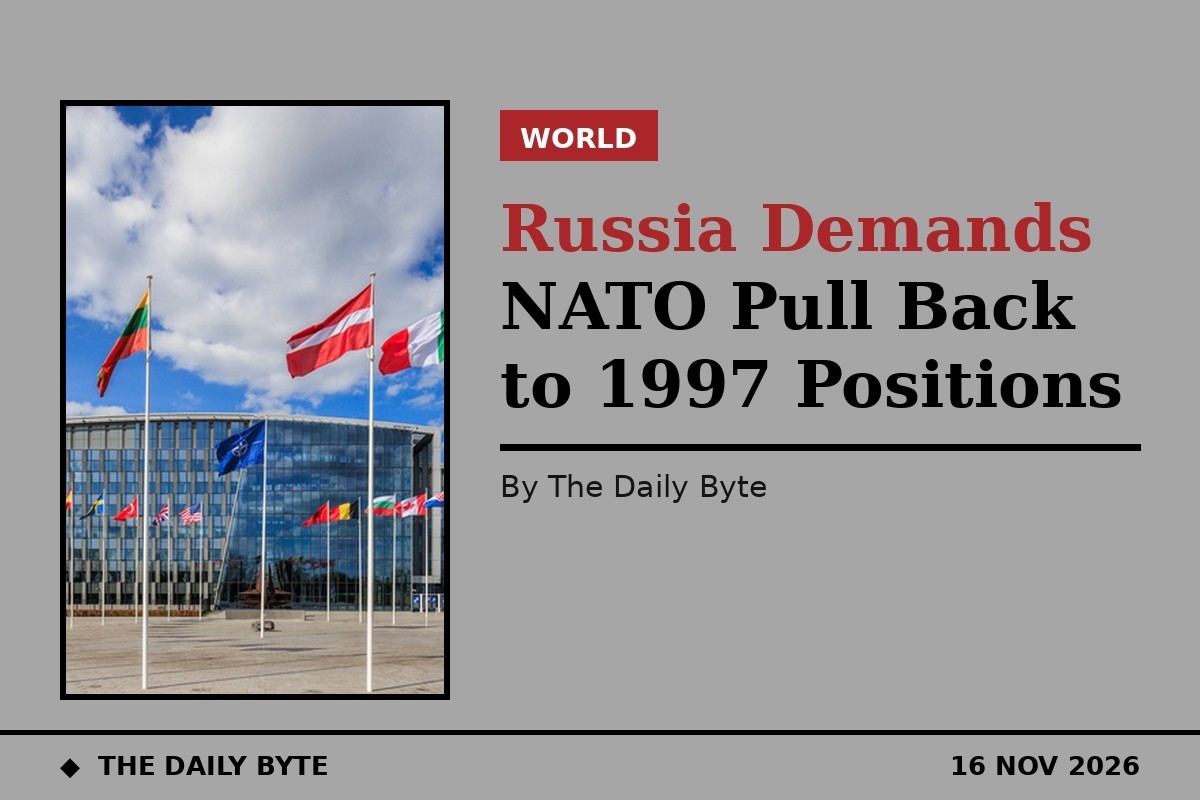
Russia has demanded that NATO pull its troops and military infrastructure back to the positions they held in 1997, before the alliance expanded into Central and Eastern Europe, according to a negotiating paper circulated during US-brokered peace talks in Abu Dhabi. The demand, dated 10 November, would strip allied forces from the countries that joined NATO after that date, including Poland, Hungary, the Czech Republic and the three Baltic states.
The New York Times reported on 13 November that it had obtained a copy of the paper from a person involved in the talks and that another person with knowledge of the negotiations confirmed its authenticity. The Washington Post reported on 14 November that it had obtained Russian negotiating points setting out the same demand. Russia has not published the document itself.
What the 1997 demand would mean
The demand does not ask any country to leave NATO. Poland, Romania, Bulgaria, the Baltic states and Finland — 16 of NATO's 32 members joined after 1997 — would remain members, and the promise to defend them would stay on paper. But the soldiers, bases and weapons needed to back that promise would have to go, under the Russian proposal.
The paper goes further than troop withdrawals. It calls for an end to Western arms deliveries to Ukraine, a permanent block on Ukrainian membership of NATO, and restrictions on NATO military activity across Eastern Europe, the South Caucasus and Central Asia. It also seeks limits on Britain's and France's ability to extend their nuclear deterrent to other European countries, and would bar Ukraine from taking part in the European Union's collective security and defence policy even if it joined the bloc.
Kremlin foreign policy aide Yury Ushakov said on 12 November that President Vladimir Putin, meeting US envoys Steve Witkoff and Jared Kushner in Moscow, had described the 1997 return as a foundation of Russia's vision of an effective security architecture. The demands echo draft treaties Moscow sent to Washington and NATO in December 2021, two months before the full-scale invasion of Ukraine, which the Biden administration and US allies rejected as non-starters.
A demand, not a deal
It is important to be clear about the status of the paper. This is Russia's opening negotiating position in talks that restarted in Abu Dhabi on 10 and 11 November, the first trilateral meeting of American, Russian and Ukrainian officials in nine months. It is not an agreed settlement, and no European government sat at the table when the paper was circulated.
Ukrainian President Volodymyr Zelenskyy has said the United States raised the question of whether Ukraine would withdraw from Donbas if it joined NATO, a suggestion the White House has not confirmed. The US negotiators have not disclosed details of the Abu Dhabi talks or of their follow-up meeting with Putin in Moscow.
For Europe's eastern members, the stakes are direct. The 1997 line would remove allied deployments from the states that border Russia or its Kaliningrad exclave, including the Baltic nations and Poland, while leaving the formal alliance intact. European leaders are due to discuss their response in Berlin on 19 November, when the Coalition of the Willing meets to coordinate support for Ukraine and a common position on peace talks.
Sources: The New York Times; The Washington Post; Radio Free Europe/Radio Liberty.


