Russia and Ukraine Open Abu Dhabi Talks After Nine Months
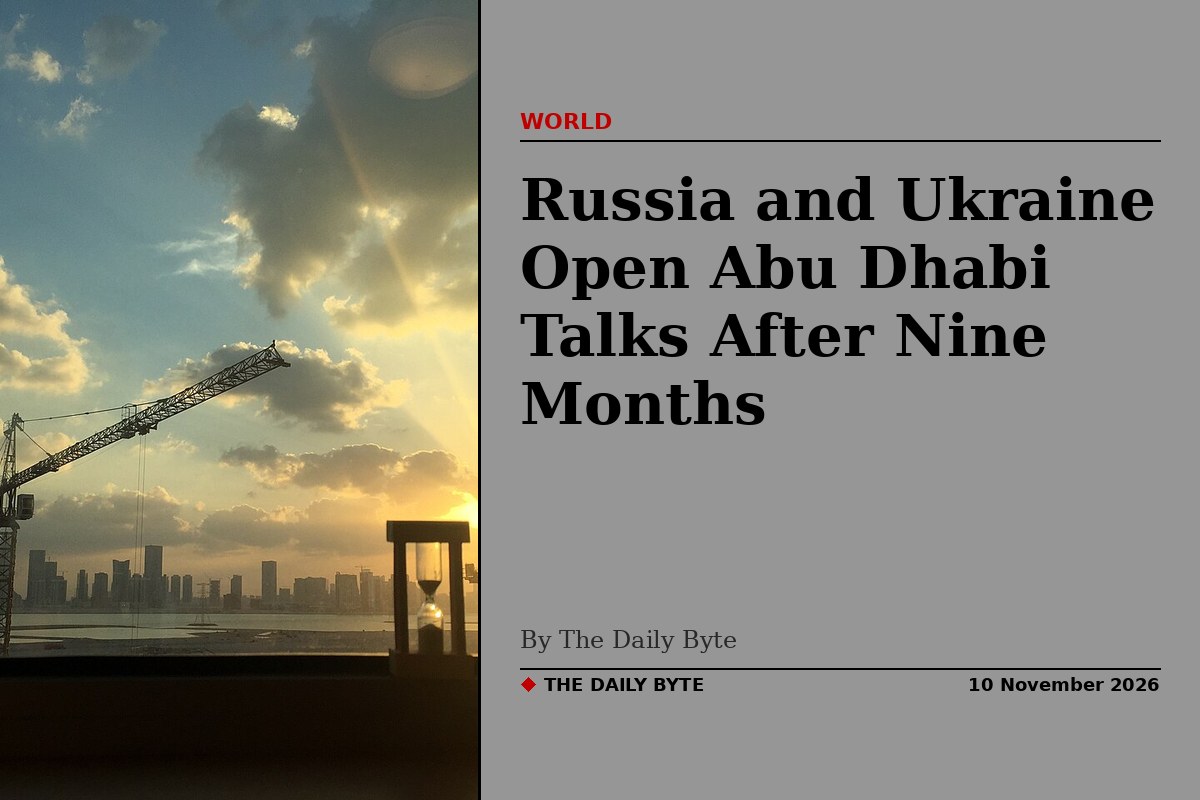
Russian and Ukrainian officials are due to meet in Abu Dhabi on Tuesday for two days of talks brokered by the United States, the first time the three sides have sat down together since February.
The discussions, scheduled to begin at around 06:30 GMT, come after President Donald Trump suggested last week that a broad peace deal could be possible in the war, now in its fifth year, and that such a deal could incorporate the security of Europe as a whole.
Who is at the table
The Russian delegation is again headed by Kremlin aide Vladimir Medinsky as chief negotiator. Deputy Foreign Minister Sergei Ryabkov joins the team for the first time, alongside senior military officer Yuri Zhigarlovsky.
Ukraine’s delegation is led by Rustem Umerov, who said on Monday that Kyiv was doing everything to ensure Europe remained part of the diplomatic process. US special envoy Steve Witkoff and negotiator Jared Kushner are leading the American mediation effort after weeks of shuttle diplomacy.
Europe kept at arm’s length
European powers, including France, Germany and the European Commission, are sending officials to Abu Dhabi, but Russia has made clear it does not want the Europeans to take part in the negotiations themselves. Instead, Ukrainian delegates will meet separately to brief their European allies on how the discussions are going.
That arrangement has drawn criticism in European capitals. Officials have argued that any negotiation touching European security needs the direct involvement of the governments concerned, and that Russia should not be involved in setting European security policy.
American officials, including Witkoff and Kushner, held talks in Brussels last week with NATO, the European Union and major European powers about security guarantees. US Secretary of State Marco Rubio said before travelling to France on Sunday that there had been “advances” in discussions about Europe’s post-conflict security architecture.
Territory remains the hardest question
Publicly, there has been no sign that President Vladimir Putin is willing to drop his insistence that Ukraine surrender the entire eastern region of Donbas before a peace deal can be struck. President Volodymyr Zelenskyy has refused to hand over land his forces have died defending, and a senior Ukrainian official said the question of territory could be discussed only at leaders’ level and only in the context of appropriate security guarantees.
US negotiators believe Zelenskyy and Putin may be willing to strike a compromise on territory, each ceding a little, a US official told Reuters. Under the proposed deal, Ukraine would get an end to the war, security guarantees and a roadmap to accession to the EU.
On the eve of the talks, Zelenskyy said Ukraine’s leverage was increasing as a result of its recent battlefield performance, including retaking some territory in Donetsk. He said Russia was suffering record losses, a claim disputed by Moscow, and urged Washington to convince the Kremlin to end the war.
Fighting continues as talks open
A truce on striking energy targets announced by Trump last month quickly fell apart. Ukraine has escalated its strikes on Russian oil refineries in recent weeks, while Moscow has pounded Ukraine’s electricity infrastructure and cities.
Trump has frequently said an agreement to end Europe’s deadliest conflict since the Second World War was close, without a deal emerging. Negotiations have picked up again in recent weeks after months in which Washington’s attention was focused on the war in Iran.
G7 foreign ministers are also expected to discuss Ukraine on Tuesday, the second day of their gathering in Paris, where Ukraine’s Foreign Minister Andrii Sybiha will join the talks.


