Ruto Defends IEBC After Opposition Walkout
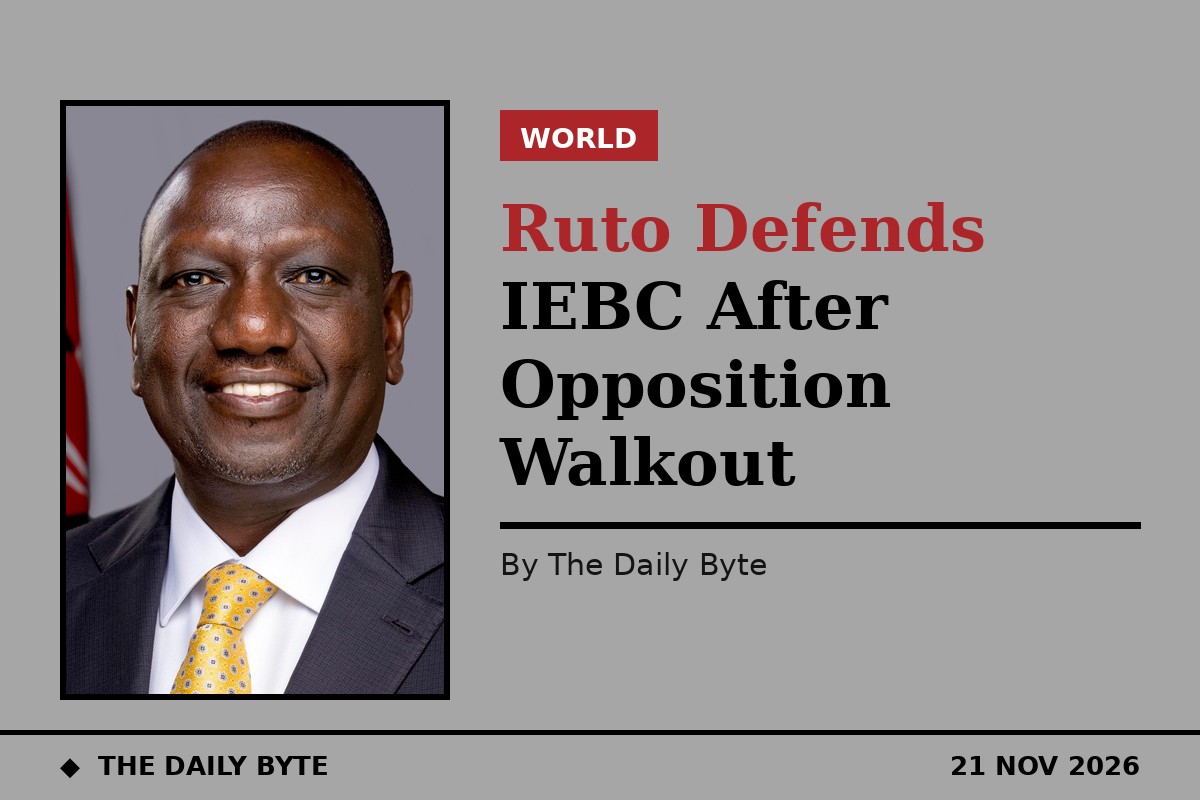
President William Ruto has defended Kenya's electoral commission against criticism from opposition leaders, telling them to let the body carry out its constitutional work without interference ahead of the 2027 General Election.
Speaking on Saturday, 21 November, during the issuance of title deeds for Chepyuk Phase III in Mt Elgon, Bungoma County, Ruto accused opposition leaders of targeting public institutions and looking for people to blame over political disagreements.
“They are looking for scapegoats in every place, including in the IEBC. I want to tell our friends, please allow institutions to work,” he said.
His remarks came two days after leaders of the United Opposition, led by former Deputy President Rigathi Gachagua, walked out of a consultative meeting with officials of the Independent Electoral and Boundaries Commission (IEBC) in Nairobi on Thursday, 19 November.
What the opposition walked out over
The opposition delegation accused the commission of failing to include several of its concerns in the meeting's agenda, arguing that discussions on preparations for the election scheduled for 10 August 2027 could not proceed without addressing the issues raised by Kenyans.
Gachagua said the opposition had come prepared to present matters that needed attention before the next election, and the leaders asked the commission to provide another date for engagement, saying they remained willing to take part in further consultations.
Wiper Party leader Kalonzo Musyoka also questioned the commission's preparedness, saying the delegation had expected a more comprehensive engagement, while Linda Mwananchi movement leader Edwin Sifuna was among the leaders who left the meeting.
Among the concerns raised by the opposition are demands for an independent audit of the voter register and reforms to the transmission of presidential election results. The coalition has also proposed live broadcasts of voting and counting processes, electronic voting for Kenyans living abroad and greater scrutiny of election technology.
Other issues include greater transparency in the recruitment of election officials and in the procurement and distribution of ballot papers. The opposition argues that addressing these matters early would strengthen public confidence in the electoral process and reduce disputes after the election.
Gachagua said the opposition had previously sought structured engagement through a technical team led by former Chief Justice David Maraga, but claimed the commission had failed to respond to its proposals.
Ruto: apply for a job at the commission
Ruto pushed back against attempts to direct the commission, maintaining that institutions should be allowed to perform their legally assigned responsibilities. He said the commission was made up of qualified Kenyans who should be allowed to work independently.
“Let us not give lectures or try to direct anybody. Those institutions are run by competent Kenyans. Everyone should do the work they applied for,” he said.
He also challenged opposition leaders questioning the procurement of election technology and ballot papers to apply for positions at the commission if they wished to be involved in such decisions.
“If you want to work in the IEBC, apply. You go and work in the IEBC. If you want to be procurement officers, there was a time applications were open, but you missed the date,” he said.
Ruto questioned whether the opposition leaders had the expertise to dictate where ballot papers should be sourced and which election technology should be procured.
IEBC chairperson Erastus Ethekon regretted the walkout, maintaining that the meeting was intended to explain the commission's preparedness and to give political parties an opportunity to engage with the electoral body.
Pressure grows as 2027 approaches
The disagreement comes as political parties and other stakeholders intensify discussions on preparations for the 2027 election. The IEBC is responsible for organising and supervising elections, maintaining the voter register and overseeing the electoral process in accordance with the Constitution.
With less than a year remaining before the scheduled polls, pressure is likely to grow on the commission to demonstrate preparedness, transparency and independence, while both the government and the opposition face growing expectations from Kenyans ahead of the next national vote.


