Ruto Signs Law Banning Maslaha Sex Offence Settlements
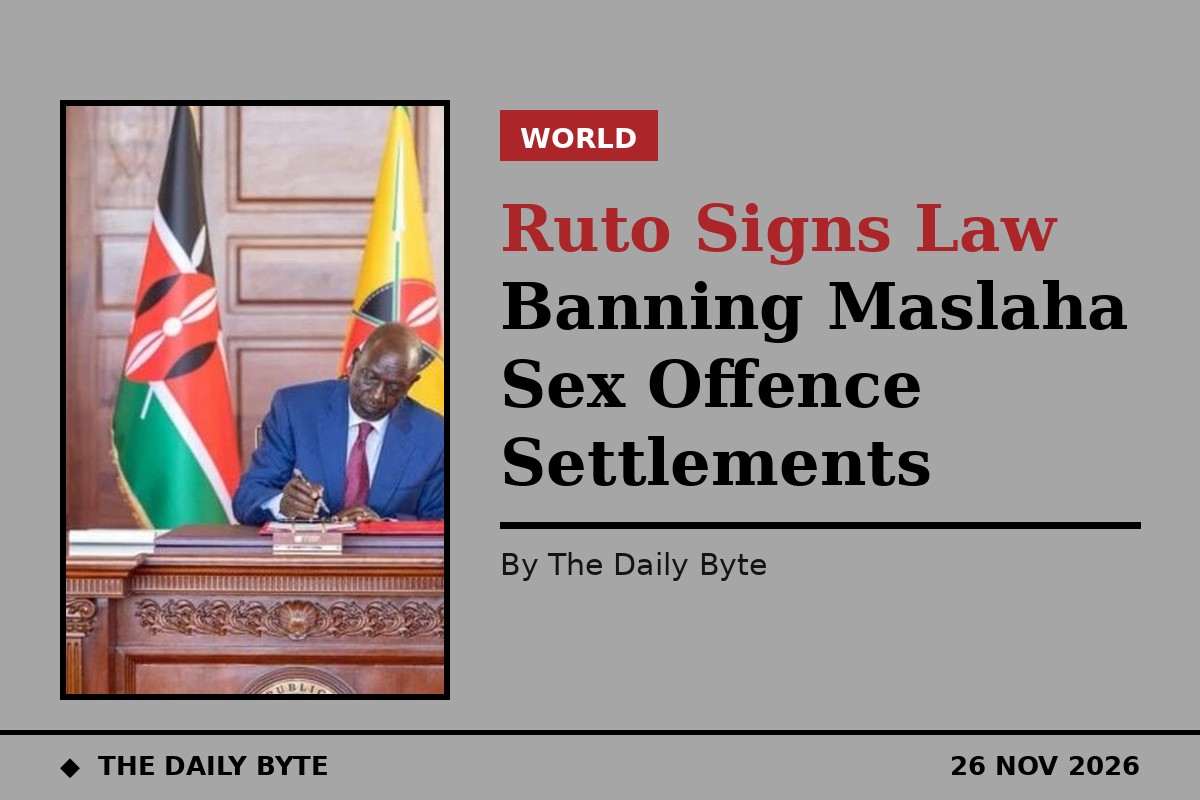
President William Ruto has signed into law legislation barring the use of traditional dispute resolution mechanisms to settle sexual offence cases in Kenya, requiring such cases to be handled through the formal court system.
The Sexual Offences (Amendment) Act, 2025, was assented to at State House, Nairobi, on Thursday, 26 November 2026, as one of six National Assembly Bills signed by the President that morning. The Bill was sponsored by Garissa County Woman Representative Udgoon Siyad Kuno and passed with amendments by the National Assembly on 4 November 2026.
The legislation is anchored on the constitutional right to expeditious administration of justice under Article 50 and the provisions governing the administration of justice under Article 159. The National Council on the Administration of Justice, chaired by the Chief Justice, backed the legislation, arguing that alternative dispute resolution in sexual offence cases could allow offenders to escape justice while exposing victims to further victimisation.
Maslaha settlements now void
The new law invalidates agreements reached outside the judicial process, including settlements through traditional practices such as maslaha. Such arrangements have allowed victims' families to accept compensation while accused persons avoided prosecution, leaving victims without justice and offenders free to reoffend.
The Act also prohibits the withdrawal of a sexual offence complaint through coercion, intimidation or inducement of the victim, and bars courts from discontinuing proceedings solely because the parties have reached an out-of-court settlement. The Director of Public Prosecutions will not be able to withdraw a case on the basis of an agreement reached through traditional dispute resolution.
During the presentation of the Bill at State House, government officials said the measure was intended to prevent perpetrators from evading accountability through informal settlements. “Things like maslaha, which are largely practised in part of Kenya, are now outlawed,” an official said while explaining the legislation to the President. The law follows concerns that traditional dispute resolution arrangements have been used to resolve serious criminal offences, including rape and defilement, outside the formal justice system.
Courts must find another reason to drop a case
The Bill precludes a court from permitting the discontinuation of proceedings relating to sexual offences solely based on an out-of-court settlement. Consequently, pursuant to Article 157(8) of the Constitution, courts are obligated to seek additional reasons for the withdrawal of such proceedings once they have commenced. The Bill also gives effect to Article 159(3) of the Constitution, which forbids reliance on customs and practices that contravene the Bill of Rights or are repugnant to justice and morality. A brief from State House put it plainly: “The offence created prohibits any person from coercing or inducing a victim, including through purported settlements, to withdraw a complaint relating to a sexual offence.”
Trials to conclude within six months
Sexual offence cases must now be heard on a day-to-day basis and concluded within six months from the date a plea is recorded. Adjournments may only be granted in exceptional and unforeseen circumstances, with the court required to record the reason. Officials said the timeline was intended to address delays in the determination of sexual offence cases, which can prolong the suffering of survivors and undermine access to justice. The change gives effect to Article 50(2)(e) of the Constitution, which guarantees the conclusion of criminal proceedings without unreasonable delay, and is aimed at promoting public confidence in the criminal justice system and encouraging victims to report offences.
Public awareness and survivors' right to education
President Ruto also assented to the Sexual Offences (Amendment) Bill, 2023, sponsored by Kisii County Woman Representative Doris Donya Aburi, which was considered and passed with amendments by the National Assembly on 21 October. It introduces nationwide public education campaigns on sexual offences and directs the education sector to protect the right to education of survivors.
The Bill recognises that sexual offences have serious and far-reaching negative effects on victims, including psychological trauma, social stigmatisation, infections and unwanted pregnancies. It mandates the responsible Cabinet Secretary to promote public awareness through nationwide education and information campaigns, and requires programmes to protect, safeguard and promote the right to education of victims of sexual offences, including victims of teenage pregnancies. The Bill notes that victims require specialised psychological support and counselling to help them cope with trauma and continue their education. President Ruto said the two laws would promote a better understanding of the provisions and limitations of the law and strengthen the country's response to sexual offences.


