Rwanda Raises Key Rate to 9.5% as Inflation Hits 19.5%
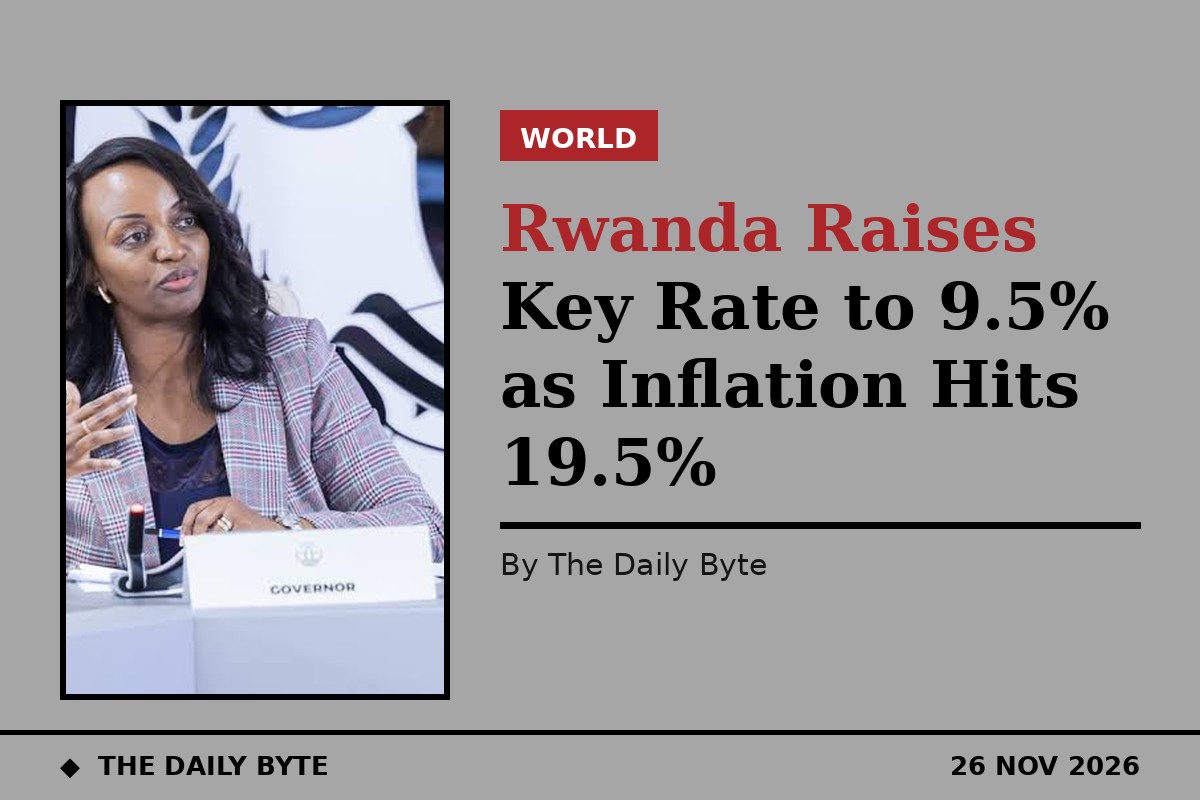
Rwanda's central bank has raised its benchmark lending rate by 75 basis points to 9.5 per cent, its fourth increase this year, as it steps up efforts to bring down inflation that reached 19.5 per cent in October.
National Bank of Rwanda Governor Soraya Hakuziyaremye announced the decision in Kigali on Thursday, 26 November 2026, after a meeting of the bank's Monetary Policy Committee. The move takes the Central Bank Rate from 8.75 per cent to 9.5 per cent, the highest level the rate has reached since at least 2009.
Hakuziyaremye said the decision was taken to help bring inflation down towards the bank's medium-term objective of 5 per cent. Inflation in Rwanda reached 19.5 per cent year on year in October, leaving consumer prices rising at nearly four times the pace the central bank aims to deliver over time.
The committee said headline inflation is projected to return within its target range by the end of 2027, while core inflation is expected to keep falling through 2027 as domestic and imported cost pressures ease. It named prolonged weather disruption linked to El Nino, which can damage farm output, and conflict in the Middle East, which can lift international oil prices, as the main risks to that path.
Fourth increase in a year of tightening
The increase extends a tightening campaign that has gathered pace through the year. The central bank raised the policy rate in February, again in May, and by 50 basis points in August, as price pressures proved more persistent than officials had expected. Thursday's 75-basis-point step is the largest of the four moves.
Hakuziyaremye said the committee would continue to monitor inflation and economic developments closely and stood ready to adjust policy further if inflationary pressures intensify beyond its projections. She said government measures taken alongside monetary policy would support a faster return to lower inflation, and expressed confidence that tighter borrowing costs and those complementary steps would bring price growth down towards the 5 per cent objective.
The decision means businesses and households across Rwanda face higher costs on new loans, while savers stand to earn more on deposits held with commercial banks. The central bank has argued that stable prices are a necessary condition for the country's strong recent economic growth to be sustained and shared widely.
By moving in a larger step than its recent increases, the Monetary Policy Committee signalled that it wants to get ahead of inflation expectations before they become embedded, even as it repeated that future decisions would remain driven by incoming data on prices and the wider economy.


