Salisbury Hospital hub approved by Wiltshire Council
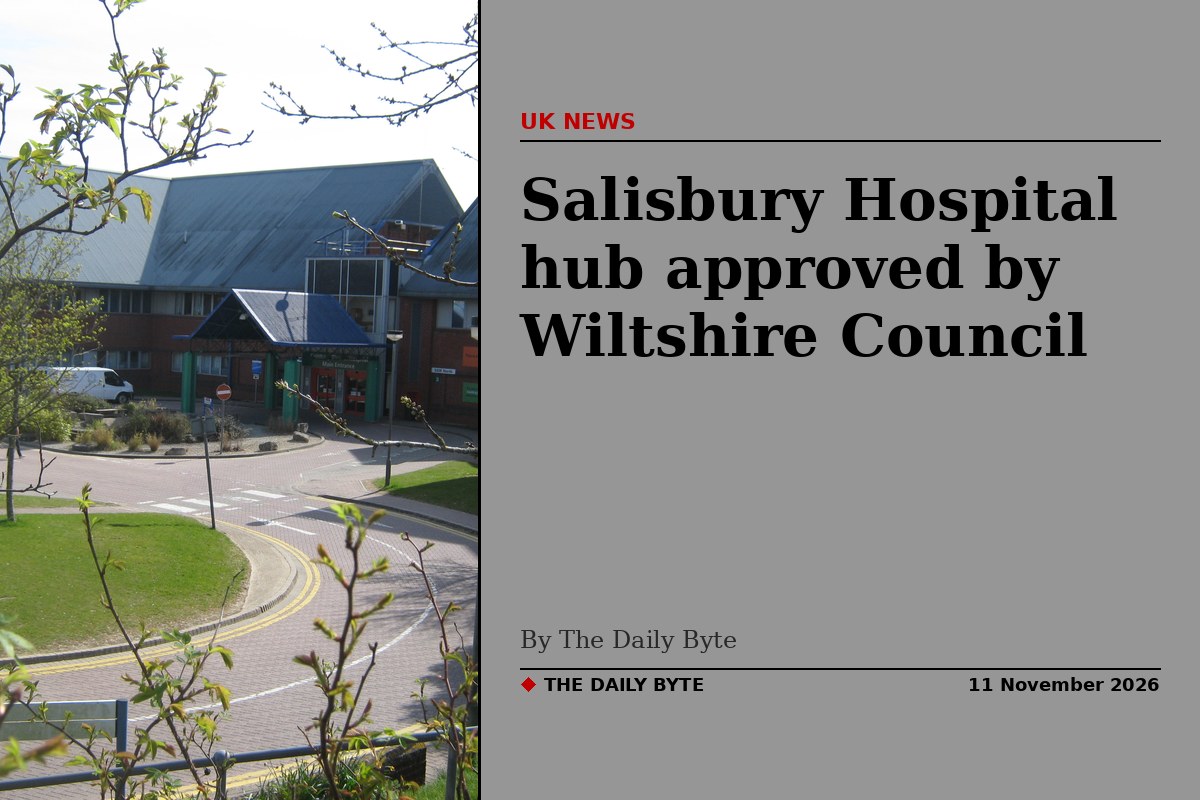
Salisbury District Hospital has won planning permission for a major new Diagnostic and Surgical Hub, known as DASH, which will replace its ageing Day Surgery Unit with a purpose-built centre for planned operations and diagnostic tests. Wiltshire Council gave the scheme the green light, and Salisbury NHS Foundation Trust says it is a significant step towards faster diagnoses and treatment for patients across Wiltshire, Hampshire and Dorset.
The new hub will include five operating theatres, including a specialist laminar flow theatre, alongside four endoscopy procedure rooms and dedicated MRI and CT scanning facilities. Construction cannot start in full yet: the Trust is still waiting for NHS England to approve the final business case, a decision expected in the coming months, but enabling works to prepare the site can now go ahead.
What the new hub will include
The Diagnostic and Surgical Hub will be built within the Salisbury District Hospital campus at Odstock Road. It is designed as a dedicated facility for planned care, separate from the hospital’s emergency work, so that operations and diagnostic procedures are less likely to be disrupted when urgent demand rises.
According to the Trust’s plans, the building will contain five operating theatres, four endoscopy procedure rooms, a CT scanner and an MRI scanner. The specialist laminar flow theatre is designed to provide highly filtered air during surgery, which is used for procedures where reducing the risk of infection is especially important. The hub is part of the Trust’s wider plans to modernise planned care and increase diagnostic capacity, supporting national ambitions for community diagnostic centres.
Why the hospital needs the new building
The current Day Surgery Unit is ageing, and the Trust says the new hub will give patients faster access to the tests and operations they need. By bringing theatres, endoscopy and scanning together in one purpose-built building, the hospital aims to see and treat more patients, cut waiting times for planned procedures and make its services more resilient.
The Trust has been planning the hub for some time: a procurement notice published in February 2026 sought a design-and-build contractor for the scheme through the ProCure23 framework, and a briefing to Wiltshire Council’s health select committee in July 2026 set out the same scope of five theatres, four endoscopy rooms, a CT scanner and an MRI scanner.
What still has to happen before building starts
Planning permission is a major milestone, but it is not the final approval. The Trust now awaits approval of the full business case from NHS England before main construction can begin. That decision is expected in the coming months. In the meantime, the Trust can progress the enabling works needed to prepare the site.
A Salisbury NHS Foundation Trust spokesperson said: “We are delighted to have received planning permission for our new Diagnostic and Surgical Hub. This is a really important milestone and takes us another significant step towards delivering this major development for Salisbury District Hospital. We are grateful to Wiltshire Council and everyone who has contributed to the planning process. We can now progress the enabling works needed to prepare the site while we await the final approval of our Full Business Case from NHS England. There is still work to do before main construction can begin, but securing planning permission is an important and very welcome step forward.”
What it means for patients in the region
Once built, the hub is intended to serve patients from Salisbury and the wider region, including parts of Wiltshire, Hampshire and Dorset. Faster diagnostics matter because many patients waiting for planned surgery first need scans or endoscopy to confirm a diagnosis or plan treatment. A dedicated hub should mean fewer cancellations, shorter waits and more operations carried out as planned.
No opening date or construction cost has been announced, and the Trust has not yet said when the first patients will be treated in the new building. The next step is the NHS England business case decision, which will determine when main construction can begin.