Samsung Eyes AI Data Centres Beyond Its Chip Business
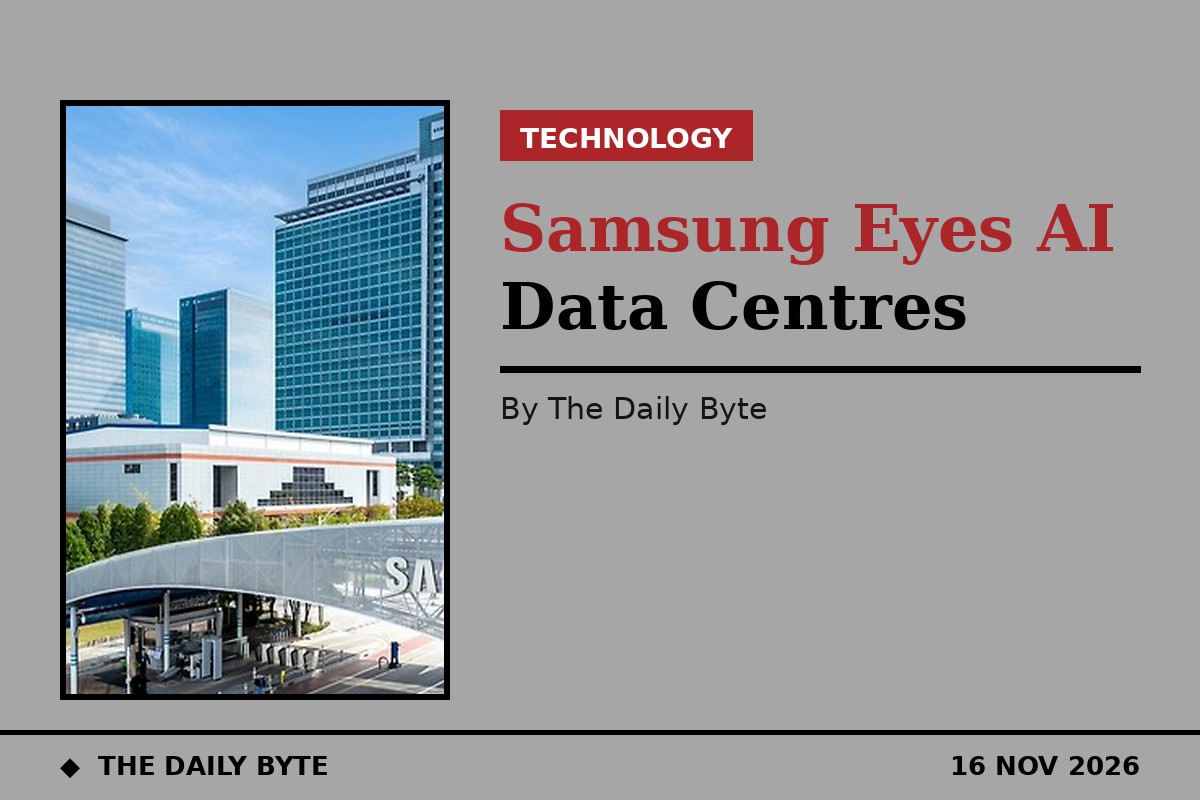
Samsung wants to move beyond memory chips and become a full provider of artificial intelligence infrastructure, building and operating data centres as well as supplying the chips that fill them. The Financial Times reported on 15 November that the South Korean group is seeking to turn other parts of its sprawling business into champions of the AI supply chain, in a shift from a highly lucrative but cyclical chip business into steadier infrastructure revenue.
The plan, as described by the Financial Times, is a one-stop offer: construction arm Samsung C&T would build the data centres, IT services unit Samsung SDS would operate them, battery maker Samsung SDI would supply energy storage systems, and Samsung Electronics would provide the memory chips. The group has already taken steps in that direction over the past year. It invested $1 billion in KKR-backed data centre operator Helix Digital Infrastructure in September, acquired a European cooling systems maker, and signed a partnership with OpenAI to develop AI infrastructure.
Talks with Anthropic and OpenAI
Samsung SDS is in early-stage talks with Anthropic and OpenAI to potentially sign them on as data centre tenants, the Financial Times reported. The talks are at an early stage and no terms or capacity have been reported, so they should be treated as prospective rather than as signed customer contracts. Analysts expect Samsung SDS's annual data centre revenue to reach 6.6 trillion won, about $4.9 billion, by 2031, roughly six times its current level.
The clearest concrete step so far is on the ground in South Korea. Samsung SDS broke ground on 2 November on an AI data centre in Gumi, on a former Samsung Electronics campus, with an initial capacity of 60 megawatts expandable to 120 megawatts. The board approved 427.3 billion won, about $315 million, for the project, which is due to be completed by the end of 2028. Its main job will be training robots and running data for Samsung's own factory automation, rather than serving outside customers at first.
The wider ambition rests on a bet about demand. McKinsey estimates that global data centre capacity demand could almost triple by 2030, with AI workloads accounting for about 70% of the total. Samsung's chip division delivered almost all of a record 107.4 trillion won third-quarter operating profit, about $80 billion, according to the Financial Times' reporting, which shows both why the group can afford the move and why it wants revenue that does not rise and fall with the memory cycle.
There is still a gap between ambition and delivery. A 2025 letter of intent with OpenAI had Samsung SDS designing and running AI data centres, with Samsung C&T and Samsung Heavy Industries exploring floating data centres, but an OpenAI-linked site in Pohang has made little progress on land, power or funding. The Gumi build and the tenant talks will be the test of whether the broader plan becomes real business or stays a strategy presentation.


