Sánchez Admits Mistakes in Heated Feijóo Debate
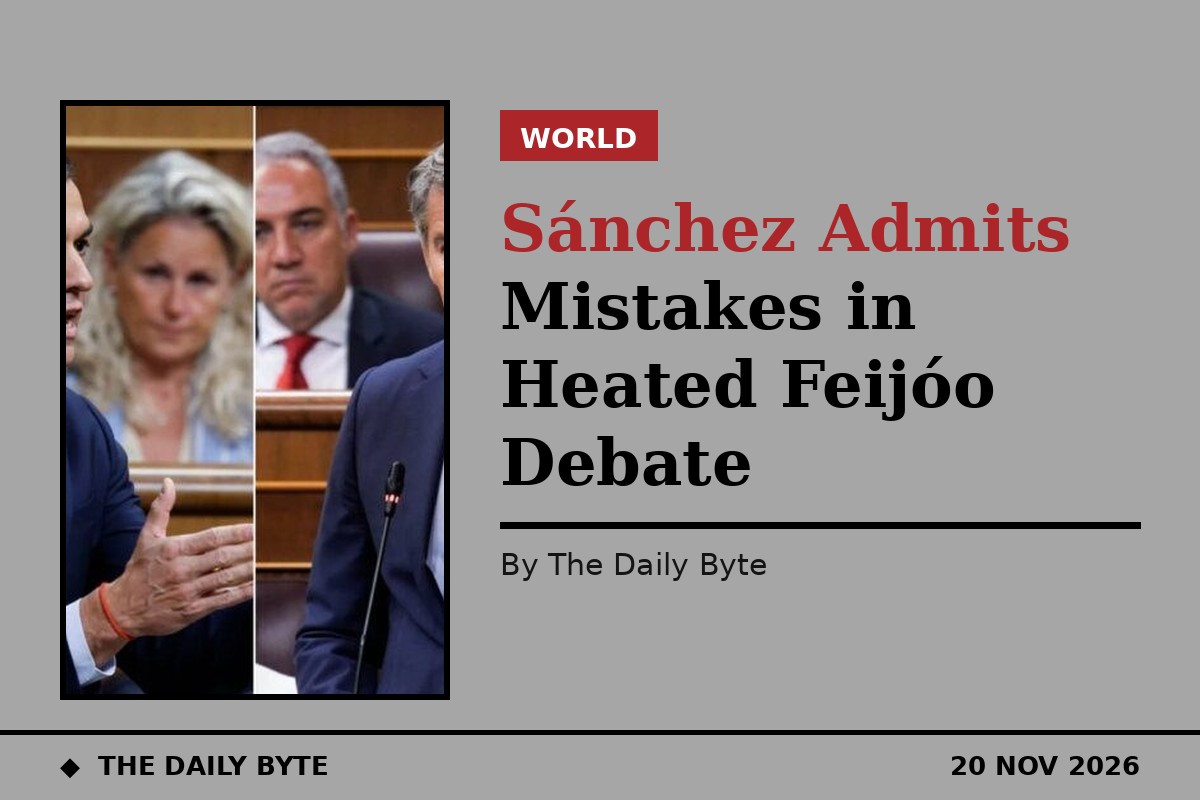
Spanish Prime Minister Pedro Sánchez admitted that his government had made mistakes in a heated televised debate with opposition leader Alberto Núñez Feijóo on Thursday 19 November, ten days before Spain’s snap general election on 29 November.
The 90-minute encounter, moderated by María Casado of the Academy of Television, was the only head-to-head debate of the campaign, and the two men, who had never spoken outside of often very heated parliamentary debates, showed not just their ideological differences but also deep personal antipathy towards each other.
Housing dominated the exchanges
Housing was the most discussed topic of the night: Sánchez mentioned it at least 16 times and Feijóo 24 times. Sánchez referred to Vox, and to its leader Santiago Abascal, on at least 16 occasions, while Feijóo interrupted Sánchez on more than 29 occasions during the debate.
Sánchez was unusually subdued and eager to display a conciliatory tone, seeming to address the demotivated left-wing electorate above all else, and he acknowledged shortcomings in his administration while highlighting Spain’s economic growth and social and environmental achievements. Feijóo, leader of the conservative People’s Party (PP), was much more aggressive, accusing the government of increasing the financial burden on ordinary citizens and failing to address major domestic challenges, and determined not to be outflanked by the far-right Vox party.
The debate was organised by the Academy of Television and structured in blocks covering housing, the economy and taxation, social policy and public services, combating corruption and democratic renewal, and migration and foreign policy. Under a prior draw, Feijóo opened the debate, while Sánchez closed it with the traditional “golden minute”.
In their closing minute, Feijóo repeated that he “knows how to manage” and argued that Spain “needs a change”, while Sánchez told voters that Spain “does not bow to powerful forces”.
A close race
The polls have barely shifted since the start of the campaign: the Socialists are polling between 26 and 29 per cent of voting intentions, compared with 30 to 31 per cent for the PP and 17 to 19 per cent for Vox. An average of 19 polling institutes put the PP on 31.0 per cent, the PSOE on 27.7 per cent and Vox on 19.0 per cent.
Spain’s Congress of Deputies has 350 seats, and a party or coalition needs 176 seats for an outright majority, so coalition negotiations are likely to be essential after the vote. The right has turned the campaign into a referendum on Sánchez, who has been in power since 2018.
Sources: Le Monde; Demócrata.


