Sanctioned Russians 'used forged Romanian passports'
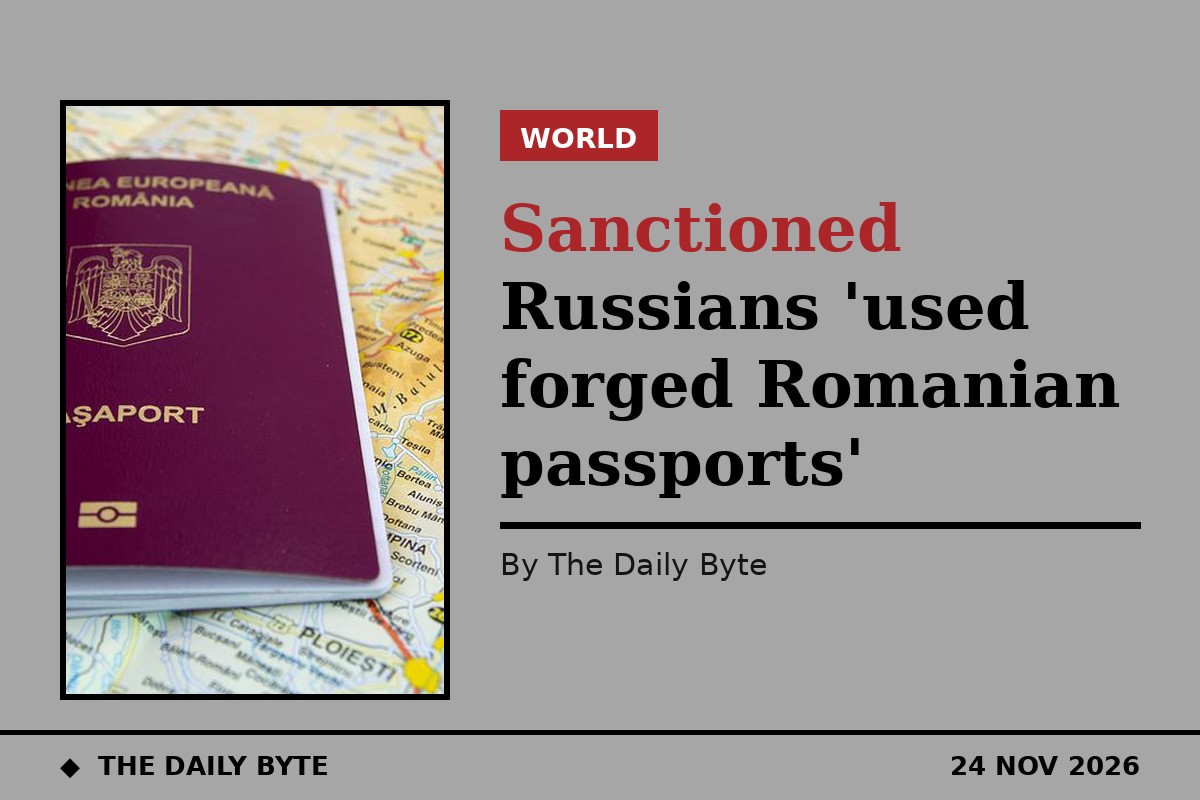
About 50 Russians, including people under international sanctions and others linked to organised crime, obtained Romanian identity documents with forged papers and used them to live, work and travel inside the EU, according to a cross-border investigation published 23 November. The journalists found that the documents opened doors sanctions were meant to keep shut: free movement across the EU, bank accounts and businesses, and travel without a visa.
The investigation was carried out by Le Monde with five partner newsrooms: The Kyiv Independent in Ukraine, Public Record in Romania, Cu Sens in Moldova, Follow the Money in the Netherlands and the Investigative Centre of Jan Kuciak in Slovakia. The team worked from Romanian court files covering disputed documents.
How the citizenship route works
Since 1991, Romania has allowed people to reclaim citizenship by proving that an ancestor was born or lived between 1918 and 1940 in territory that belonged to the Kingdom of Romania at the time and now lies in Moldova or Ukraine. Applications from Russian citizens rose sharply after Russia's full-scale invasion of Ukraine in February 2022. According to Romania's National Citizenship Authority, the number rose from 1,947 in 2021 to 6,658 in 2023, before easing to 4,574 in 2024.
Fraud followed the surge. The authority has identified more than 3,255 attempted frauds since 2022, most involving fake Romanian family histories. More recently, a second scheme emerged: forged nationality certificates, which the investigation says have already benefited at least 300 people, most of them Russian nationals. The shortcut bypassed checks including a Romanian language test and a criminal-record check. A Bucharest lawyer for several dozen of those affected said intermediaries promised citizenship within weeks for 50,000 to 70,000 euros.
The people named in the files
The journalists pieced together the stories of individual beneficiaries from the court files. Shamil Musaev, 43, from Dagestan, appeared on a Russian list of criminals for unspecified acts said to have been committed in 2009. He obtained a Romanian passport in 2023 using a fake citizenship certificate, and confirmed to the consortium that he used Romanian identity documents to work as a delivery driver in Romania and to travel to France and Spain between 2023 and 2025.
Romanian authorities are also examining people close to the Kremlin. Mairbek Abdulazizov, 43, is part of the Chechen elite around the leader Ramzan Kadyrov. He denied holding one when contacted. Kirill Seleznev, 52, was a Gazprom executive from 2002 to 2019 and later headed RusChemAlliance, a subsidiary of the Russian energy company. He is under sanctions from the United States and the United Kingdom, and Russian authorities have accused him of embezzling 150 billion rubles, about 1.6 billion euros.
Another case concerns Dmitri Rudenko, who until April 2025 led SKTB Tekhnolog, a state-owned company in St Petersburg that develops explosives for tank shells and Russian missiles and was placed under EU sanctions in October 2026. Rudenko, under Ukrainian sanctions since 2023, is suspected of obtaining Romanian documents illegally in 2024. Investigators said he had made several trips to France after the start of the war and transferred at least 700,000 euros abroad.
Ukrainians accused of treason, and a network of helpers
The files also contain Ukrainians accused by Kyiv of treason, including four founding members of Allatra, a group Ukrainian authorities describe as a religious cult that justifies the Russian invasion. In Romania, more than 800 civil cases are under way to annul documents obtained with forged papers, The Kyiv Independent's reporting found, and prosecutors charged at least 16 Russian citizens in September and October 2026 with using forged citizenship certificates.
Behind the individual cases, the court documents describe a network of lawyers, notaries, civil registry officials and intermediaries in Romania, Moldova and Ukraine, along with helpers such as Romanian villagers who registered beneficiaries' addresses at their own homes for payment. A Ukrainian national suspected of acting as an intermediary for 839 Russian citizens is being prosecuted, and Romanian authorities have issued an international warrant for his arrest.
Why it matters for European security
The investigation's central warning is about what an EU passport unlocks. Observers told Le Monde that people close to the Kremlin or connected to organised crime could travel within the EU, open bank accounts and businesses there and continue criminal activity. Some financial restrictions that normally apply to Russian nationals, such as the ban on banks accepting deposits of more than 100,000 euros, would also fall away with EU nationality, according to sanctions law expert Francesca Finelli.
Romanian authorities say the judicial investigation is continuing and hundreds of procedures to revoke Romanian identity documents are still under way. Several people have already had their documents withdrawn, and a few have been jailed. The case is now a test of whether the loophole can be closed before more of the documents are used.


