Saudi Arabia and China discuss Houthi threats
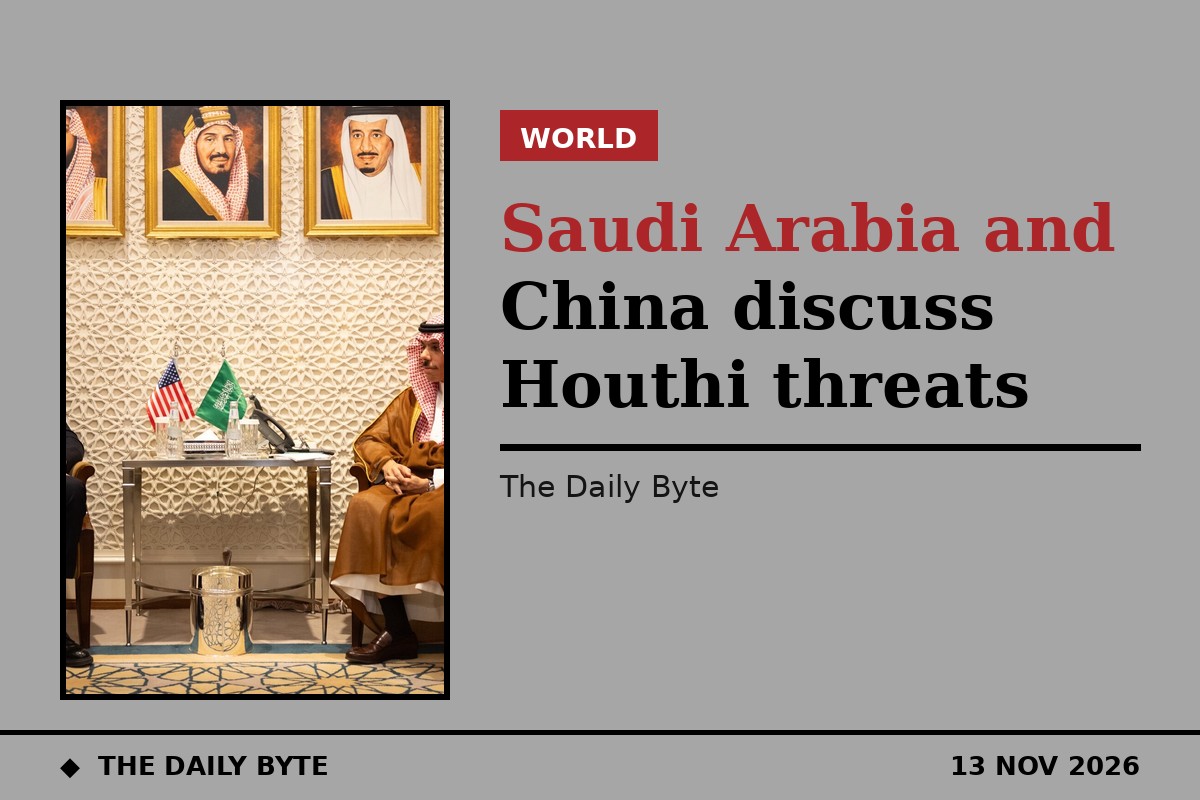
Saudi Arabia and China have held talks in Riyadh on Houthi attacks against Saudi Arabia, energy security and the safety of shipping through the Strait of Hormuz and the Bab el-Mandeb Strait, according to the Saudi Press Agency (SPA).
Saudi Foreign Minister Prince Faisal bin Farhan received Zhai Jun, China’s special envoy for the Middle East, at the Foreign Ministry’s headquarters in Riyadh. SPA said the two sides reviewed bilateral relations and discussed the latest regional developments, including what the agency described as continuing attacks by the Houthi militia on civilian targets and civilians inside the Kingdom.
The two sides also discussed the repercussions of the attacks on regional security and stability, and diplomatic efforts to contain crises and reduce tensions, according to the SPA report. Energy security and stable markets were a central theme, with both sides stressing freedom of navigation through the Strait of Hormuz and the Bab el-Mandeb Strait, two waterways on which a large share of the world’s oil and gas shipments depend.
Houthi claims remain unverified
The meeting came after Yemen’s Houthi movement claimed a series of drone and missile attacks on Saudi energy and military targets. Houthi military spokesman Yahya Sarea said the group had targeted a pumping station on Saudi Arabia’s East-West oil pipeline, an oil facility in the Red Sea port city of Yanbu and an Aramco building in Riyadh.
The claims have not been independently verified, and Saudi authorities had not immediately confirmed any damage to the facilities named by the Houthis. The Saudi-led coalition said it had intercepted and destroyed two Houthi drones, one in the Riyadh region and another in the kingdom’s oil-rich Eastern Province.
The Houthis did not say on which day the attacks they claimed had taken place. The group, which is aligned with Iran, has stepped up attacks on Saudi Arabia in recent weeks as fighting inside Yemen has intensified and the wider regional war has spread to shipping lanes and energy infrastructure.
Why the East-West pipeline matters
The East-West pipeline has become increasingly important to Saudi Arabia, the world’s largest oil exporter, because it carries crude from the kingdom’s eastern oilfields to the Red Sea port of Yanbu, allowing exports to bypass the Strait of Hormuz altogether.
According to Reuters, Saudi Arabia has rerouted about four million barrels of crude oil a day through the pipeline, equivalent to around four per cent of global oil supply. Any disruption to the pipeline, its pumping stations or the export facilities at Yanbu could therefore have consequences well beyond Saudi Arabia, affecting international energy markets and shipping costs.
The Bab el-Mandeb Strait, which connects the Red Sea with the Gulf of Aden and the Indian Ocean, is another corridor under pressure. Increased military activity around it could further complicate commercial shipping and raise transport and insurance costs for vessels using the route.
UN sanctions renewed
The talks in Riyadh also came on the same day the United Nations Security Council unanimously approved a British-drafted resolution extending sanctions against individuals associated with the Houthi movement. The measures include travel bans and asset freezes, extended until 14 November 2027, and the resolution called on the Houthis to halt their military escalation and stop attacks on civilians and civilian infrastructure.
The Council also renewed the mandate of its Panel of Experts on Yemen, which monitors compliance with the sanctions, until 15 December 2027, and said it would decide by 11 January 2027 on measures covering dual-use components and precursor chemicals that the Houthis use to manufacture drones and missiles.
China’s growing regional role
For Saudi Arabia, the meeting with China’s envoy is part of a wider diplomatic effort to build support among major powers for containing the crisis. China is Saudi Arabia’s largest trading partner and the world’s largest oil importer, so secure shipping lanes and stable energy markets matter directly to Beijing as well as to Riyadh.
China has already played a mediating role in the region, hosting talks between Saudi Arabia and Iran, and its special envoy has been involved in regional mediation efforts. The Riyadh meeting signals that both countries want to coordinate their positions on regional security, even though no specific measures or agreements were announced.
With Saudi energy installations facing renewed threats and major shipping routes under pressure, diplomatic efforts by regional and international powers are gaining importance. The situation remains volatile, and further escalation could affect global oil supplies, maritime trade and security across the Middle East.


