Saudi Coalition Strikes Hodeidah Port in Yemen
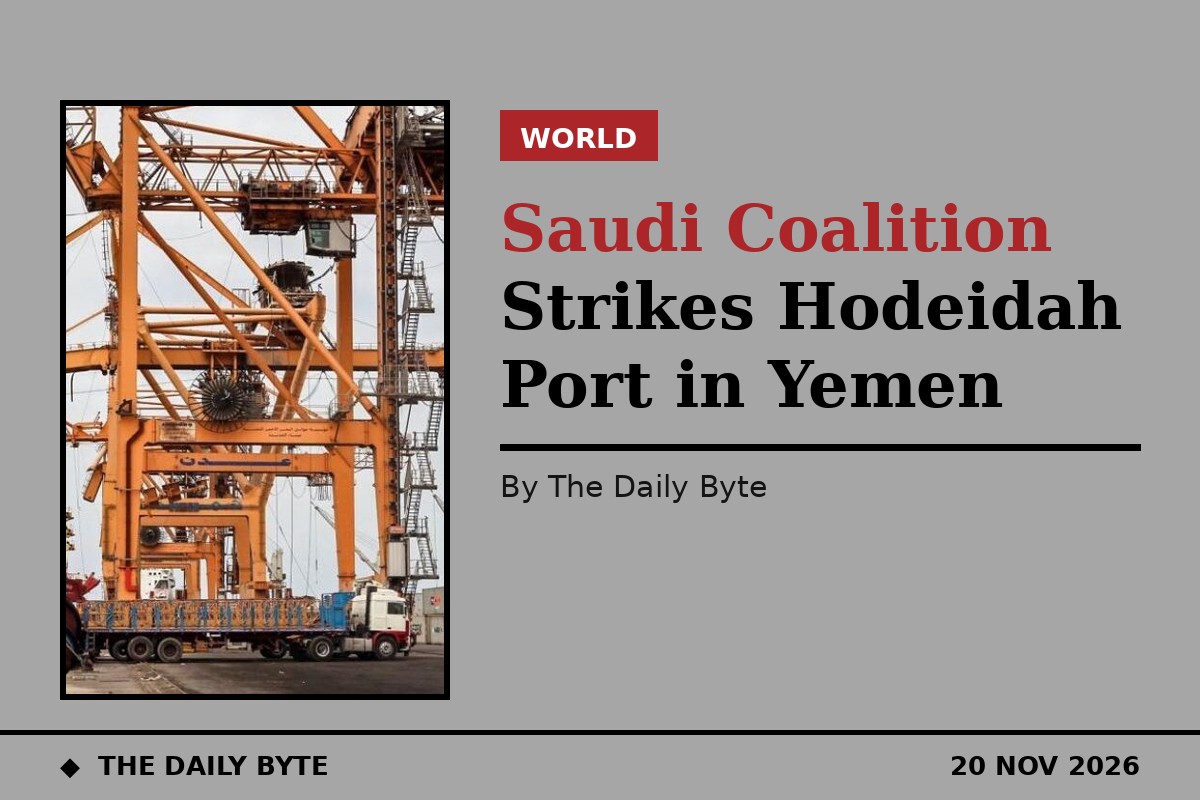
The Saudi-led coalition fighting Yemen's Houthis said it struck the Red Sea port of Hodeidah on Friday to destroy Houthi capabilities, a day after the group hit the tallest skyscraper in the Saudi capital.
The coalition said its strikes destroyed operational capabilities at the port that were used in smuggling operations and the transport of weapons and ballistic missiles. The port remains fully operational and the flow of goods will continue, according to Yemen's Information Minister.
Hodeidah is the main port bringing food and other supplies into Houthi-controlled northern Yemen, including the capital, Sanaa. The coalition had earlier warned civilians to evacuate the area around the port for their own safety.
Warnings on both sides
The Houthis answered the strike with a warning of their own. Military spokesman Yahya Saree said in a statement that Jeddah port and every other Saudi port on the Red Sea coast would become targets if the coalition bombed Hodeidah, and he urged port workers and shipping companies to move their vessels away at once.
Saree also warned airlines to avoid Saudi airspace, saying it would be the scene of Houthi operations in the coming hours, and made an exception only for the airspace near the Muslim holy cities of Mecca and Medina. He said the group would target a power station at Shuqaiq in southern Saudi Arabia.
Strikes beyond the port
The coalition said it also carried out an operation in Yemen's capital, Sanaa, targeting ballistic missile and drone capabilities, and that operations in Saada and Taiz were ongoing. The announcements signalled a widening of the coalition's air campaign rather than a single strike on one port.
The fighting in Yemen resumed in July, in parallel with the wider war between the United States, Israel and Iran. Since then the Houthis, who are aligned with Tehran, have advanced rapidly, seizing territory from Yemen's internationally recognised government and its allies, who are backed by Saudi Arabia. The Houthis have seized Yemen's Red Sea coast and forced the Saudi-backed forces aligned with the government to retreat to defend Aden, the government's temporary capital in the south.
A week of escalation
Friday's strike followed the sharpest escalation of the Saudi-Houthi front in years. On Thursday, a Houthi missile struck the Public Investment Fund Tower in Riyadh's King Abdullah Financial District, blowing out windows across seven to eight floors and bending parts of the building's metal facade. Saudi civil defence said the attack caused material damage to several floors and nearby buildings, but no injuries were reported.
On the same day, airstrikes killed 15 people and wounded 14 others in Yemen's port city of Mokha and Taiz province, according to the Sanaa-based Health Ministry, which blamed Saudi-backed forces. The ministry said a strike on a rest stop in Mokha killed 10 people and wounded nine, while another strike on road repair workers in Taiz killed five and wounded five.
The Houthis have stepped up missile and drone attacks on Saudi airports, energy infrastructure and military bases, while the coalition has carried out airstrikes on Sanaa and other Houthi-held areas. Deadly strikes on Riyadh's main airport last month led to the cancellation of most international flights, and Saudi Arabia has postponed or cancelled high-profile events, including football's AFC Asian Cup.
Neither side has shown any sign of stepping back. The coalition has shown it is willing to strike deep into Houthi-held Yemen, and the Houthis have shown they can reach Riyadh. With shipping through the Red Sea already under strain from the wider regional war, a new front around the ports would put commercial vessels, crews and cargoes directly in the line of fire.
Sources: Reuters via gCaptain; South24.


