Saudi Banks Face Liquidity Crunch As Oil Exports Rebound
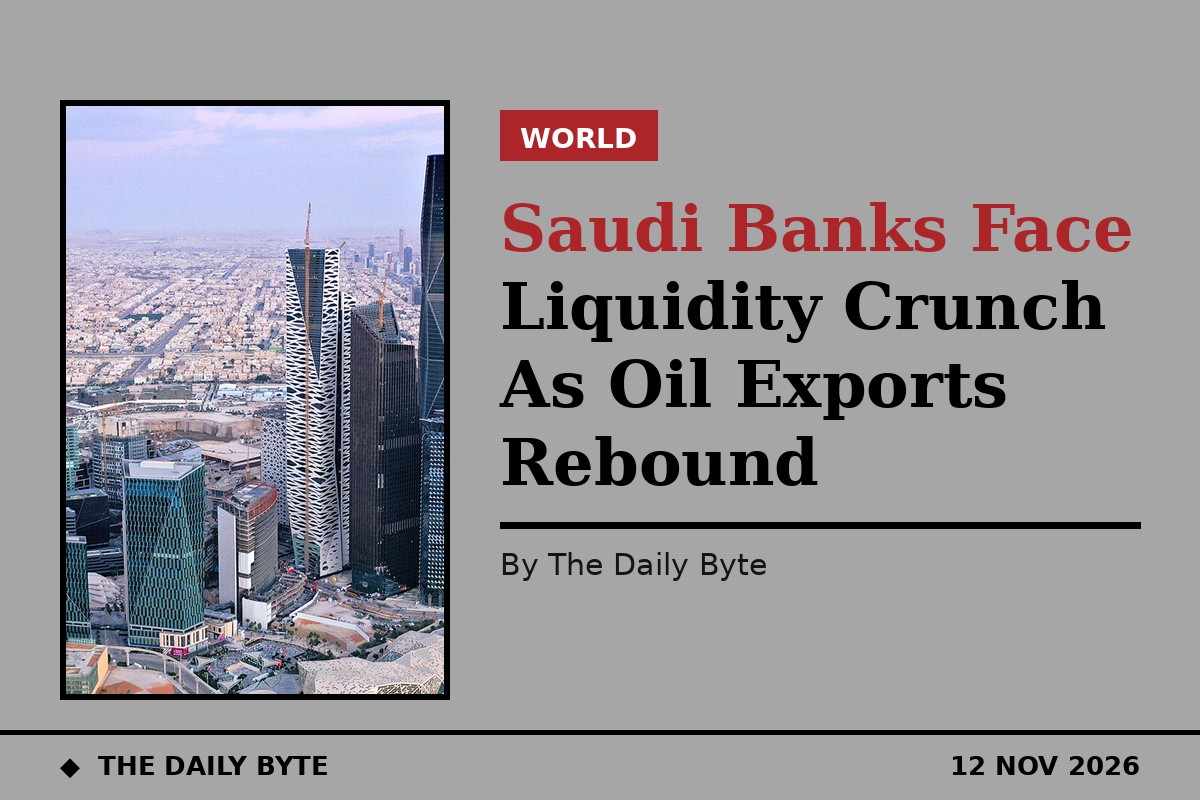
Saudi Arabia is facing a liquidity crunch in its banking system even as its oil exports rebound to pre-war levels, according to a new report from Bank of America, as the war with Iran squeezes deposits and slows the kingdom's economy.
In a note to clients, reported by Bloomberg on Tuesday and covered by Middle East Eye, Bank of America said Saudi Arabia is grappling with "contagion" caused by liquidity tightness in the United Arab Emirates and a rapid slowdown in the kingdom's own economy.
Saudi banks are closely linked to their Emirati neighbours, with a high number of interbank transactions contributing to deposits at Saudi banks, according to the report. The UAE is also grappling with fallout from the Iran war and tighter liquidity, and Saudi banks are feeling the pain as a result.
At the same time, the Saudi economy is under strain and government entities are making withdrawals from Saudi banks. But loan demand is high, which is effectively raising the cost of Saudi money, the report said.
Why the peg matters
The liquidity strain is particularly notable for Saudi Arabia because its currency, the riyal, is directly pegged to the US dollar, along with the currencies of other Gulf states including the UAE, Qatar, Oman and Bahrain.
Gulf central banks cannot inject additional liquidity into their markets in the way the United States, Europe and Russia can, because their currencies are set against the dollar and their interest rates track those set by the US Federal Reserve. That leaves Saudi banks with fewer tools to ease a squeeze when deposits slow and withdrawals rise.
Saudi Arabia has avoided the worst fallout from the US-Israeli war on Iran, according to the report, but its economy is still tied to smaller Gulf states. The UAE, for example, is Saudi Arabia's single largest foreign direct investor, so pressure on Emirati banks and businesses feeds through quickly to the kingdom.
Oil output rebounds
The liquidity strain comes even as Saudi Arabia's oil exports rebound to pre-war levels. Saudi Arabia told the Organization of Petroleum Exporting Countries that it pumped 10.6 million barrels per day of oil in October, up from 8.372 million barrels per day in September. The figure marked the kingdom's highest output since February, before the United States and Israel attacked Iran.
The East-West Pipeline, which terminates at the Red Sea port of Yanbu, has allowed Saudi Arabia to bypass Iran's attacks in the Strait of Hormuz. But the pipeline has itself been targeted by the Houthis and by militias in Iraq, according to Riyadh, with the latest strike against it reported on Monday.
More recently, the kingdom's economy has been shaken by the collapse of a ceasefire in Yemen. Saudi Arabia has come under Houthi missile and drone attacks targeting energy infrastructure, airports and high-profile commercial buildings. The Aramco Tower, a skyscraper in Riyadh, was hit by a Houthi air attack earlier this week, according to Middle East Eye.
Private credit steps in
With bank liquidity tight, Saudi Arabia is relying more heavily on private capital. Goldman Sachs, HSBC and Fortress Investment Group, together with regional managers Ruya Partners and Amwal Capital, are providing 150 million dollars in financing to nonwoven fabrics manufacturer United Saudi Company, Bloomberg reported, citing people familiar with the matter.
It is one of the first major private credit deals involving big international financiers since the regional war began in February, and Fortress's first move into Saudi private credit, according to the report. The agreement comes as the kingdom faces near-daily Houthi attacks, strained domestic finances and tight bank liquidity, making foreign capital all the more important.
Renewed tightness in liquidity is intensifying funding pressures at Saudi banks and putting at risk the pace of spending on critical projects, as Crown Prince Mohammed bin Salman pursues a multitrillion-dollar economic overhaul while managing the fiscal pressures of the war. How long the squeeze lasts will depend in part on whether deposits recover and whether the war's disruption to Gulf trade and shipping begins to ease.