Saudi Official Inspects Aramco Office After Houthi Attack
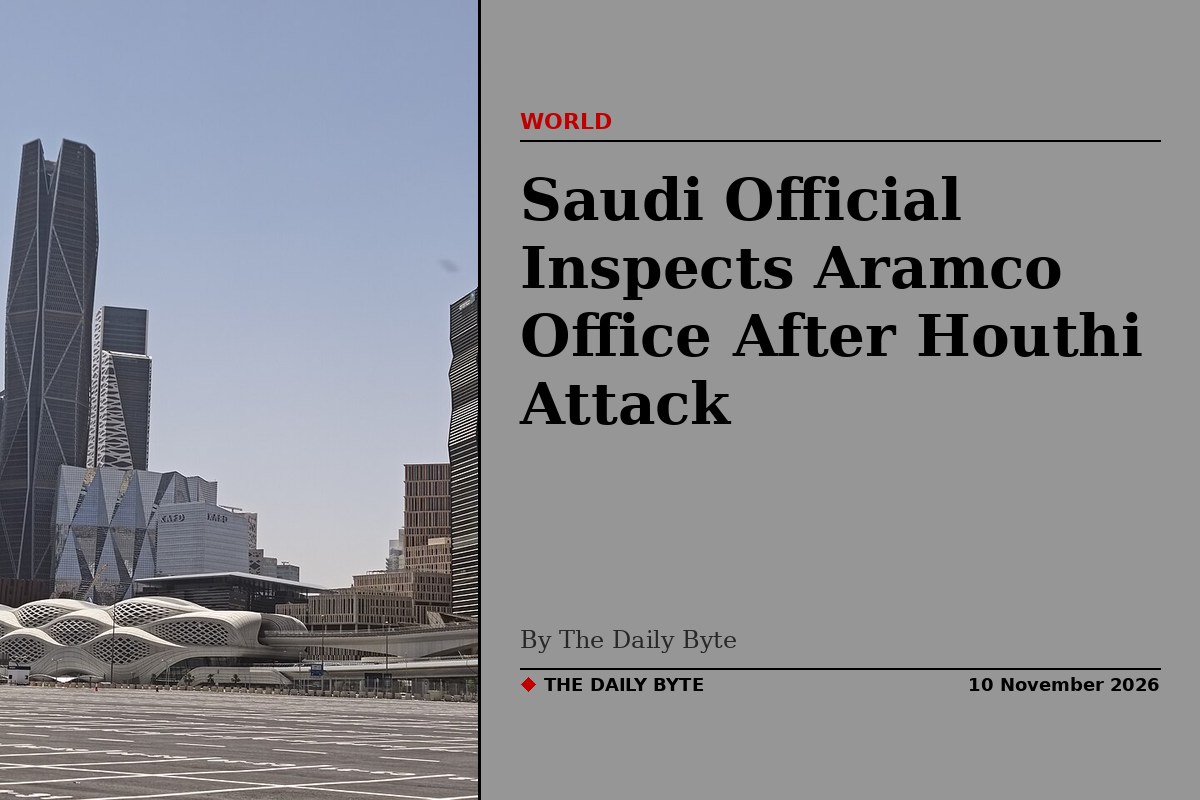
Saudi Arabia's deputy governor of Riyadh has inspected an Aramco administrative building in the capital that was damaged in an attack by Yemen's Houthi group, state news agency SPA reported early on Tuesday, 10 November.
Prince Mohammed bin Abdulrahman bin Abdulaziz visited the site in the King Abdullah Financial District and said the attack showed that the Houthis were targeting civilian facilities, according to SPA. He directed the authorities to provide support for Aramco employees affected by the incident.
Saudi Arabia's Energy Ministry had reported on Sunday that the Aramco Tower in the financial district suffered limited damage, with no injuries or fatalities. The ministry did not initially identify those responsible, but the Houthis later claimed responsibility for the attack.
Windows shattered across several floors
A Reuters witness saw shattered windows across several floors of the Aramco Tower after the attack. The Energy Ministry said falling shrapnel from an attempted attack caused the damage, describing it as limited.
The Saudi-led coalition fighting the Houthis said its air defences intercepted and destroyed two ballistic missiles launched towards Riyadh on Sunday, and further missiles aimed at other parts of the kingdom. Houthi military spokesman Yahya Saree later claimed a series of missile and drone attacks aimed at Aramco facilities and Riyadh's King Khalid International Airport.
The Houthis have stepped up strikes on Saudi infrastructure in recent weeks, including an attack on the oil giant's headquarters in Dhahran in the Eastern Province. The escalation is taking place amid the wider US-Israeli war with Iran, in which the Houthis are allied with Tehran.
Pipeline struck in Medina region
Saudi Arabia said on Monday that its East-West oil pipeline was struck in the Medina region, causing a limited fire that was later extinguished. The attack caused no casualties and did not affect pipeline operations, SPA said.
The pipeline carries crude from the Eastern Province to the Red Sea coast, and any disruption to it is closely watched by oil markets. Saudi officials stressed that operations continued normally after the strike.
The attacks on Saudi targets come as fighting between the Houthis and the coalition backing Yemen's internationally recognised government has intensified. The Houthis advanced in September towards the Bab el-Mandeb Strait, the strategic shipping chokepoint at the southern end of the Red Sea, on the other side of the Arabian Peninsula from the Strait of Hormuz.
Wider regional escalation
The Houthi campaign against Saudi Arabia has run alongside the nine-month war between the United States, Israel and Iran, which began on 28 February. Iran's allies across the region, including the Houthis in Yemen, have struck US and allied targets, while the United States has maintained a naval blockade of Iran and carried out strikes on Iranian positions.
Saudi Arabia has sought to keep the conflict away from its territory, but the repeated attacks on Riyadh and on Aramco facilities show how the war is spilling across the region. The kingdom has invested heavily in air defences, and the coalition says most incoming missiles and drones are intercepted before they reach their targets.
For now, the damage from Sunday's attack appears limited, and no casualties were reported. But the visit by Riyadh's deputy governor underlines the political weight Riyadh attaches to attacks on Aramco, the state oil company at the heart of the Saudi economy, and to the safety of civilian sites in the capital.


