Saudi Arabia Overtakes UAE as India's No. 2 Oil Supplier
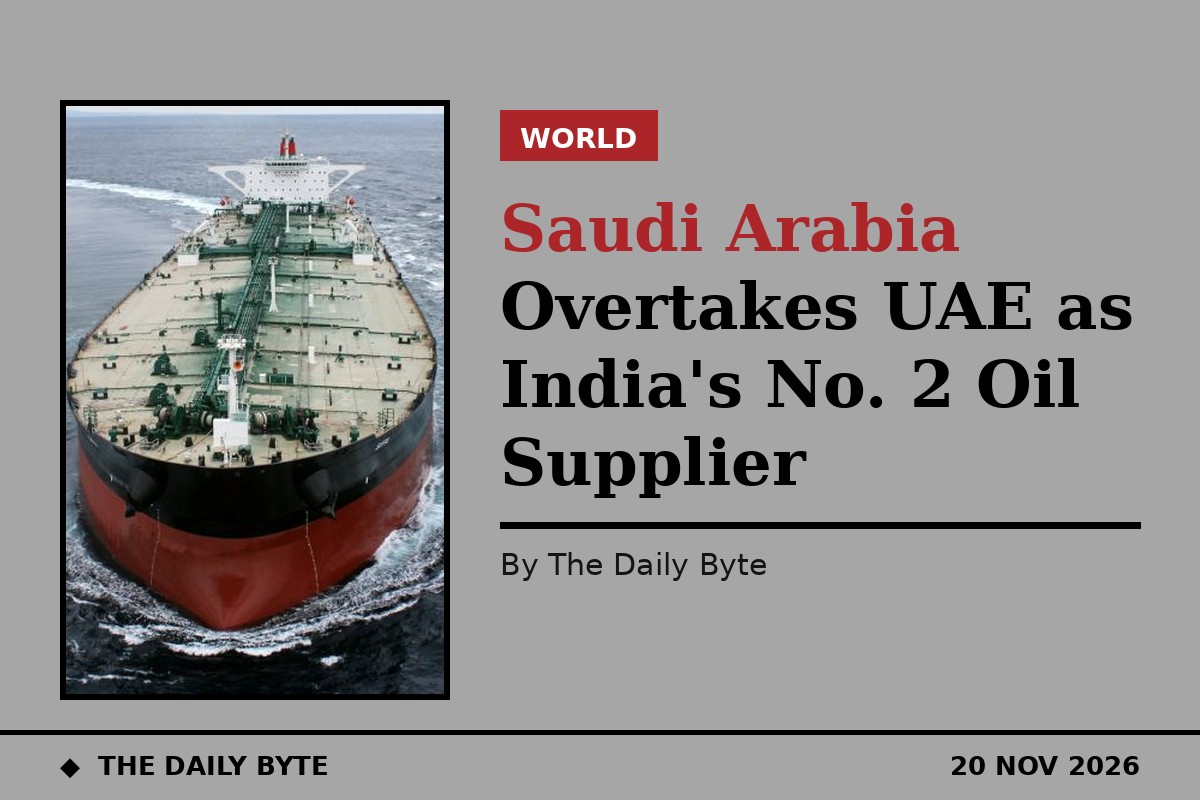
India's oil imports from Saudi Arabia moved ahead of those from the United Arab Emirates in October, trade data showed, the first time Riyadh has led Abu Dhabi in the Indian market since the Iran war disrupted supplies across the region in late February.
Saudi shipments rose to about 790,000 barrels per day, their highest level in eight months, while purchases from the UAE fell to about 612,000 barrels per day, a seven-month low. Russia remained India's largest supplier, with imports of about 1.85 million barrels per day.
Discounts and a Red Sea push behind the shift
Riyadh offered discounted cargoes to win back market share, Indian refining sources told Reuters, with the price cuts designed to offset higher shipping costs and make Saudi crude more competitive against supplies from other Middle Eastern producers and from Russia.
Saudi Arabia also raised oil output last month and boosted exports from its Red Sea port of Yanbu, after attacks damaged its East-West pipeline. The push by both Gulf producers to maximise exports has intensified competition for market share, particularly in key demand centres in Asia.
The two countries took different routes through the disruption. Saudi shipments slowed after the war disrupted traffic through the Strait of Hormuz, while imports from the UAE recovered sharply from April. The UAE began moving crude from fields west of the waterway and arranging ship-to-ship transfers outside the strait, after its exit from OPEC, to capture a larger share of demand in markets including India.
Record month for Indian imports
India's total crude imports reached a record 5.58 million barrels per day in October, up 4.7 per cent from September and 6.9 per cent from a year earlier, the data showed. Russian imports rose 3.5 per cent from September to 1.85 million barrels per day, accounting for about a third of the country's total purchases.
Indian refiners had increased their Russian purchases after the Iran war disrupted Middle Eastern supplies in late February, and the October figures show that shift has not been reversed. At the end of October, the state refiner Bharat Petroleum said it would cut its purchases of Russian crude in November, as high freight costs and premiums made Russian oil less attractive than offers for Middle Eastern crude.
The longer view still favours Abu Dhabi
October was a single-month reversal rather than a change in the full-year picture. Over April to October, the first eight months of India's financial year, the country imported an average of 741,400 barrels per day from the UAE, up 41.8 per cent from a year earlier, while purchases of Saudi oil averaged about 484,100 barrels per day, down 18.4 per cent.
Whether Riyadh can hold its regained second place will depend on how long the discounts last and whether shipping through the Gulf stays open. For now, the October data show a market still being reshaped by the war: Gulf producers competing hard on price, India buying record volumes, and Russia still firmly in first place.


