SBC Medical breach hits 1.6 million patients in Japan
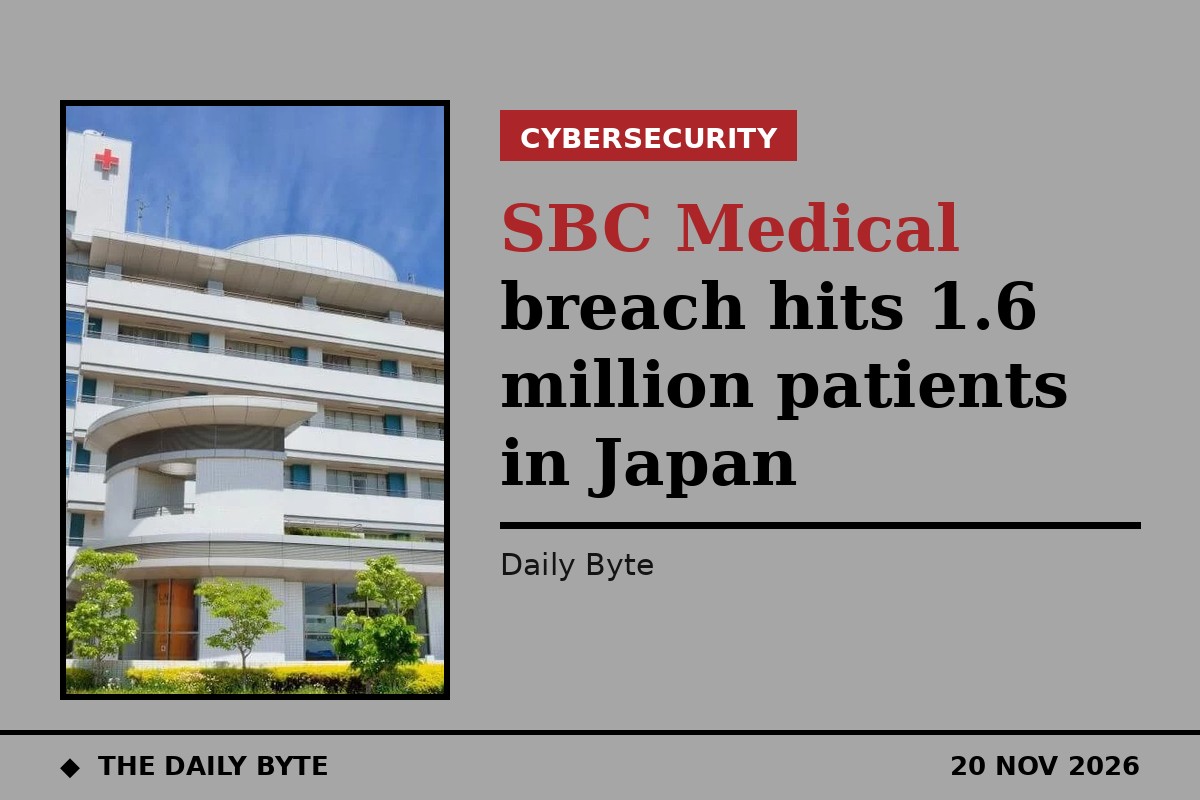
SBC Medical Group has disclosed two cybersecurity incidents affecting its clinics in Japan, exposing the basic personal information of 1,624,000 people, including customer passwords, in a filing with the US Securities and Exchange Commission.
The Nasdaq-listed company provides management services to medical corporations and their clinics, mainly in Japan, and its clinics receive 7 million patient visits a year. It discovered the database breach on 16 November and was told about the second incident, at a third-party booking platform, the same day.
What was taken from the databases
On 16 November 2026, unauthorised access occurred to certain databases within a website system managed by SBC Medical Group, Ltd., the company's Japanese subsidiary. The company confirmed that an unauthorised third party accessed and extracted customer information, and said the method of intrusion and the full scope remain under investigation.
The largest category covers the basic personal information of 1,624,000 people, with records dating from 2010 to 2023. Depending on the individual record, the exposed fields include names, sex, telephone numbers, email addresses, passwords, addresses, dates of birth, patient card numbers, member IDs and survey responses. Not every field was exposed for every person.
The incident also reached reservation requests from 255,416 people, submitted through advertising, affiliate and campaign pages between 2007 and 2026, and inquiries submitted through website forms by 217,769 people between 2004 and 2026. A further 4,513 people had treatment descriptions and stored image file names taken, and 15,007 had basic information, treatment names and review text exposed.
Credit card information was compromised for 14 individuals. SBC said it has confirmed that all of those cards were in a state in which additional payments could not be processed, such as having expired.
The attackers also stole about 20,000 employee account records, including names, IDs and passwords. For 459 employees, the affected data also included bank account and pension information, withholding tax certificates and dependent exemption declarations.
A second incident at booking service Tribeau
Separately, on 16 November, SBC was told of unauthorised access to clinic administrator accounts on Tribeau, a third-party reservation service used by 56 clinics to which the company provides management services. The platform operator identified information belonging to about 19,000 individuals.
For 12,641 of them, the attackers compromised reservation information including names, phone numbers, age and requested treatments. For 6,804 people they compromised reservation information and treatment details, and for three people they also accessed message contents, dates of birth and gender. The operator confirmed that email addresses, home addresses, credit card information, passwords and electronic medical records were not included in the Tribeau incident.
What the company has done
SBC reported the database breach to Japan's Personal Information Protection Commission on 16 November, the same day it was discovered, and said it plans to consult police. It isolated the affected server, set up an incident response team and brought in external cybersecurity specialists. It also rotated the passwords for all the clinics it supports on Tribeau.
The company said it has not confirmed unauthorised access to electronic medical records or to information in its mySBC reservation site, and that as of 18 November, when the Form 8-K was submitted, it had not seen any evidence of misuse of the exposed data. It also said it could not yet estimate the financial impact of the incidents.
For patients, the exposure of passwords alongside names, contact details and patient card numbers is the most immediate risk, since the same credentials may have been reused elsewhere. SBC has not said when it will contact the people affected.
Sources: BleepingComputer; SecurityWeek.


