SC Limits Ombudsperson Role in Women's Property Cases
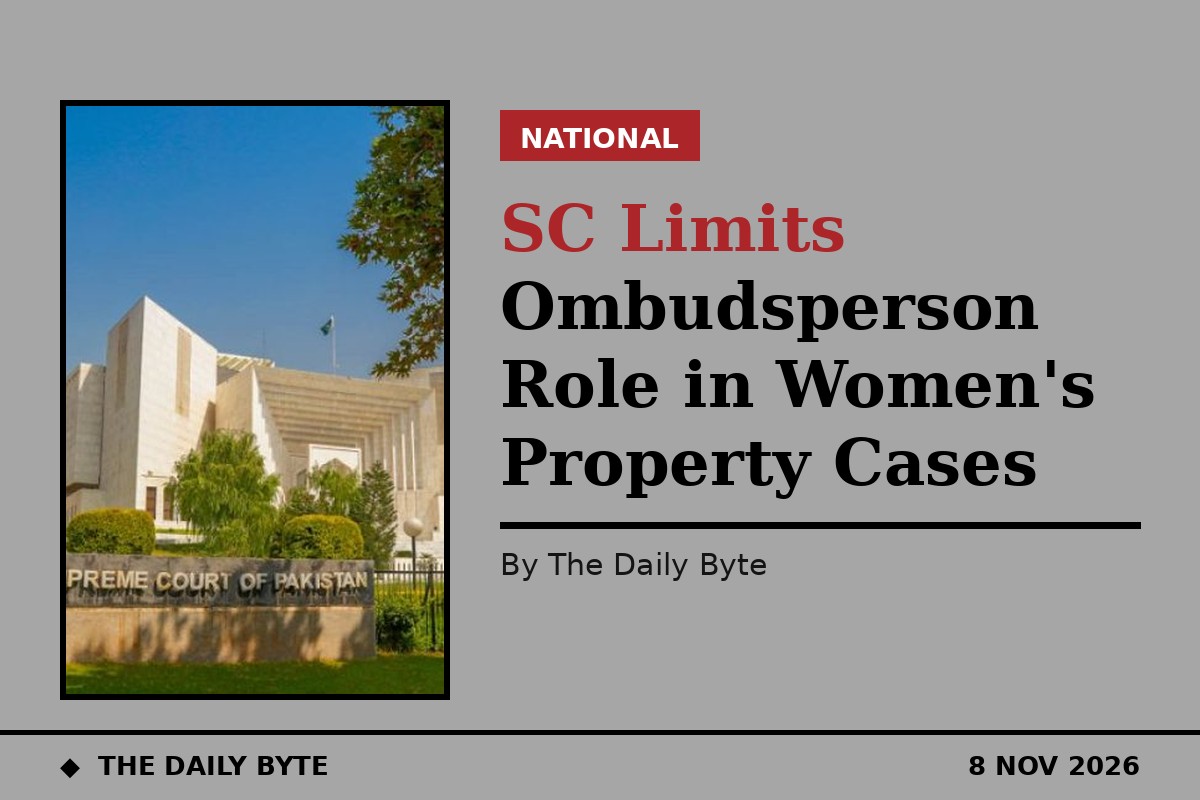
The Supreme Court of Pakistan has ruled that the ombudsperson cannot decide complex disputes over land ownership and inheritance under the Khyber Pakhtunkhwa Enforcement of Women's Property Rights Act, 2019, holding that such matters must be resolved by civil courts.
A two-member bench of Justice Ayesha A. Malik and Justice Muhammad Shafi Siddiqui set aside the rulings of both the Peshawar High Court and the provincial ombudsperson in an eight-page judgment, and directed that the dispute be sent to the relevant civil court as a formal reference, Voice Pakistan reported.
The court held that the ombudsperson's jurisdiction under the 2019 Act is summary in nature and limited to the restoration of clear, undisputed ownership. Where a woman can show undisputed title and unlawful deprivation of possession, the ombudsperson may call for a deputy commissioner's report within 15 days and decide the matter within 60 days. But where ownership is disputed and detailed evidence is needed, Section 6 of the Act requires the matter to be referred to a civil court as a regular suit.
The case concerned about 39 kanals of land at Mandai Khas, Alam Gudder, near Dogra Hospital in Bara, District Khyber. The petitioners, Naheed Shah Afridi and Islam Bibi, the widow and daughters of the late Rehmat Shah Afridi, had sought possession from Muzaffar Shah Afridi, who asserted sole ownership and filed a civil suit. The court gave four reasons the case was unfit for summary proceedings: the petitioners were not in possession of the land; no conclusive title document was produced; the claimed oral gift could not be accepted without proof; and the former tribal area has no historical revenue records to settle title summarily.
The court also held that the high court had erred in treating the ombudsperson's proceedings as void merely because a civil suit was pending, since Section 7 of the Act allows a complaint even while court proceedings are under way. It directed the ombudsperson to transfer all records to the court of Civil Judge-1 Bara, where the civil suit is already pending, and ordered notices to all parties within 15 days.