Schools told to plan for blackouts and overnight stays
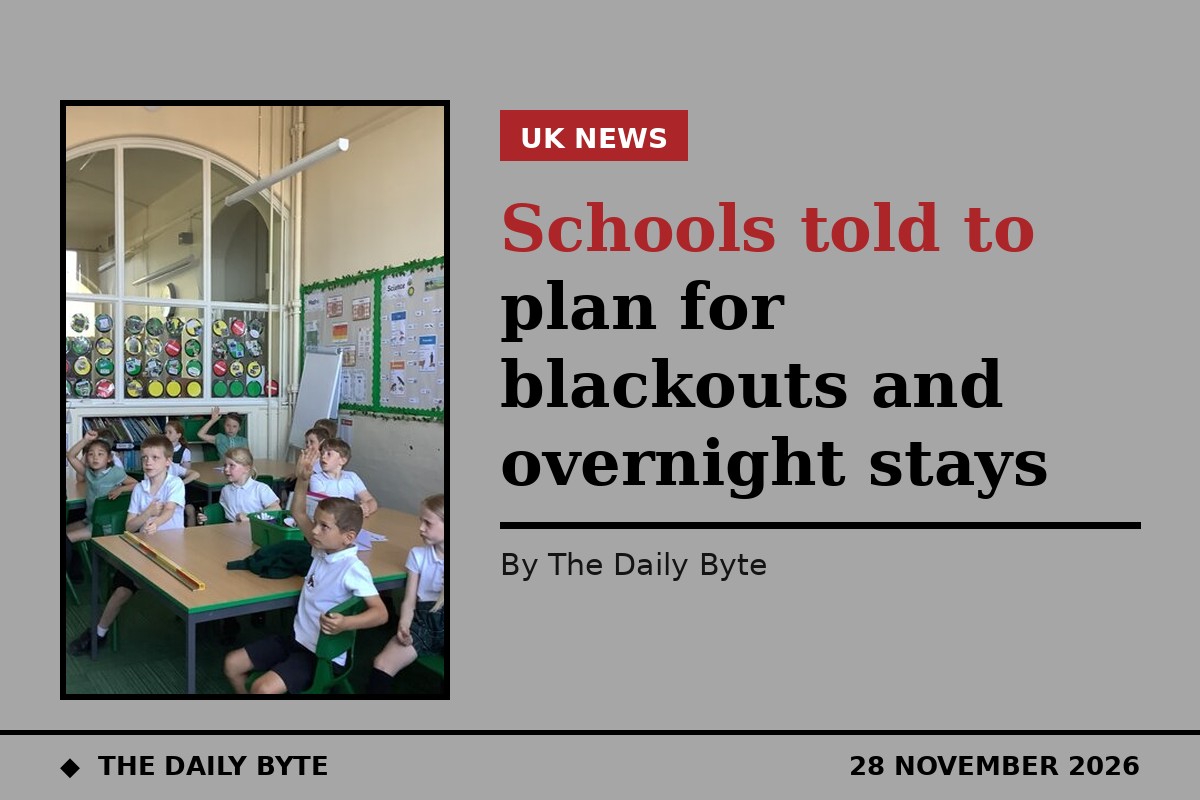
Schools in England have been told to stay open during emergencies, including a national power cut, and to plan for pupils who cannot be collected to remain on site overnight. Updated guidance from the Department for Education, published on 26 November 2026, covers schools, nurseries, childminders, colleges and children's care settings.
The guidance says closing a school will not necessarily make children safer, because the same emergency may also affect their homes and the wider community. Settings should remain open wherever it is safe and reasonably practicable to do so.
What the new guidance says
The Department for Education has published updated guidance titled "Emergency preparedness, response and recovery", alongside nine one-page emergency action cards giving staff the steps to take in the first minutes of an incident. The cards cover building failure, loss of connectivity, cyber attack, environmental hazards such as wildfire smoke, extreme weather, infectious disease, a national power outage, a physical threat and water shortage.
The guidance also identifies suspicious drone activity, chemical releases and hoax threats as potential risks for schools. It asks leaders to consider how long their school could remain open without critical services, and whether one emergency could trigger another, using the government's National Risk Register to inform their planning.
The guidance applies to England and covers childcare providers, schools, colleges, universities and other higher education providers, alternative provision and specialist settings for children and young people with special educational needs and disabilities.
What schools must do in a power cut
In the event of a national power outage, the action cards tell staff to fill drinking water supplies, use fresh food first and ensure that pupils have access to warmth and medication. Schools should also prepare their facilities for wider community use if requested, and councils may ask schools to remain open for priority groups as part of local response arrangements.
Emergency plans should show how a school would support anyone who cannot be collected or who needs to remain on site overnight, and how it would obtain water, food and essential medical supplies if deliveries were disrupted. If a school loses all connectivity, including online services and telephone lines, the guidance says it should confirm how it would contact 999 and use paper registers where necessary.
Planning should be an ongoing process rather than a one-off activity, the Department for Education says. Schools should regularly test their plans through exercises, including practising lockdown and evacuation procedures and testing emergency communications, and keep records of exercises and improvements.
Who gets priority
Schools should prioritise the attendance of vulnerable pupils, children of critical workers and those due to sit exams. Children of critical workers include those whose parents are armed forces personnel and workers in the civil nuclear, energy or telecommunications sectors, as well as teachers and school support staff.
Multi-academy trusts are expected to coordinate responses across their schools and share resources and advice. The guidance also encourages schools to build relationships with emergency services, infrastructure providers and other local partners before an emergency occurs.
Reaction from school leaders
The Association of School and College Leaders said schools already strive to remain open in emergency situations and only take the decision to close where there is no alternative option. The union said schools and colleges regularly review and update their emergency arrangements.
The guidance was developed following lessons from recent incidents, including wildfires and cyber attacks. The Department for Education says further action cards may be added in future, and that the cards should remain accessible during disruptions to power, connectivity or digital systems.
The full guidance is published on GOV.UK at Emergency preparedness, response and recovery.


