Scottish prison staff quit to dodge misconduct probes
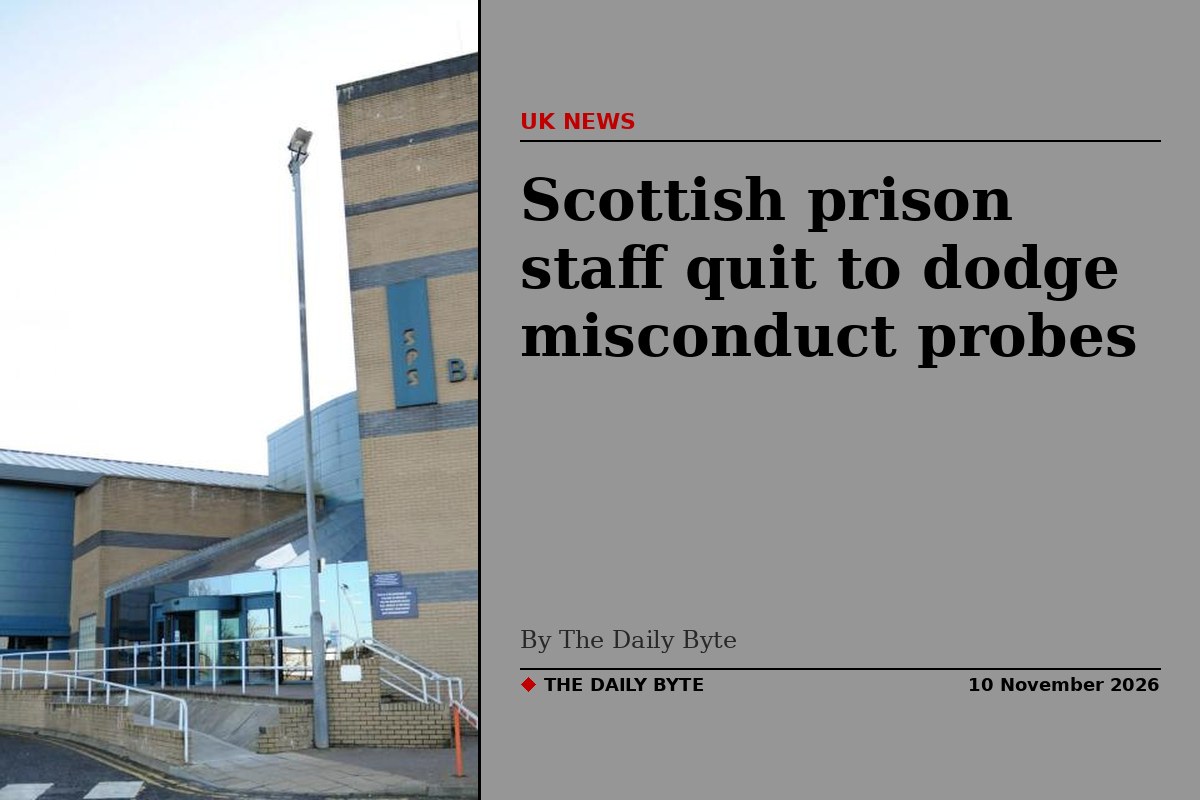
Prison staff accused of serious misconduct have been allowed to quit their jobs or retire with a payoff to escape investigation, an independent review of the culture of the Scottish Prison Service has found.
The Culture Review, carried out by Crowe Advisory and published by the Scottish Prison Service (SPS) on Tuesday, 10 November, was highly critical of the practice, which allowed staff suspected of wrongdoing to leave with what the review described as an unblemished employment record and with pay in lieu of notice.
The review said the practice had perpetuated what it called a “culture of impunity” within the organisation. It urged the prison service to continue investigating complaints even when the person accused resigns or retires, and to introduce an independent process for handling such cases. It also called for a rethink of the practice of allowing staff under investigation to resign and leave immediately with pay in lieu of notice, which meant they could not be interviewed.
Staff praised, but leadership questioned
The review was not wholly negative. Its researchers praised the “decent, professional, and committed” people working across the organisation, and concluded that the service was “well positioned to address the current challenges and achieve meaningful, lasting cultural improvement”.
Crowe’s team visited prisons and held focus groups and conversations with staff, people in custody and partners, meeting more than 700 staff. The review highlighted strengths including the professionalism, dedication and compassion of staff, strong peer support and teamwork, a shared commitment to rehabilitation and public service, and many examples of innovation and good practice at local level.
It also identified areas for improvement, including inconsistent leadership behaviours and accountability, variability in how the service’s values are experienced across the organisation, communication and openness between different parts of the service, the handling of inappropriate behaviour and confidence in processes, and operational pressures undermining progress.
What the prison service says
Linda Pollock, chief executive of the Scottish Prison Service, said she was “incredibly proud” to lead the service and that the professionalism, dedication and compassion of staff was rightly recognised and praised in the report. She said significant work was already in progress across the service that aligned with the themes and recommendations in the review, and that the service was committed to continuing to build on that progress.
Phil Fairlie, assistant general secretary of the Prison Officers Association in Scotland, said the report identified significant areas of great strength, not least staff working on the front line in incredibly challenging circumstances. He said the findings matched what the union’s own survey of members had described about the culture in which they work, and that those areas were a worry to everyone. He added that the union was already working with senior leadership to agree priorities and find improvements together.
Paula Arnold, chair of the Prison Governors’ Association in Scotland, welcomed the publication of the report and said its findings closely aligned with a separate study of the lived experiences of prison leaders in Scotland, carried out by the University of Lincoln.
Political reaction
Stephen Kerr, justice spokesman for the Scottish Conservatives, described the report as damning and said it left SNP ministers with very serious questions to answer about the culture within the prison service.
The review was conducted during a period of significant pressure on the service, with the prison population at a record high and challenges from serious and organised crime, the threat of illicit substances, and an ageing prison population with increasing social care needs. Last week there were 8,527 people in custody in Scotland, close to a record high.
The Scottish Prison Service said work already under way included revisions to its suicide prevention strategy, a review of items in use at HMP and YOI Polmont, and a mandatory 72-hour observation period for all young people entering custody. It said it would continue working on the improvements identified in the review, in line with its values, for staff, people in its care and their families.