US Senate Advances Energy Permitting Bill 73–25
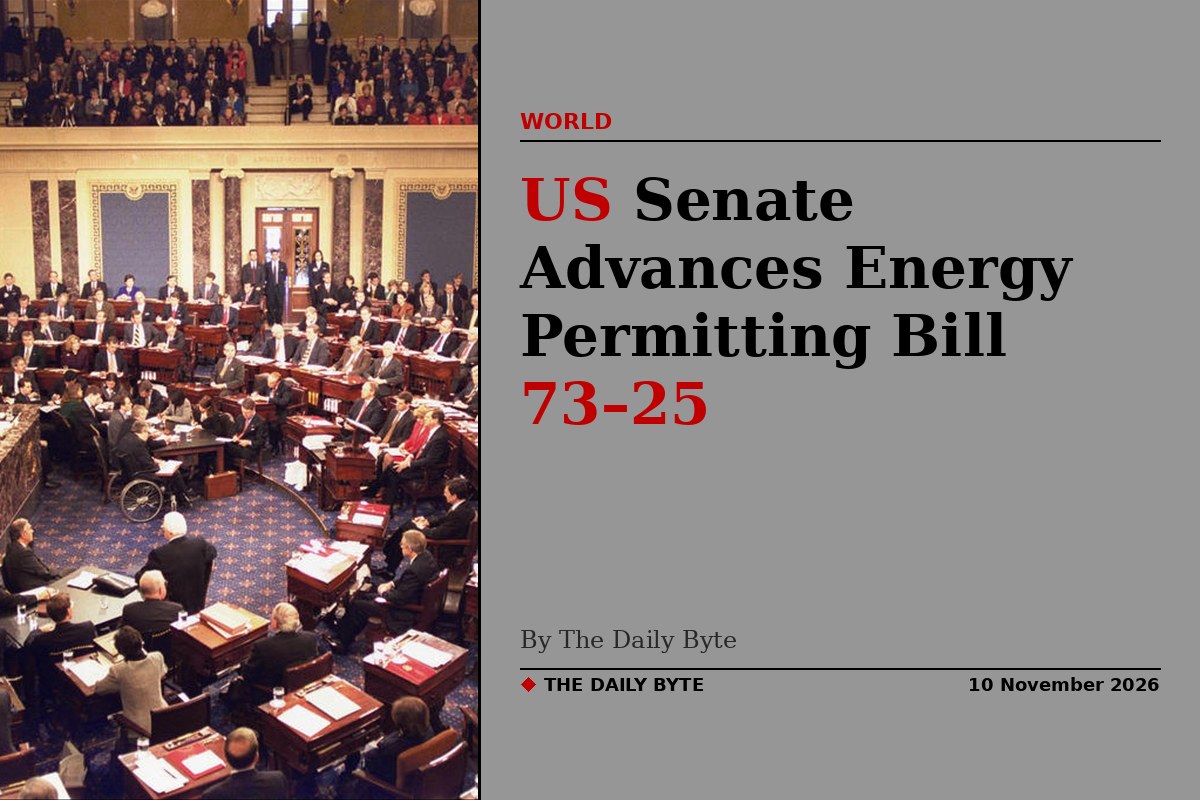
The United States Senate voted 73–25 on Monday to take up a bipartisan bill that would speed up federal permits for energy and infrastructure projects, clearing the first hurdle for a package that has been years in the making.
The vote opens debate on the Bipartisan American Affordability and Jobs Act, known as BAAJA. It does not enact the bill: the Senate and the House of Representatives would still have to agree on the same text before it could go to the president.
The result was bipartisan. About 51 Republicans, 21 Democrats and one independent voted to proceed, according to reports of the vote, with several Democrats who backed opening debate yet to commit to final passage.
What the bill would change
The measure would change how federal agencies review projects and how certain permitting decisions can be challenged in court. Its supporters say shorter reviews would get more power plants, transmission lines and mines built as electricity demand grows.
The bill would also require large data centres to cover more of the transmission costs linked to serving them, and it would set up a new Department of Energy programme to help communities assess the effects of data centres on electricity costs, water and local infrastructure.
A revised text released on Saturday reflects negotiations among Republican Senators Mike Lee and Shelley Moore Capito and Democratic Senators Martin Heinrich and Sheldon Whitehouse, the bill's sponsors.
The changes added requirements for tribal consultation, expanded the role of states in transmission planning and utility oversight, and adjusted provisions affecting electric cooperatives and public power utilities.
Tribal and environmental objections
The bill still faces opposition from environmental and tribal groups. Nearly 100 Native American organisations urged Congress on Monday to halt consideration of the bill, saying it would weaken protections for tribal sovereignty, sacred sites and cultural resources.
Heinrich said the manager's amendment had strengthened tribal protections considerably, requiring federal agencies to consult tribes throughout the permitting process, giving tribes an equal role with states in transmission planning, and expanding opportunities to object to projects affecting cultural resources.
Environmental groups, including the League of Conservation Voters, said the changes were improvements but that the bill still carried significant risks for public lands and environmental protections. Critics also oppose limits on judicial review and changes to environmental and endangered species protections.
Wind projects and Trump's position
President Donald Trump said on Monday that he supported the bill but would not approve wind turbines, a position that could complicate passage. His opposition to wind projects had almost derailed Senate negotiations earlier this year.
Whitehouse sought to reassure Democrats worried about the administration's treatment of renewable energy projects, saying the administration had assured him that a backlog of hundreds of wind energy permit applications stalled at the Department of Defense would begin moving through the approval process.
"This bill is the floor, not the ceiling, of our climate and environmental aspirations," Whitehouse said. "We look forward to working to accomplish big things with our big Democratic majorities."
What happens next
The Senate will now debate the bill and consider amendments, with a final vote still to come. Its path in the House is uncertain: House Democratic leader Hakeem Jeffries's office has raised objections to the proposal, including over tribal sovereignty provisions and a proposed reform of a broad environmental law.
The vote came days after the midterm elections in which Democrats won control of Congress, and the bill's Democratic sponsors argued against shelving it until next year, saying it would deliver near-term savings on electricity costs and provide a foundation for further climate and environmental legislation under a Democratic-controlled Congress.
Even so, several Democrats who voted to open debate have not committed to final passage, and the bill's odds of becoming law before the new Congress begins in January remain uncertain.


