Serbia Sets Presidential Vote for 27 December
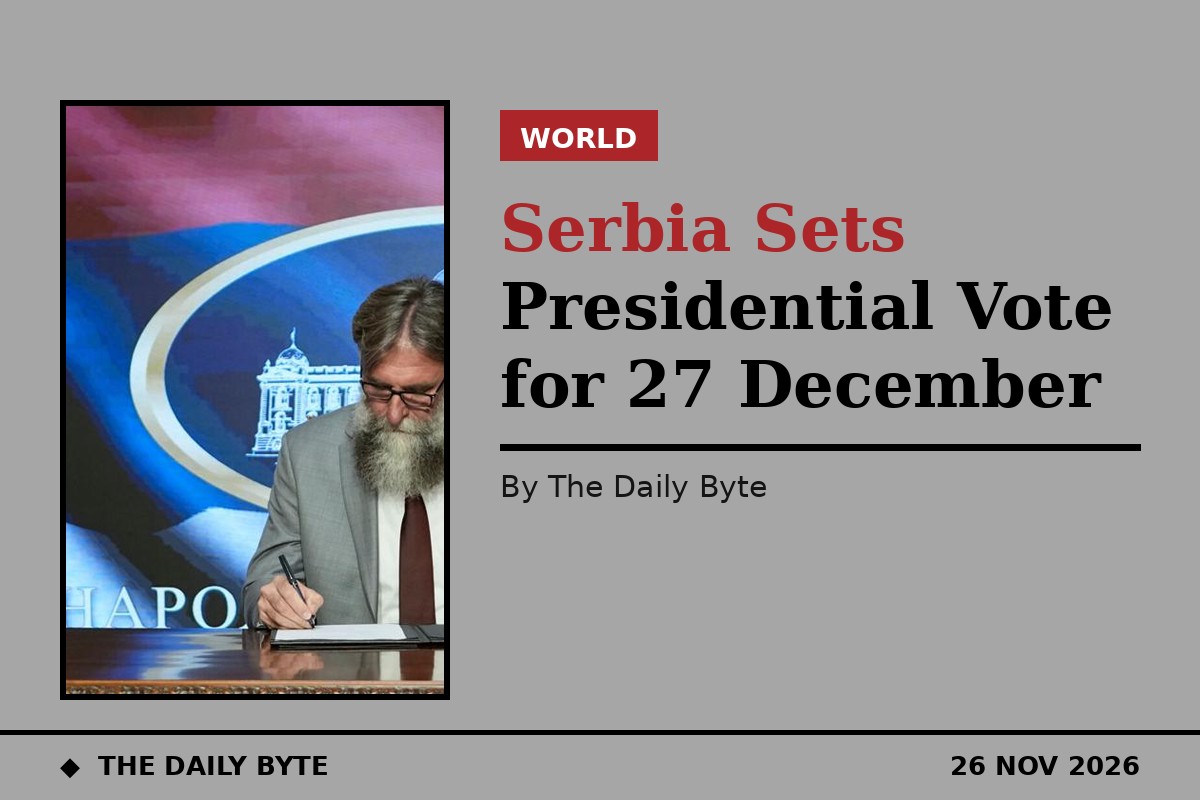
Serbia will hold an early presidential election on Sunday 27 December, after the speaker of parliament formally called the vote on Thursday, setting the date for a contest that will close a turbulent political year in Belgrade.
Aleksandar Cupic, the parliament speaker who has served as acting president since his election to the post on 19 November, signed the decision at noon in the National Assembly building. "I call all citizens of Serbia to show responsibility and come out and vote on December 27," he said after signing.
The early election follows the resignation of former president Aleksandar Vucic on 27 September. Vucic stepped down before the end of his second term to lead his Serbian Progressive Party (SNS) into a snap parliamentary election on 25 October, a gamble that ended in a landslide defeat at the hands of candidates backed by a student-led protest movement.
Vucic had dominated Serbian politics for 14 years and served two near-complete five-year terms as president. The constitution bars him from seeking a third term, which is why he instead tried to return as prime minister.
Candidates still to emerge
It is not yet clear who will contest the presidency. The student movement says it has chosen a candidate but has not yet announced a name, while Vucic has suggested his party could sit out the election altogether. No final decision from the SNS has been announced.
"I hope we will have a tough choice between top candidates and their programs," Cupic said. "Building democratic institutions is the task for all of us."
A ceremonial post with real weight
The Serbian presidency is largely ceremonial. The president commands the armed forces, has a say in foreign policy, proposes the prime minister-designate after consulting political parties, appoints and dismisses army chiefs, and can dissolve parliament at the government's request. Executive power rests with the government and the prime minister.
In practice, however, Vucic concentrated power in the presidency while he held it, regularly announcing major state decisions and policies and even presiding over government sessions, and facing accusations of authoritarian rule. The December vote will therefore be read as a test of whether the post-Vucic transition produces a president aligned with the new parliamentary majority or one drawn from the old ruling party.
From street protests to power
The student movement that defeated Vucic's party led two years of street protests that began after a train station canopy collapsed in the northern city of Novi Sad, killing 16 people. Many blamed the tragedy on corruption and negligence during the building's renovation.
Since losing power, Vucic has accused the election winners of imposing "revolutionary terror", although his government remains technically in control until a new one is formed. The change of power has also brought a surge in detentions of officials and police officers suspected of abusing their positions during Vucic's rule.
What happens next
The winner of the 27 December vote will serve a five-year term. Campaigning will now begin in earnest, with the first test being whether the student movement names its candidate and whether the SNS decides to field one of its own or stay out of the race entirely.


