Shared e-bikes face licensing in England crackdown
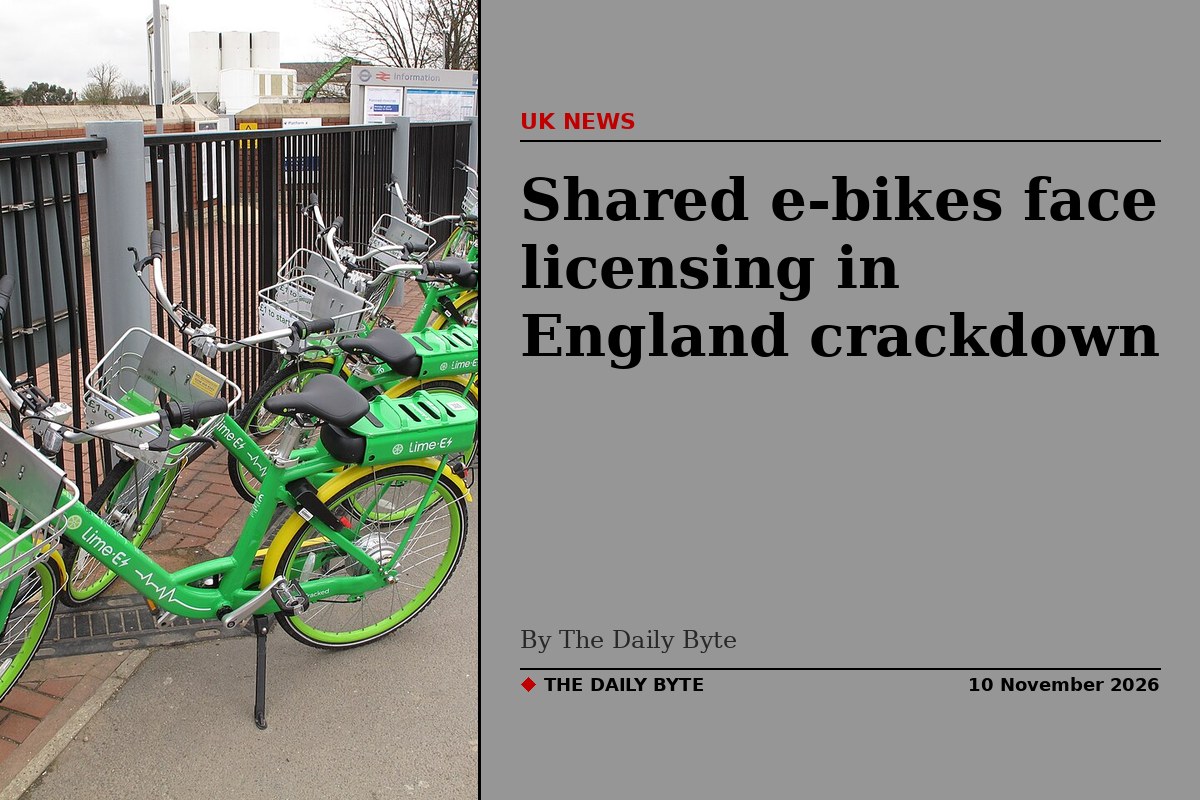
Shared e-bike hire schemes in England would need a licence to operate under government plans aimed at ending what ministers call the "wild west" of pavement parking. The Department for Transport opened a consultation on 5 November 2026 setting out national standards for shared cycle and e-cycle hire schemes, and it closes at 11.59pm on 31 December 2026.
Under the proposals, local leaders in England would be able to licence schemes in their area and enforce minimum standards. Operators named in the plans include Lime, Voi, Beryl, Dott, Forest and Bolt. Once the regulations take effect, running a qualifying scheme without a licence would become a criminal offence, carrying a potentially unlimited fine.
What a licence would require
The Department for Transport would set minimum conditions for every licence, which local licensing authorities could add to. Operators would need a parking plan, a plan for dealing with antisocial and illegal behaviour, and fleet management and maintenance plans, with defined fleet sizes and operating areas.
Ministers are also consulting on whether local leaders should be able to set fees and require operators to share ride data to improve enforcement and journey planning. Whether insurance should be a mandatory licence condition is still undecided.
The consultation sets out four objectives for licensing: promoting active and sustainable travel, ensuring safety and accessibility for users and non-users, integrating schemes into wider transport networks, and enabling stable, well-managed schemes that communities can rely on.
The legal basis and the London question
The powers rest on the English Devolution and Community Empowerment Act 2026, passed in April 2026, which lets the government make regulations to licence shared micromobility schemes. The consultation covers how those powers would be used for shared cycles, including e-cycles.
The scheme is England-only. In London, the transport secretary is working with the Mayor and Transport for London on devolving the powers to TfL, so that one body enforces the rules across the capital instead of 32 boroughs applying different standards.
E-scooters are not covered by this consultation. They remain illegal to use on the road except in the government's rental trials, where a separate, temporary regime applies. Schemes run directly by a local authority, such as the docked Santander Cycles in London or Greater Manchester's Starling Bikes, would also not be subject to these standards.
Why ministers say action is needed
Transport Secretary Heidi Alexander said shared e-bikes had become an increasingly popular way to get around, but that badly parked bikes and antisocial riding had become a familiar frustration. Prime Minister Andy Burnham said e-bikes "can be a real frustration" when used irresponsibly or parked obstructively on the pavement.
Roads Minister Justin Madders, who is responsible for micromobility policy, said in his foreword to the consultation that e-bikes can play "a significant role" in the government's aim of delivering economic prosperity, and that improving local transport connectivity and choice can help break down barriers to opportunity.
Operators themselves have called for regulation. The department said the sector wants an end to the "patchwork of rules for operating in different areas", and the major companies have welcomed the consultation. According to industry body CoMoUK, there are almost 70,000 rental cycles in the UK as of March 2026, up from 50,000 in March 2024, with e-cycles making up 70 per cent of the fleet in 2024.
What happens next
These are proposals, not rules already in force. The consultation runs for 100 questions, asking people about their experience of hire schemes and any accessibility difficulties, such as a poor sense of balance or hearing difficulties, that affect how they perceive e-bikes. Responses can be sent by email or by post to the Department for Transport, and the consultation closes on 31 December 2026. How long implementation would take after that has not yet been decided and will depend on the final shape of the licensing requirements.


