Shekel slides as Israel election points to deadlock
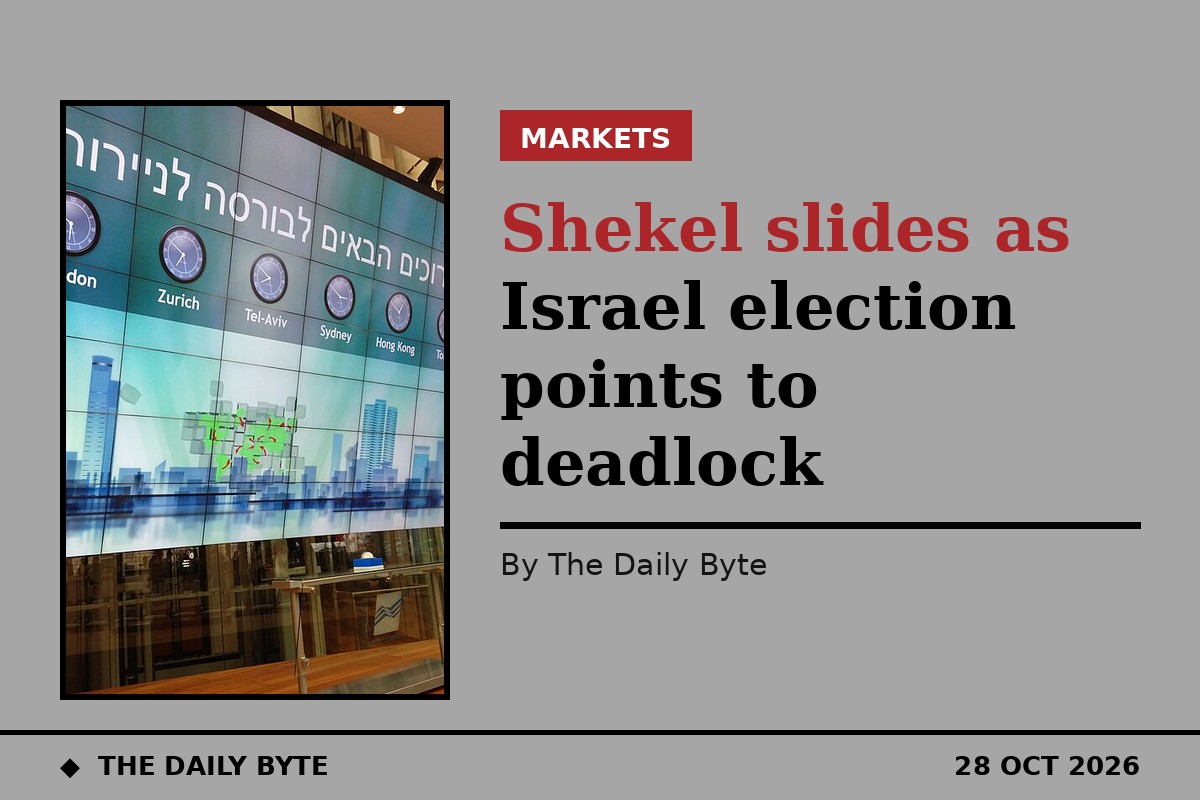
Israel's currency and stock market came under clear pressure on Wednesday as partial results from Tuesday's general election pointed to a hung parliament rather than a decisive winner. With about 71% of votes counted, Prime Minister Benjamin Netanyahu's right-wing bloc was projected to win 54 seats in the 120-seat Knesset, well ahead of the 47 projected for the opposition bloc led by Gadi Eisenkot, but still seven seats short of the 61 needed to govern. Arab parties were projected to win 19 seats, leaving neither side with a straightforward route to a majority, and definitive results were expected on Thursday.
Why traders disliked the result
The market reaction was swift. The shekel weakened to between about 3.09 and 3.1185 to the dollar, a fall of roughly 1–2%, putting it on course for its worst day in about 16 months and reversing Tuesday's gains, when high turnout had raised hopes of a change of government. Tel Aviv's TA-125 index fell by around 2–3%, with banking, insurance and construction shares hardest hit, while the 10-year government bond yield rose to about 4.1%. Longer-dated Israeli debt abroad also slipped slightly.
What to watch next
Analysts said the problem was not who finished first, but how fragile any government formed on these numbers looks. Capital Economics' William Jackson said markets had reacted negatively because the results offered more paths for Netanyahu to stay in power, yet any government that emerged was unlikely to be robust. If neither leader can build a coalition, another election becomes possible, with Netanyahu staying on as caretaker in the meantime.
Investors will now watch Thursday's final count and the coalition talks that follow. The US Federal Reserve's rate decision, still pending at the time of writing, is a second live factor for the shekel and global markets. Israel's markets have risen strongly over three years of war and political turmoil, supported by technology and higher defence spending, but Wednesday's sell-off showed deadlock can still unsettle them quickly.
Sources: Reuters and CTech (Calcalist).