Gill wants saliva ban lifted after Wellington draw
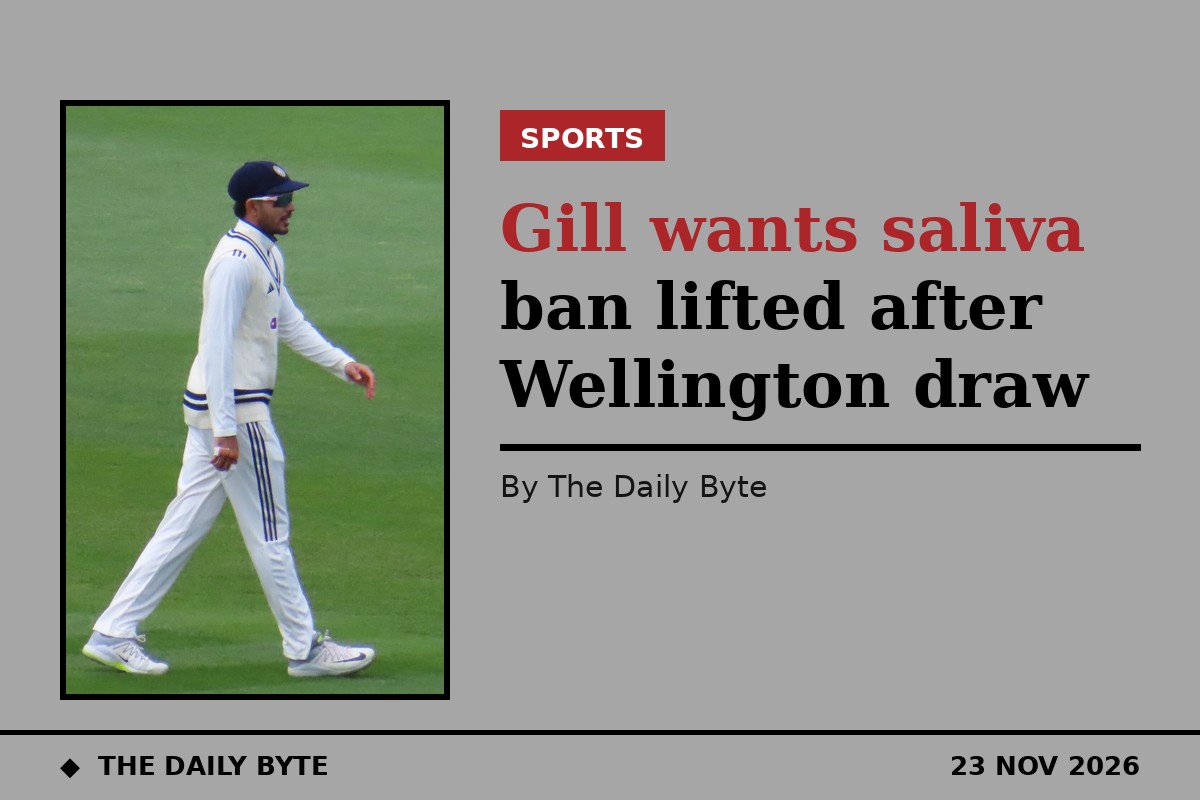
India captain Shubman Gill has called on cricket's lawmakers to lift the ban on using saliva to shine the ball, arguing that the rule no longer makes sense years after the Covid-19 pandemic.
Gill raised the issue at his post-match press conference on Monday after India's bowlers were unable to force a result on the final day of the drawn first Test against New Zealand at the Basin Reserve in Wellington.
"We are way past Covid times. There was a rule that you can't put saliva on the ball to make it shine. It's been seven-eight years and I still don't understand why they are not allowing it," Gill said.
A flat pitch and a soft ball
Gill's frustration was easy to understand. India had declared their first innings at 720 for nine, a lead of 352 runs, and gave their bowlers around 135 overs to dismiss New Zealand a second time. But the hosts batted through the final day, finishing on 239 for five after 120 overs, with Daryl Mitchell unbeaten on 49 from 186 balls and Glenn Phillips not out on 26 from 126 deliveries.
The pair added an unbeaten 63 runs for the sixth wicket, and New Zealand lost only three wickets on the final day after resuming on 119 for two. The two sides shook hands before the final hour, and the match ended in a draw.
Gill said the Kookaburra ball had gone soft after only 25 to 30 overs, leaving his bowlers with little to work with on a pitch that offered almost no assistance. "Our first ball was very soft after 25-30 overs. I think the other team also complained," he said. "In such conditions, if there is no help from the wicket, and on top of that, the ball has become soft, then it becomes very difficult for the bowlers to take wickets."
He also pointed to similar problems with the Dukes ball during India's tour of England last year, saying the ball had gone soft quickly in the first three or four matches there as well.
How the ban came about
The International Cricket Council introduced a temporary ban on saliva in May 2020 as a health measure during the pandemic, while still allowing players to use sweat to polish the ball. The restriction was made permanent in September 2022.
Bowlers use saliva and sweat to keep one side of the ball shiny, creating the contrast between the two sides that helps the ball swing in the air and, with an older ball, produce reverse swing. Gill argued that without saliva, bowlers struggle to maintain the ball on unresponsive pitches, leaving them with fewer ways to take wickets.
The Board of Control for Cricket in India lifted the saliva ban for the Indian Premier League in 2025 after feedback from franchise captains, but the restriction remains in force in international cricket.
Siraj call defended
Gill also defended his decision to leave fast bowler Mohammed Siraj out of the playing eleven for the Wellington Test, calling it a very tough decision. He said Siraj, or anyone else, might not have made much difference on a pitch with no pace in it.
The draw was India's second straight drawn Test, and both sides took four World Test Championship points from the match. India stayed fourth in the standings on 50 per cent, with New Zealand third on 66.67 per cent.
Whether the ICC revisits the saliva rule remains to be seen, but Gill has now put the debate firmly back on the agenda — and after 120 wicketless overs in Wellington, his bowlers would agree with every word.