Shuri Castle Reopens Seven Years After 2019 Fire
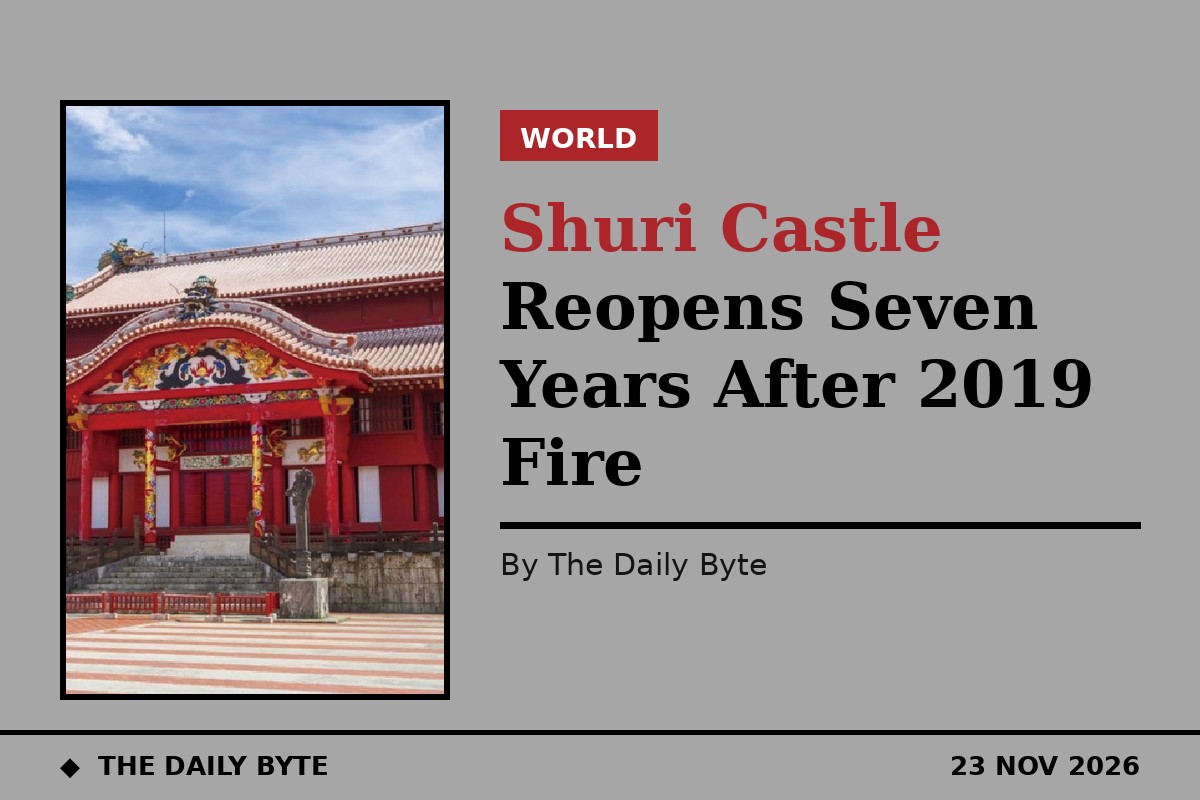
The restored main hall of Shuri Castle opened to the public on Monday, 23 November, for the first time in seven years, returning one of Okinawa's most recognisable landmarks to visitors after it was destroyed by fire in 2019. Visitors who had booked in advance were admitted to the hall from noon, with entry to the interior managed through timed reservations.
The opening followed a ceremony in the castle courtyard on Sunday, when officials and residents gathered to mark the completion of the reconstruction. About 500 people took part in the event, organised by the Okinawa prefectural government, which featured local high school students performing court dance from the era of the Ryukyu Kingdom, a song about how timber for the castle was transported in centuries past, and performers dressed as a king and queen of the kingdom.
Okinawa Governor Genta Koja, who grew up in the Shuri district and took office at the end of September, told the ceremony that the fire had been a tremendous shock to the people of Okinawa. “Seven years after the major loss, as we mark this milestone of the main hall restoration, I am deeply moved and delighted,” he said. He thanked the historians, artisans and other experts from across Japan who contributed to the rebuilding, as well as donors at home and abroad, and called for the rest of the castle to be rebuilt, describing the opening of the main hall, known as the Seiden, as “not the end”.
The fire broke out in the early hours of 31 October 2019, while the castle was hosting a festival, and spread from building to building in strong winds. Firefighters struggled for nearly 12 hours to contain the blaze. It destroyed the Seiden and two adjacent halls, along with four nearby structures, while two other structures were heavily damaged. Investigators could not determine the cause of the fire, but considered an electrical fault the likeliest explanation.
Rebuilding the hall took years of work by craftsmen and specialists in carpentry, lacquerwork, traditional roof tiles, sculpture and ceramics, drawing on techniques passed down through generations. The main hall has been reproduced to resemble the original building more closely than the previous restoration, based on new findings from historical documents, including the ingredients of its red pigment. Experts traced the pigment to iron bacteria found in northern Okinawa, and after lengthy experiments artisans recreated the deeper red by blending the bacteria-derived pigment with a commercial product. The striking vermilion exterior has earned the hall the nickname of a giant piece of Ryukyu lacquerware, and inside, the throne from which the kings of the Ryukyu Kingdom once presided over political affairs and ceremonial occasions has been recreated, along with the hall's elaborate decorations.
Shuri Castle was the political and cultural centre of the Ryukyu Kingdom, which lasted about 450 years from 1429 until 1879, when Japan annexed the island. The castle also embodies Okinawa's recovery from the Second World War: it burned down in 1945 during the Battle of Okinawa, which killed about 200,000 people, many of them civilians. The castle was largely restored in 1992, for the 20th anniversary of Okinawa's reversion to Japan, marking the end of the island's 27-year occupation by the United States. Work on other parts of the complex was still under way when the 2019 fire struck.
The reopening of the main hall does not complete the restoration. The castle's northern and southern buildings will continue to be rebuilt in stages, in a process experts say could take more than a decade, and the prefecture is strengthening disaster prevention measures, including monitoring systems and emergency response procedures, so that another tragedy can be prevented. For Okinawa, whose economy has long lagged behind the rest of Japan, the return of the castle also raises hopes for more visitors: Governor Koja has pledged to double the prefecture's per capita income and tourism revenue within the next decade. Admission to the restored main hall costs 1,000 yen for adults. For more detail, see the NHK World report on the reopening.


