Sierra raises $1.75bn at $30bn valuation
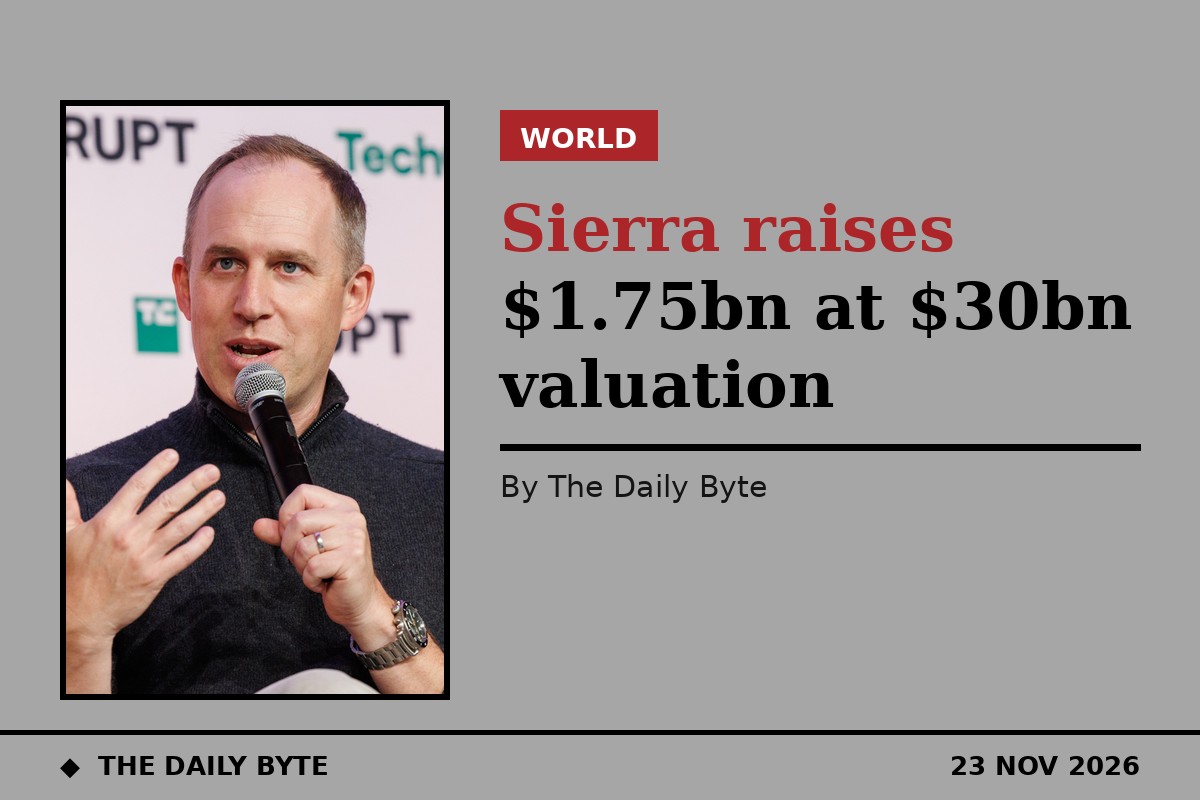
Enterprise customer-service company Sierra has raised $1.75 billion in a Series F funding round that values it at $30 billion, the company said on Monday, 23 November, roughly doubling its valuation in less than seven months.
The round was led by Greenoaks and Lightspeed Venture Partners, with all of Sierra's previous lead investors — Benchmark, Sequoia, Greenoaks, GV and Tiger Global — taking part again. Its last round, a $950 million raise in May, valued the company at more than $15 billion.
Sierra, co-founded by former Salesforce co-chief executive Bret Taylor and former Google executive Clay Bavor, builds AI agents that handle customer conversations for large companies. The company describes the agents as a "digital front door" for a business: software that answers questions, processes claims, originates loans, onboards drivers and resolves problems, rather than simply chatting with customers.
Revenue has doubled in five months
Sierra said its annual recurring revenue has passed $400 million, double the pace of five months ago, after adding more than $150 million in the third quarter alone. It says it now serves almost half of the Fortune 50, with clients including BNY, HSBC, Singtel, Wells Fargo, JPMorganChase, Pearson, Next and Cox Automotive.
The customer list matters because it is dominated by banks, insurers and other regulated businesses. Sierra's founders argue that some of the world's oldest companies — BNY traces its roots to 1784, Cigna to 1792 and JPMorganChase to 1799 — are deploying AI in customer service faster than younger firms, because the returns are measurable and the work is well defined.
Charging for outcomes, not tokens
Sierra's pitch to those customers is its pricing. It charges for outcomes — a problem resolved, a loan originated, a driver onboarded, an insurance claim paid, a subscriber saved — rather than for usage or tokens. The idea is to align the company's interests with its clients': Sierra only earns when the agent actually gets something done.
The platform also lets any team build its own agents, with an internal tool called Ghostwriter that builds, tests and deploys them, then keeps improving them by reviewing conversations and suggesting new experiments. Sierra says its "constellation of models" approach lets clients use different underlying AI models without worrying about which one is best or what the token bill will be.
Answering the bubble question
The founders used the funding announcement to address the anxiety hanging over the AI sector: that the enormous sums being invested will not deliver an adequate return. "Our experience tells a different story," they wrote. "We're seeing some of the oldest, most regulated companies in the world deploy AI the fastest — deepening their customer relationships, generating efficiencies, and driving growth."
Sierra will use the new money to build out its technology and hire more sales staff to sign enterprise contracts faster. It is also working with companies including Meta, Stripe and Walmart on protocol definitions for how AI agents interact with business systems, as personal and work agents start to transact with companies directly.
The round is one of the largest ever for an AI application company, and it puts Sierra among the most valuable private AI firms in the world. Rivals are drawing heavy capital too: voice AI company ElevenLabs is valued at $22 billion, Decagon at $4.5 billion, Wonderful at $5 billion and Parloa at $3 billion. The $30 billion price tag sets a high bar, though: Sierra must now show that automated customer service can keep growing at this pace, and that outcome-based pricing produces the margins of a software business rather than a services one.


