Silver Down Nearly 60% From January Record High
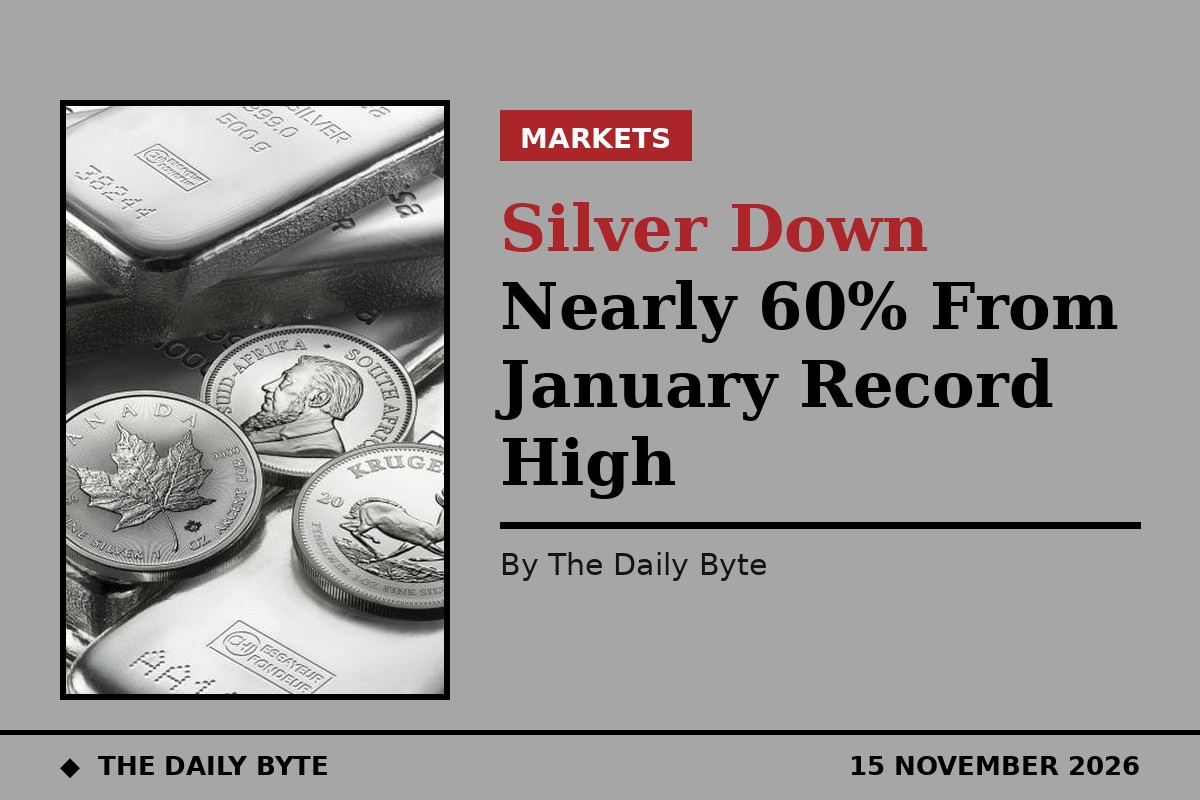
Silver traded near $48.74 an ounce on Sunday 15 November 2026, down 2.60% from the last LBMA fix, leaving the metal roughly 59% below the record high it set in late January, according to live spot price data from GoldPrice.
The scale of the reversal is extraordinary. Silver peaked at $121.62 an ounce on 29 January 2026, the culmination of a historic run through 2025. The next day it suffered one of the largest one-day collapses in decades, losing roughly 30% after the CME Group raised futures margin requirements and triggered forced liquidation. What followed was not a recovery but a grinding, year-long de-rating.
By 30 October silver had closed at $49.07 an ounce, a 12-month low after an 18% fall in the month. It recovered above $52 in early November, ending Friday 6 November at $51.89, up 5.75% on the week, before slipping back to trade around $50 to $51 on 12 November. In sterling, the Royal Mint recorded an all-time high of £91.20 per troy ounce on 29 January; by 1 November it was quoting £38.07, a fall of 58.3%.
Why silver is falling
Analysts point to three forces. Higher US interest rates and bond yields have raised the cost of holding a metal that pays no income, while a strong dollar has made silver more expensive for buyers in other currencies. The federal funds target range sits at 3.75% to 4.00%, and the 10-year Treasury yield closed above 5.14% on Friday 13 November. A sell-off in AI and technology shares has added to the pressure, spilling over into commodities.
Gold has suffered alongside silver, trading near $3,900 an ounce, roughly 28% to 29% below its own January record. Both metals have been caught between their roles as havens in a time of war and their sensitivity to US rates, and for now rates are winning.
Physical market still tight
The price collapse sits oddly against the physical market. The Silver Institute's World Silver Survey 2026, published on 15 April, forecast a sixth consecutive annual supply deficit for 2026, with demand estimated near 1.08 to 1.11 billion ounces. Preliminary estimates show solar demand falling 21% this year as high prices encourage thrifting and substitution, but industrial use remains the backbone of consumption.
Retail buyers have not walked away. The Royal Mint reported silver bullion purchases on its website up 295% year on year across the first nine months of 2026, suggesting small investors have been buying into the fall even as professional money has stepped back.
Some analysts argue the pressure is temporary. Peter Krauth of silverstockinvestor.com has said the correction reflects rates and the dollar rather than any collapse in underlying demand, and that the physical deficit should eventually reassert itself. Others caution that silver's volatility cuts both ways: the same leverage that carried it above $120 an ounce in January has punished holders ever since.
What happens next is likely to turn on the Federal Reserve's December meeting, the direction of the dollar, and whether the $49 to $50 area holds as a floor. For now, UK holders who bought bars or Britannias near the top are sitting on heavy paper losses, and the metal that began 2026 as the market's great success story has become its sharpest warning about momentum.
Sources: Discovery Alert and GoldPrice. Market information only, not investment advice.