Slovenia Freezer Hack Sets Meat Plant Chamber to 100°C
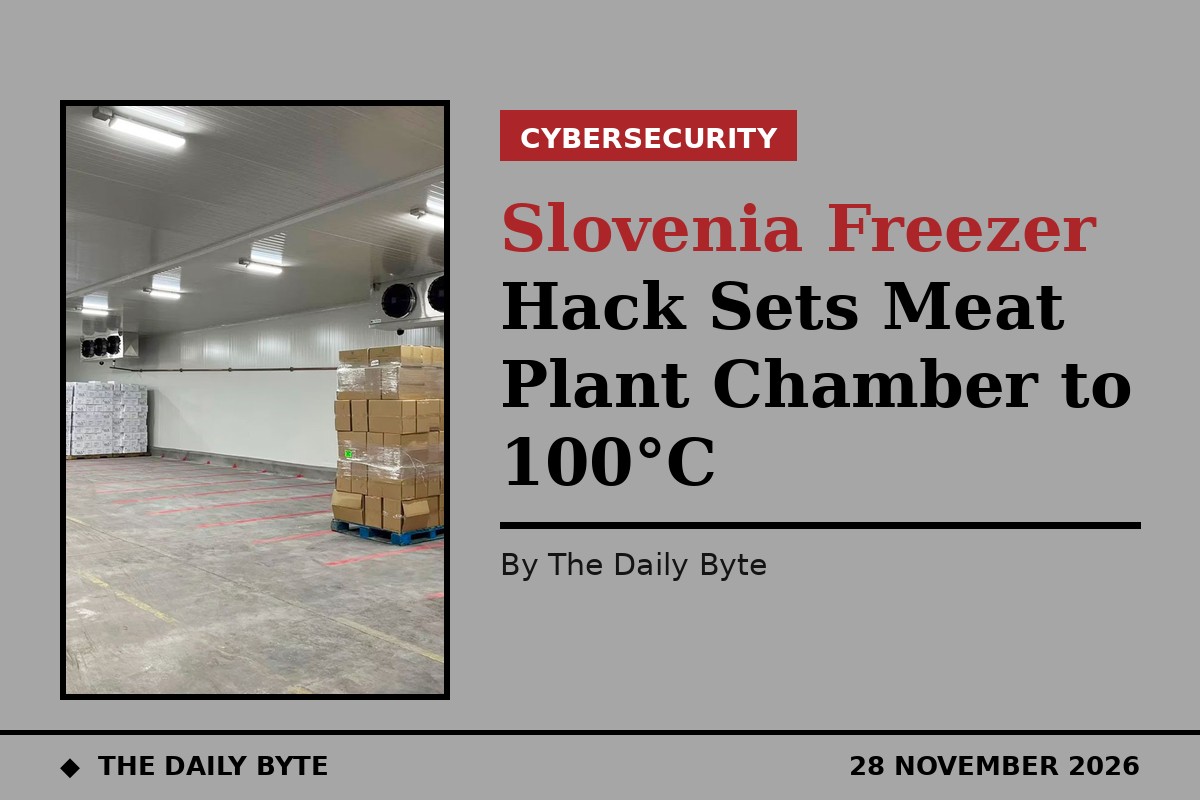
Hackers broke into the internet-connected refrigeration controls of a meat processing plant in Slovenia and changed a freezer chamber's target temperature to 100 degrees Celsius, in an attack that put about 250,000 euros worth of food at risk. Staff at Salamerija Alpija, the salami plant run by the Tolmin Agricultural Cooperative, spotted the change during a routine check around noon on 26 November 2026, before the chamber itself had time to warm up. No meat was spoiled, but the cooperative's director said the outcome could have been far worse if the attack had landed over a weekend, when the sites are unstaffed.
The employee who found the altered setting suspected a cyberattack at once, because staff had heard about recent attacks on refrigeration systems elsewhere in Europe. Workers checked the cooperative's other sites and found more tampered settings: coolers in the slaughterhouse and a refrigerator in one of the cooperative's shops had been set to 20 degrees Celsius instead of the usual 2 to 3 degrees. All of the cooling equipment was managed through an internet-connected remote system, so the cooperative disconnected every refrigeration controller from the network and switched to setting temperatures by hand.
Technician locked out as login screen showed political image
When a service technician tried to log in to the cooling control system to fix the settings, his access was blocked. Instead of the usual controls, his screen showed a photograph of Italian politician Matteo Salvini with an Italian caption that translates as "thank Uncle Matteo". The cooperative has added manual temperature checks every few hours while the investigation continues. Nobody has claimed the attack, and the method the intruders used to get in has not been made public.
One detail explains why no alarm sounded. The plant's system is designed to warn staff when the temperature inside a chamber falls unexpectedly. In this case the attackers changed the target temperature in the digital control system, so the alarm's thresholds never fired. The distinction matters for every operator of connected cooling equipment: an alarm that watches the temperature in a room may not report that someone has changed the setting the equipment is told to follow.
Police investigate as SI-CERT takes the report
The Nova Gorica Police Administration said on 27 November that it is investigating a suspected criminal attack on an information system. Police said early information pointed to unauthorised access to the remote management system for the refrigeration and freezer equipment, and that access to the supervisory system had been blocked. The cooperative reported the incident to SI-CERT, Slovenia's national computer emergency response team, which confirmed it had received the report on 26 November. Police said there was no material damage because staff responded quickly.
The Tolmin incident is the latest in a run of attacks on European refrigeration. In early November, dozens of stores in Belgium, Luxembourg, Sweden, Ireland, the Netherlands and Estonia reported refrigeration temperatures as high as 50 degrees Celsius. An Estonian cold-technology distributor said attackers had reached the control computer of an older Danfoss refrigeration system, and added that some legacy units had not been updated after a similar attack in France in October that affected hundreds of stores.
No proven link to the Danfoss flaw
Separately, the United States Cybersecurity and Infrastructure Security Agency published an advisory on 24 November about a critical flaw in Danfoss AK-SM 8xxA commercial refrigeration controllers, tracked as CVE-2026-129713. There is no public evidence linking that flaw to the Slovenian incident: the Tolmin report did not identify the maker or model of the controllers involved, explain how the attackers got in, or name a suspect. The shared feature is the target, not a proven common cause.
For food producers and retailers, the practical lessons are clear. Refrigeration controllers should not be reachable directly from the internet, remote access should sit behind a virtual private network with multi-factor authentication, and control networks should be separated from ordinary business networks. Operators should use unique credentials, keep firmware current on legacy units, and fit independent temperature sensors that do not depend on the control platform. A separate alert for an unexpected change to a temperature setting can flag trouble before a room warms, and that alert needs to reach someone who can act outside normal working hours. In Tolmin, a routine walk-through caught what the alarm did not, and the test for any other cold storage operator is whether the same change would wake someone on a Sunday, and whether that person could restore safe settings without logging in remotely.


