SoftBank smart glasses caption talks for deaf staff
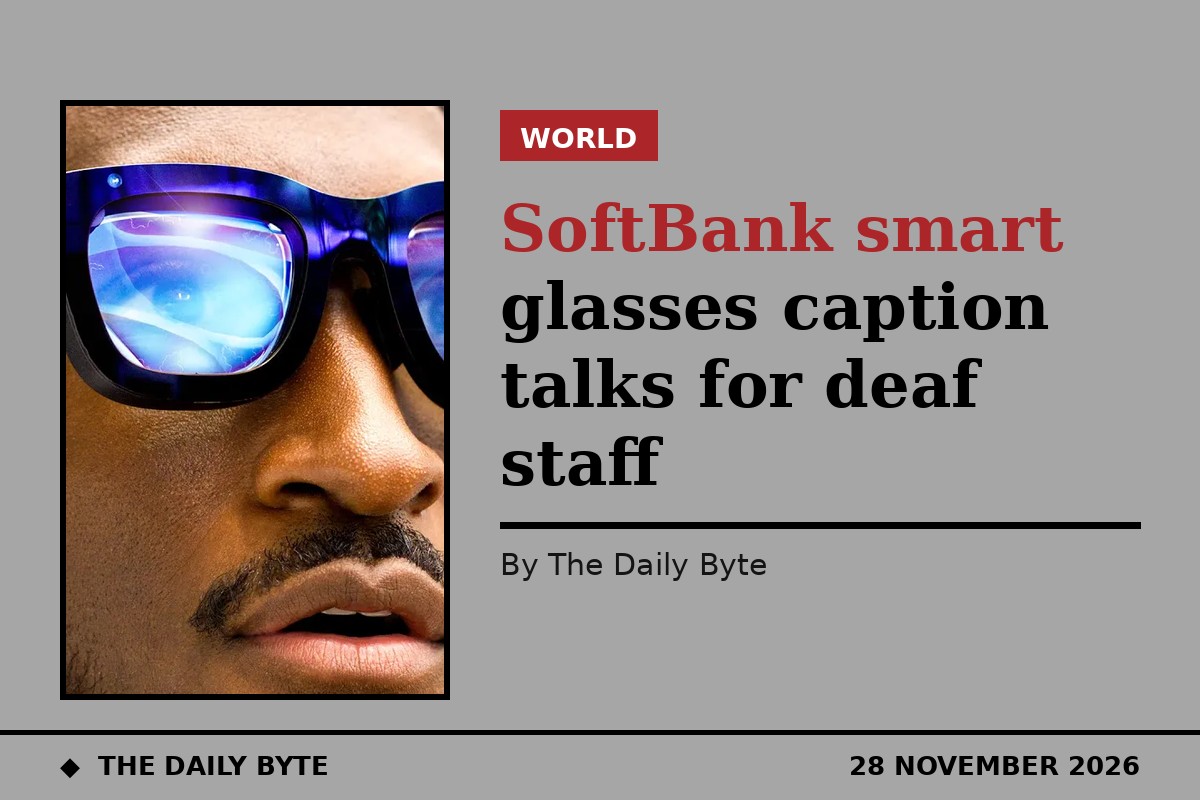
SoftBank has given smart glasses to 132 employees who are deaf or hard of hearing, turning spoken conversation into text on the lens so they can follow meetings and chats while still looking at the person speaking. The company announced the programme on 26 November, and the glasses have gone to staff who asked for them.
Captions on the lens, processed on the phone
The glasses are a commercially available model, the Even G2, paired with an app SoftBank built in-house in about two months, shaped by feedback from the employees who use them. A phone app turns speech into text and shows it on the lens, so the wearer can keep their face up, watch expressions and follow lip movements instead of looking down at a phone or a notepad. SoftBank says speech recognition and transcription happen on the phone itself, without sending audio to outside servers, and the text is then sent to the glasses.
Features built from staff feedback
The app also carries features built from staff suggestions. One lets users register their own name in advance, so if someone nearby says it, the system alerts them with a vibration and a display on the lens, helping them notice when somebody speaks to them from behind. The position of the text on the lens can be moved, and a dictionary function holds company terminology so work terms are recognised.
What staff think so far
In SoftBank's own survey of 115 employees who had used the glasses in the past month, about 70 percent said they were satisfied and found them useful for work communication, and about 80 percent said they want to keep using them. The same survey showed what still needs work: staff asked for better transcription accuracy and for help with conversations involving several people. This is an in-house workplace programme, and there is no sign the app is offered to the public. The figures come from the company's own survey, not independent testing, and the glasses have not been tried by outside reviewers. Even so, the rollout is a concrete example of caption glasses moving from demonstration into daily office use.


