Somalia Cabinet Approves Election Law Amendments Opening Direct Voting
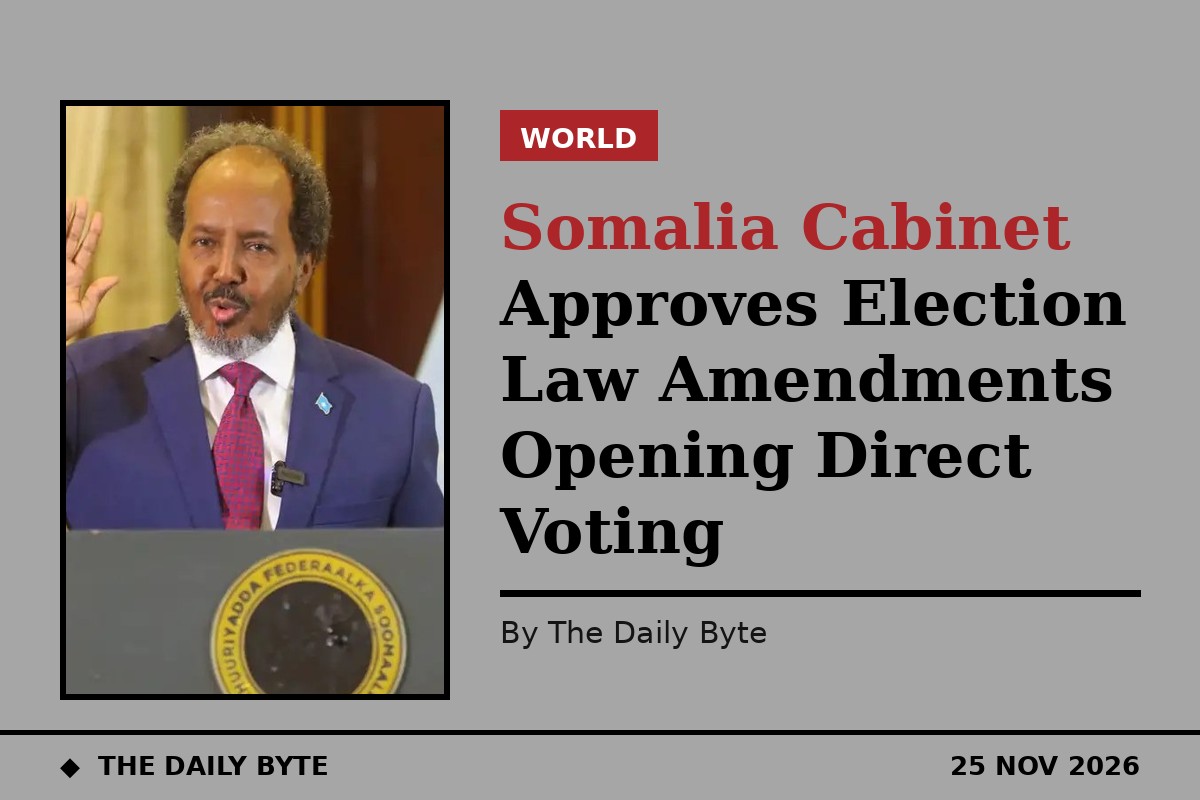
Somalia's federal cabinet has approved sweeping amendments to the country's election laws, introducing direct voting for local councils and parliament and a new system for choosing the country's senior leaders.
The decision came at an extraordinary cabinet meeting on Tuesday, chaired by Prime Minister Hamza Abdi Barre. The amendments cover 23 articles of the National Elections Law and eight articles of the Law on Political Associations and Parties. The government said the changes were drawn up to bring the two laws into line with the revised constitution and to give the electoral commission a clearer legal basis for organising the next polls.
Under the changes, citizens will directly elect local councils, federal member state representatives and members of both chambers of the Federal Parliament. Officials ranging from district commissioners up to the President will instead be elected by the respective councils, rather than through direct popular voting.
Closed lists and a 10 percent threshold
Parliamentary seats will be filled through a closed-list system, under which political organisations submit predetermined lists of candidates and voters choose a party rather than individual candidates. Seats won by each party will then be allocated according to its submitted list.
The amendments also introduce a new threshold for political organisations seeking recognition as national political parties. A political association that wins at least 10 per cent of the votes in a federal-level election will automatically qualify as a national political party.
The cabinet further agreed to give the Independent National Electoral and Boundaries Commission added powers to introduce measures aimed at making voter registration and voting easier for citizens.
Timing and the road ahead
The cabinet moved a day after President Hassan Sheikh Mohamud returned from talks with Uganda's President Yoweri Museveni in Entebbe, where the two leaders discussed efforts to revive stalled political negotiations between the federal government and the opposition, with Museveni reported to be expected to serve as a guarantor of renewed dialogue.
The amendments still need to pass through the legislative process before they can take effect, and lawmakers in both chambers will have the chance to debate and adjust the texts in the coming weeks. They land in the middle of a long-running dispute between the federal government, opposition groups and several federal member states over how the next elections should be organised, which model of voting the country should use and who should oversee the process.
The same cabinet meeting also approved an agreement between the federal government and the United Nations concerning the establishment of an office of the UN Office of the High Commissioner for Human Rights in the country. Government spokesperson Abdinasir Ahmed Bashir announced the decisions in a statement issued by the office of the Prime Minister.


