South Africa Counts the Cost as AGOA Exit Nears
South Africa is counting the wider cost of losing duty-free access to the United States, after Washington announced it intends to remove the country from the African Growth and Opportunity Act (AGOA) from 1 January 2027.
The decision, announced on 2 November, ends roughly 26 years of eligibility for South Africa, which was among the original AGOA beneficiaries when the programme was designated in 2000. Rwanda faces removal on the same date. The US cited barriers to American trade and investment, corruption, and threats to its national security and foreign policy interests.
Exports already shrinking
According to South African government figures cited by Moneyweb, exports under AGOA accounted for about 10 percent of exports to the US in 2025, down from 28 percent in 2024, and roughly 1 percent of total merchandise exports. Their value fell from about $4 billion to $1.7 billion over the same period.
Business Unity South Africa estimates that losing AGOA would add approximately 3.6 percentage points to tariffs on the goods covered by the programme. Agricultural, food-processing and manufacturing exporters face the greatest remaining exposure, alongside their suppliers and logistics providers.
Citrus growers warn of job losses
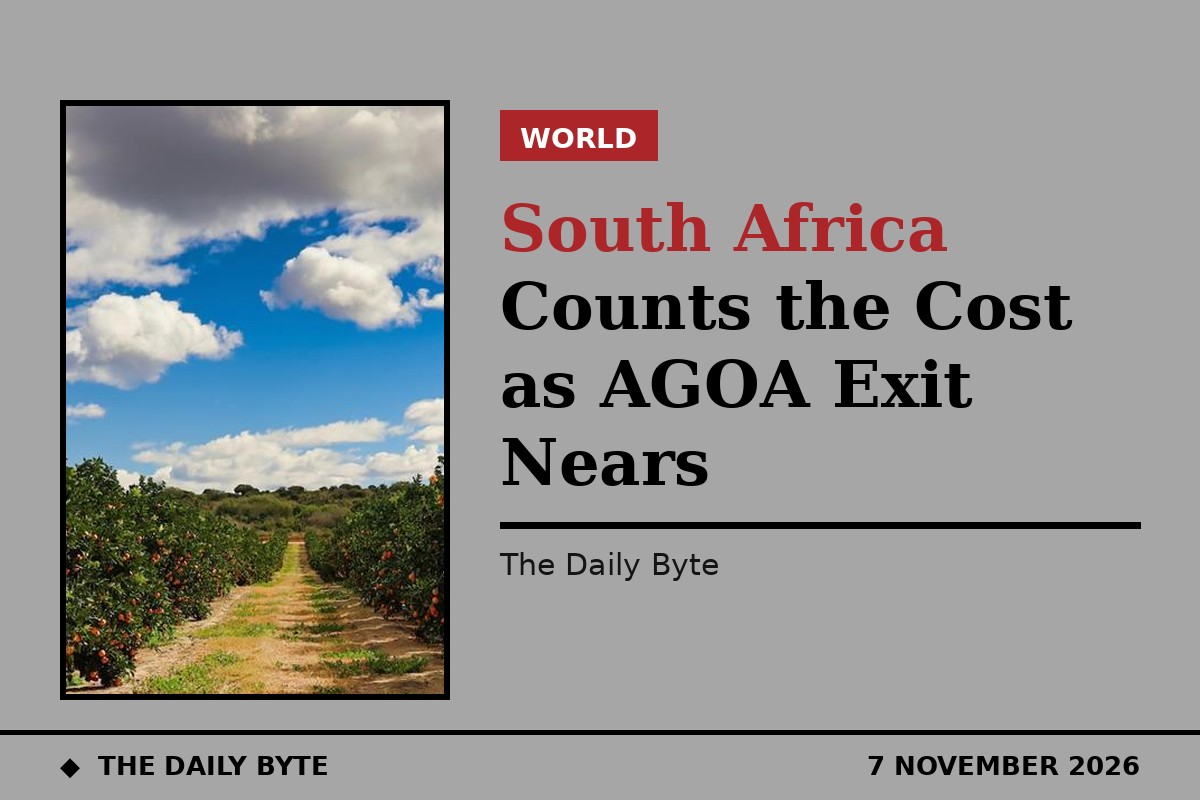
The Citrus Growers' Association of Southern Africa described the planned exclusion as a serious blow. Without AGOA, citrus exports will face US duties of generally 1.5 to 2.5 US cents per kilogram, while mandarins, lemons and grapefruit will also face a separate 12.5 percent tariff. Oranges are exempt from that additional tariff but will still lose duty-free treatment.
Labour representatives estimate between 3,000 and 10,000 jobs could be lost, with agriculture and manufacturing hit hardest. South Africa has 60 days to argue against the removal and try to persuade Washington to reverse it.