South Africa holds rate at 7.25% in split vote
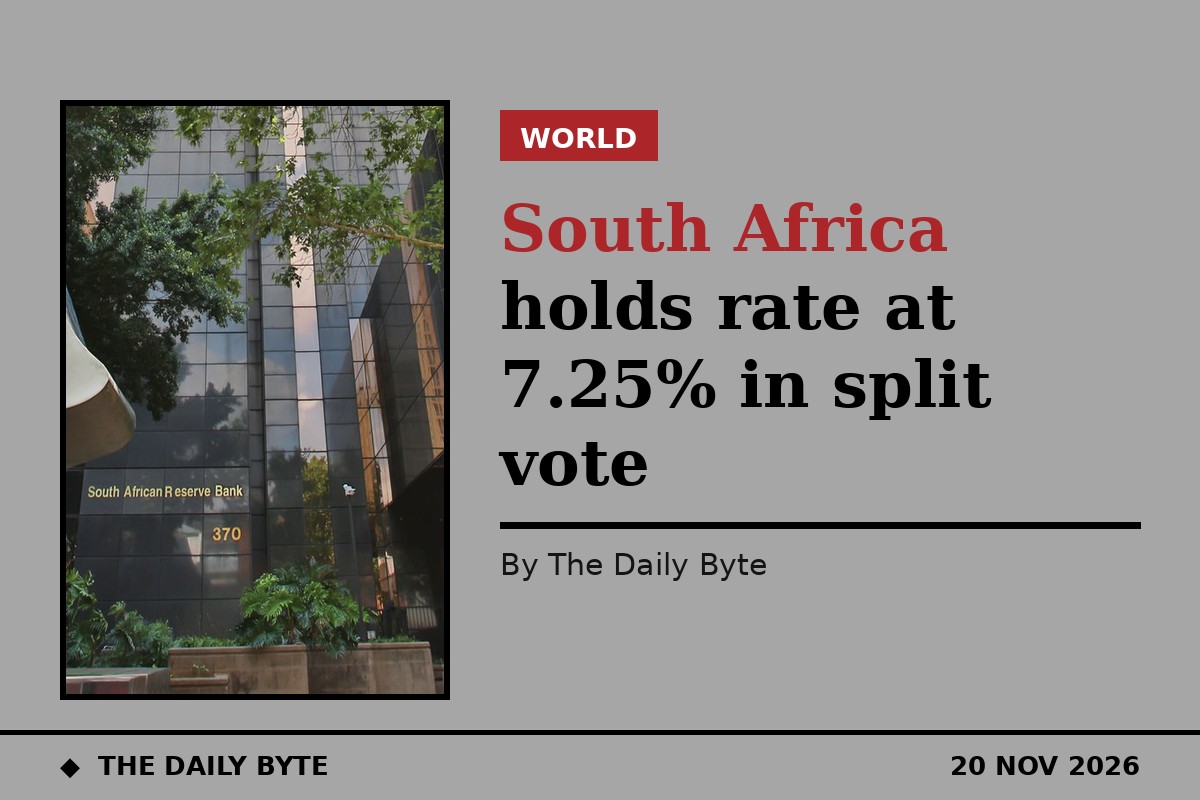
South Africa's central bank has held its main interest rate at 7.25%, in a split decision that showed its policymakers divided over how to handle inflation running at its highest in about two and a half years.
The South African Reserve Bank's Monetary Policy Committee voted four to three on Thursday, 19 November, to leave the repo rate unchanged, with three members favouring a 25-basis-point increase. The prime lending rate stays at 10.75%.
Governor Lesetja Kganyago told a press conference that the committee had decided to pause after two increases earlier this year. "With a moderately restrictive policy stance, we decided to pause for now. We are mindful of risks, and will not hesitate to raise rates if needed, to return inflation to target," he said.
Inflation at 5.2% against a 3% target
Annual consumer inflation rose to 5.2% in October, its highest in about two and a half years, Reuters reported. The Reserve Bank targets inflation of 3%, but it has been above that level for much of the year, driven by surging fuel costs linked to the war involving Iran.
The Bank has already raised rates twice during 2026, in May and September, adding 50 basis points in total and reversing part of the relief borrowers received during the previous easing cycle.
The decision was the committee's final meeting of 2026, and its next scheduled announcement is on 28 January 2027. The overwhelming majority of economists polled by Reuters had predicted a hold, but the closeness of the vote has raised fresh questions about what comes next, with economists cited in South African press coverage cautioning that the next move is more likely to be up than down.
What the hold means for borrowers
For households, the decision means no change to monthly repayments for now: the prime lending rate remains at 10.75%, and commercial banks face no new increase in borrowing costs from Thursday's announcement. But with three of the seven committee members backing an immediate increase, and the governor warning that the Bank would not hesitate to raise rates if needed, borrowers have been given a reprieve rather than a guarantee.
The Bank's decision came against a difficult economic backdrop, with food and fuel inflation climbing and households already under pressure from higher prices. Kganyago said the committee was mindful of the risks on both sides, and that policy would stay tight enough to bring inflation back to target.
Sources: Reuters; Further Africa.


