South Africa rebukes Nigeria envoy Fani-Kayode
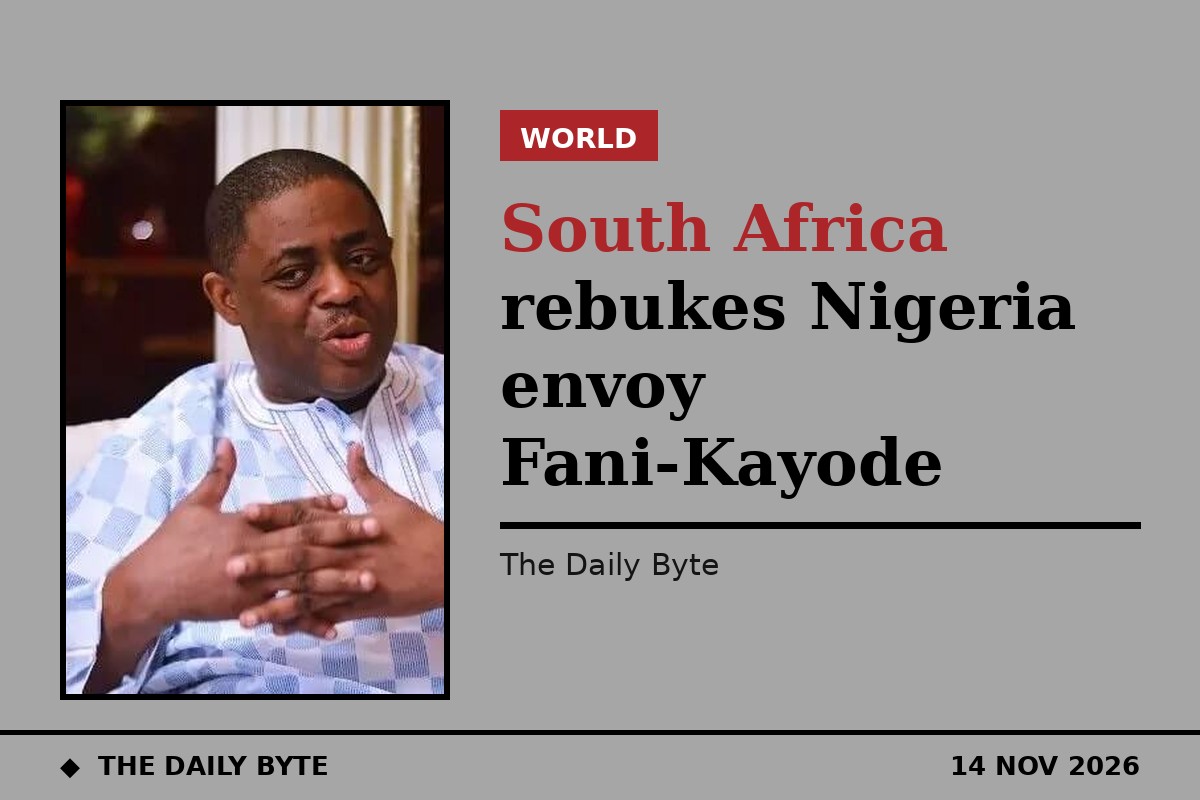
South Africa's Presidency has publicly rebuked Nigeria's newly deployed High Commissioner, Femi Fani-Kayode, after he accused the country's public broadcaster of bias and raised the matter with President Cyril Ramaphosa. The row broke out within a day of Fani-Kayode presenting his letters of credence in Pretoria on Friday, 13 November 2026.
The controversy began after Fani-Kayode snubbed a scheduled interview with the South African Broadcasting Corporation (SABC). The Nigerian envoy had accused the state broadcaster of bias, alleging that it failed to livestream the presentation of his letters of credence while airing those of other newly arrived diplomats. In his public remarks about the dispute, he also made references to President Ramaphosa, prompting a sharp and rare public rebuke from Pretoria.
Presidency says approach was grossly inappropriate
Responding in a statement, Vincent Magwenya, spokesperson to President Ramaphosa, faulted the Nigerian diplomat's approach and accused him of misrepresenting the facts about the President's involvement. Magwenya said: "Your Excellency, I deeply regret that I have to address you through a public platform. However, now that you have falsely referenced the President on a matter he has no involvement in, I'm duty-bound to clarify your misrepresentation of facts."
Magwenya emphasised the editorial independence of South Africa's public broadcaster, noting that the Presidency holds no constitutional authority to dictate coverage or operational decisions at the SABC. He said: "In South Africa, the President does not intervene on operational matters at the public broadcasters, nor did he intervene on your behalf. He simply pointed you to Sophie Mokoena, who was the most appropriate person to raise your grievance with," referring to the SABC's foreign editor.
According to the Presidency, Fani-Kayode declined to engage with Mokoena, a move Magwenya noted could have swiftly resolved the misunderstanding. He described the envoy's handling of the matter as "grossly inappropriate", adding: "The SABC is a public broadcaster. The President carries no legal or political mandate to interfere with its operations or intervene in its editorial processes. Frankly, your approach in this regard on a minor operational issue which you misunderstood was grossly inappropriate."
Envoy had pledged to rebuild relations
Despite the rocky start, Pretoria extended goodwill wishes to the new High Commissioner, urging him to mend fences with the media and respect local institutional norms. Magwenya said: "I would encourage you that as you start your tenure in South Africa, you meet with SABC to forge a mutually beneficial, respectful, and professional relationship. I wish you well on your tenure, and I hope you begin to engage the various aspects of South African society and its constitutional tenets constructively."
Fani-Kayode, who is also accredited to Lesotho and Eswatini, had pledged to rebuild diplomatic relations and strengthen historic ties between the two countries while presenting his letter of credence to President Ramaphosa in Pretoria. He conveyed President Bola Tinubu's goodwill to the South African leader and recalled Nigeria's support for South Africa during its struggle against apartheid, describing the relationship as one built on historic solidarity and mutual sacrifice.
"Nigeria and South Africa have a long history of fraternity and friendship. We fought together, we stood by you, and we gave our blood and our treasure for you during your dark days," Fani-Kayode said. He identified rebuilding confidence and addressing concerns affecting bilateral relations as key responsibilities of his assignment, adding: "Part of my job here is to reset that relationship, to come and build that bridge, and to ensure that whatever concerns we have, we can work them out and move forward together." President Ramaphosa urged the newly accredited diplomats to work closely with South Africa's Department of International Relations and Cooperation, identifying economic growth, industrial development, job creation and skills development as priority areas for cooperation. Read the Presidency's response in Klick News' report on the rebuke and the envoy's pledges in Radio Nigeria's report from Pretoria.


