South Africa Unemployment Rises to 33.7% in Q3
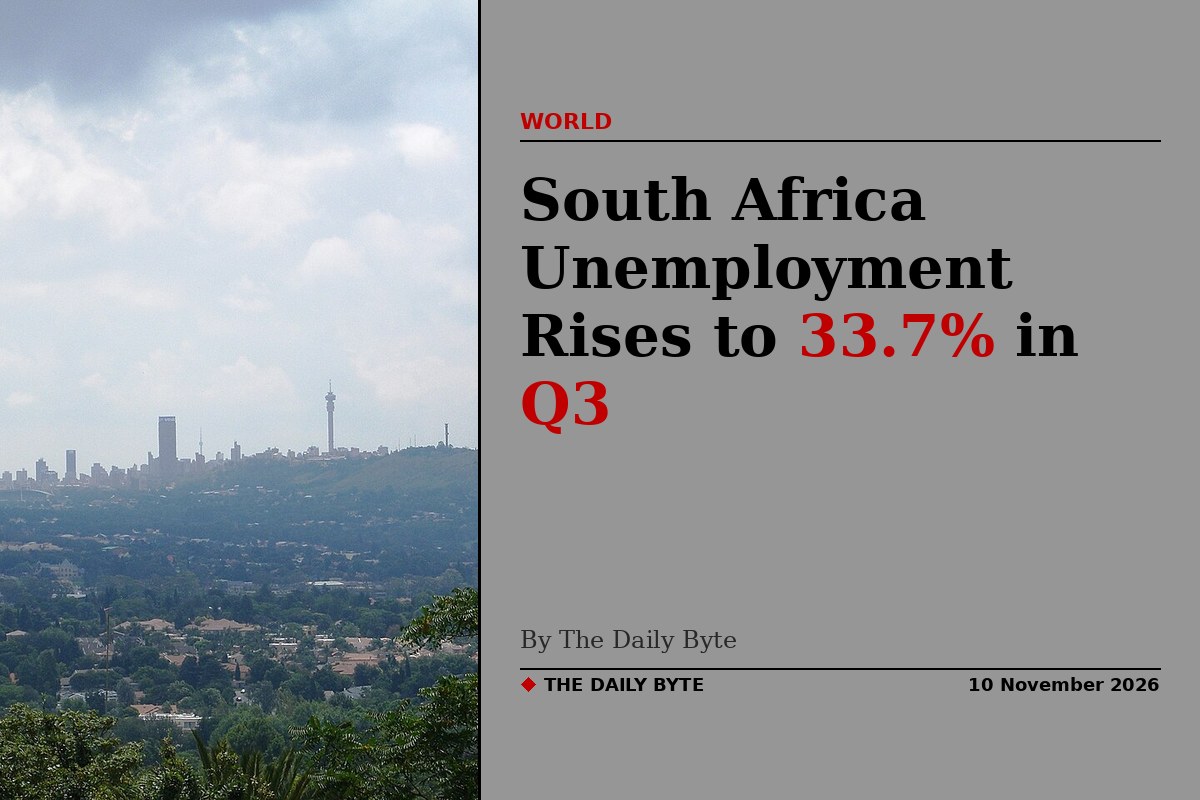
South Africa's official unemployment rate rose to 33.7% in the third quarter of 2026, Statistics South Africa (Stats SA) said on Tuesday, 10 November. The rate edged up 0.1 percentage points from 33.6% in the second quarter and stood 1.8 points above the same quarter a year earlier, when it was 31.9%.
The number of unemployed people increased by 97,000 to 8.578 million in July to September, compared with 8.481 million in April to June, according to the Quarterly Labour Force Survey. The official jobless rate has now been above 30% for six years and remains among the highest in the world.
More jobs, yet more jobseekers
The rise came despite job gains. Total employment increased by 101,000 to 16.84 million during the quarter, but the labour force grew faster, expanding by 198,000 people as more South Africans entered the jobs market or resumed looking for work.
Stats SA said the increase in unemployment during the third quarter was unusual compared with recent years. It was the first rise in unemployment in a third quarter since 2021.
Employment fell in three sectors in July to September, private households, agriculture and construction, while finance, manufacturing and mining were among the sectors that added jobs.
Broader measure reaches 44%
The broader measure of unemployment, which counts people who have given up looking for work alongside the officially unemployed, rose to 44.0% in the third quarter from 43.8% previously.
Youth unemployment edged down by 0.1 percentage points to 47.3%, with about five million people aged 15 to 34 out of work. The Eastern Cape continued to record the country's highest official unemployment rate at 44.3%, despite a 3.2 percentage point improvement from the previous quarter.
Pressure on the coalition government
The coalition government formed in 2024 has struggled to boost job creation despite prioritising economic reforms and achieving a modest pickup in growth. The figures were released the day after South Africans voted in local elections in which jobs and failing services were central issues.
The rand held steady ahead of the release, trading at 16.36 against the dollar in early trade on Tuesday, little changed from its previous close. Investors had expected the data to show a modest rise in unemployment as a challenging operating environment weighed on economic activity in the third quarter.
Stats SA was also due to publish September manufacturing output later on Tuesday. Analysts polled by Reuters expected output to have fallen 2% year on year in September, after a 4.3% drop in August, underlining the weak backdrop for hiring.
Stats SA will publish the next Quarterly Labour Force Survey, covering October to December 2026, in February 2027.


