South Kivu Displacement Toll Reaches 447,000, UN Says
By The Daily Byte
·26 Nov 2026
·2 min read
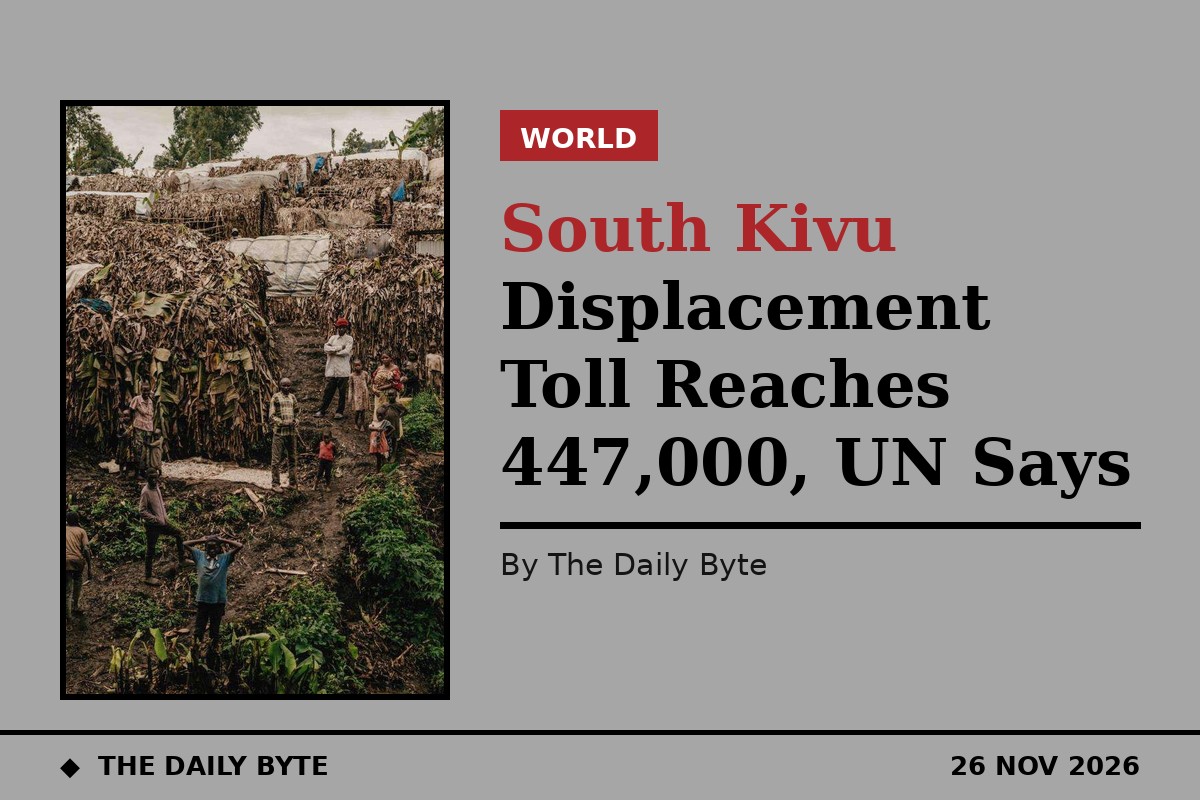
More than 447,000 people have been affected by successive waves of displacement and return in South Kivu, in eastern Democratic Republic of Congo, in less than two weeks, the United Nations humanitarian office has said. The figure is from the UN Office for the Coordination of Humanitarian Affairs (OCHA) in its second flash update, published on 24 November.
The number is not a count of 447,000 people currently displaced. It brings together repeated movements as fighting continued after 6 November: families who fled, returned, and in some cases fled again. The earlier estimate, published on 11 November, counted more than 323,000 people, about 54,000 households, displaced in Kalehe and Kabare territories between 6 and 9 November.
The fighting pits the Congolese army against the Front for the Refoundation of the Nation (FRN), the movement launched in Goma on 12 October by former president Joseph Kabila, according to Medecins Sans Frontieres. OCHA itself does not name the warring parties. The agency cites more than 224,400 displaced people in the Bunyakiri health zone as of 18 November.
Some families have begun returning: by 19 November, local sources counted more than 70,000 returnees in Kalonge, though more than 49,400 people there were still displaced. Seven health centres remain closed, and Bunyakiri general referral hospital has worked out of the Maibano health centre since 15 November, after drone strikes close to the building. MSF reports a cholera outbreak and a peak in malaria in the area.
OCHA lists shelter, food, water, health care and protection as the most urgent needs, and describes the capacity to respond as largely insufficient. Access remains heavily restricted, although traffic has partly resumed since 9 November. The agency reminds all parties of their duty under international humanitarian law to protect civilians and health facilities and to let aid through.


