South Korea Adds 139,000 Jobs as Youth Rate Hits Low
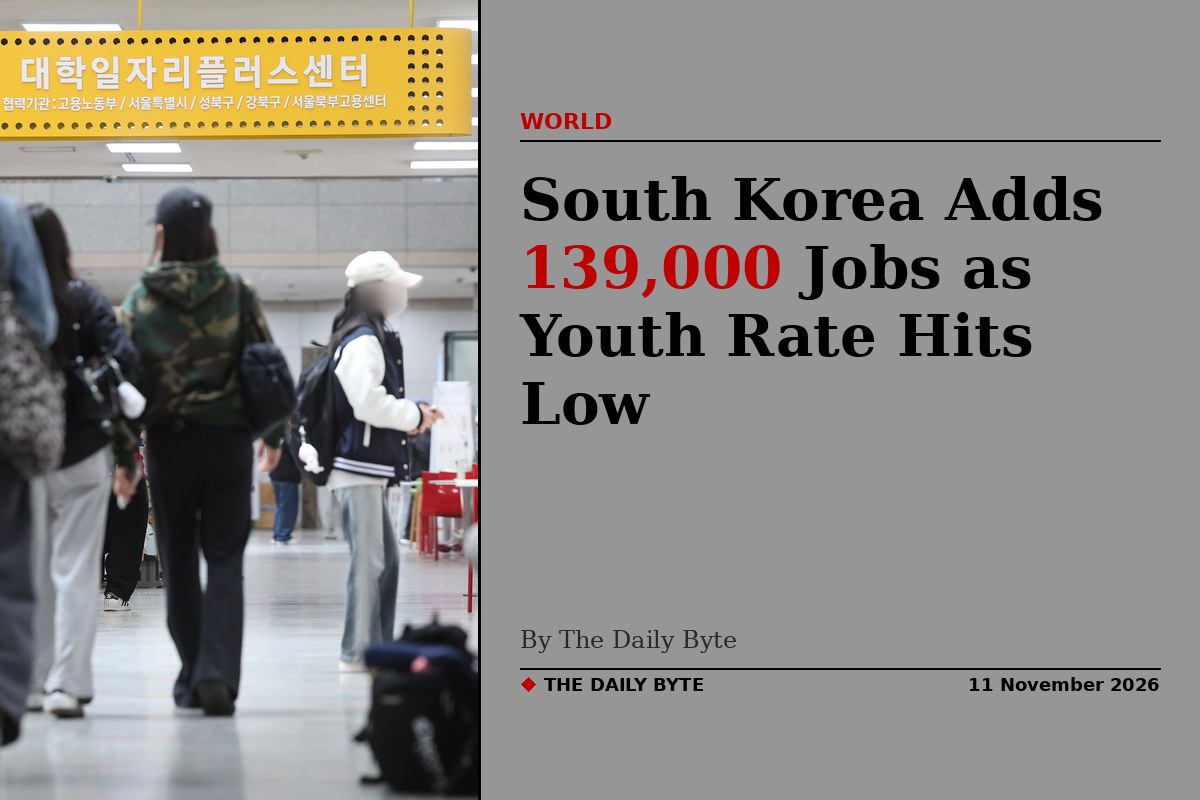
South Korea added 139,000 jobs in October, but young people are still being left behind. Employment among 15 to 29-year-olds fell for the 48th month in a row, and their employment rate dropped to its lowest October level in six years, according to official figures released on Wednesday, 11 November.
The October 2026 employment trends report, published by the Ministry of Data and Statistics, put total employment at 29.179 million, up 139,000 on a year earlier. It was the fifth consecutive monthly increase since June, and a slightly wider gain than the 113,000 recorded in September.
Headline figures look strong
On the surface, the labour market looks healthy. The employment rate for people aged 15 to 64 rose 0.3 percentage points to 70.4%, the highest for any October since the series began in 1989. The unemployment rate fell 0.2 percentage points to 2.0%, the lowest for an October since the series began in 1999.
Health and social welfare services drove the increase, adding 249,000 jobs over the year. Transportation and warehousing gained 48,000, and business facility management and support services added 37,000.
Youth employment keeps falling
The picture for young workers is very different. The number of employed people aged 15 to 29 fell by 196,000 from a year earlier, extending a decline that has now run for 48 consecutive months. Their employment rate fell 1.7 percentage points to 42.9%, down for the 30th month in a row and the lowest for an October since 2020, when it stood at 42.3%.
The wider youth measure, covering ages 15 to 34 under the Special Act on Promoting Youth Employment, showed the same pattern. Employment in that group fell by 131,000, with the rate down 0.6 percentage points to 55.4%, its tenth consecutive monthly fall.
Bin Hyun-jun, director general of social statistics at the Ministry of Data and Statistics, linked the slide to industries where young people make up a large share of the workforce. Accommodation and food services shed 137,000 jobs, the steepest fall since February 2021, which the agency partly attributed to a base effect from last year's livelihood recovery consumption coupons. He also pointed to a preference for experienced hires in new recruitment and the spread of on-demand hiring.
Manufacturing slips back
Manufacturing employment fell by 7,000 to 4.357 million, returning to decline after a single month of growth in September, when it had risen for the first time in 27 months. Jobs increased in chemicals, fabricated metal products and other transport equipment, but fell in textiles, automobiles and apparel.
Agriculture, forestry and fishing lost 101,000 jobs, and construction shed 42,000, extending its decline to a 30th consecutive month. By age, employment rose by 196,000 among people aged 60 and over, by 128,000 in their 30s and by 42,000 in their 50s, while it fell by 203,000 among people in their 20s and by 32,000 in their 40s.
The youth unemployment rate stood at 5.2%, with the number of unemployed young people down 17,000 on the year. The figures underline a split labour market: overall hiring is growing, but the gains are going mainly to older workers, while young jobseekers face a fourth straight year of shrinking employment.


