South Korea confirms first cholera case in decade
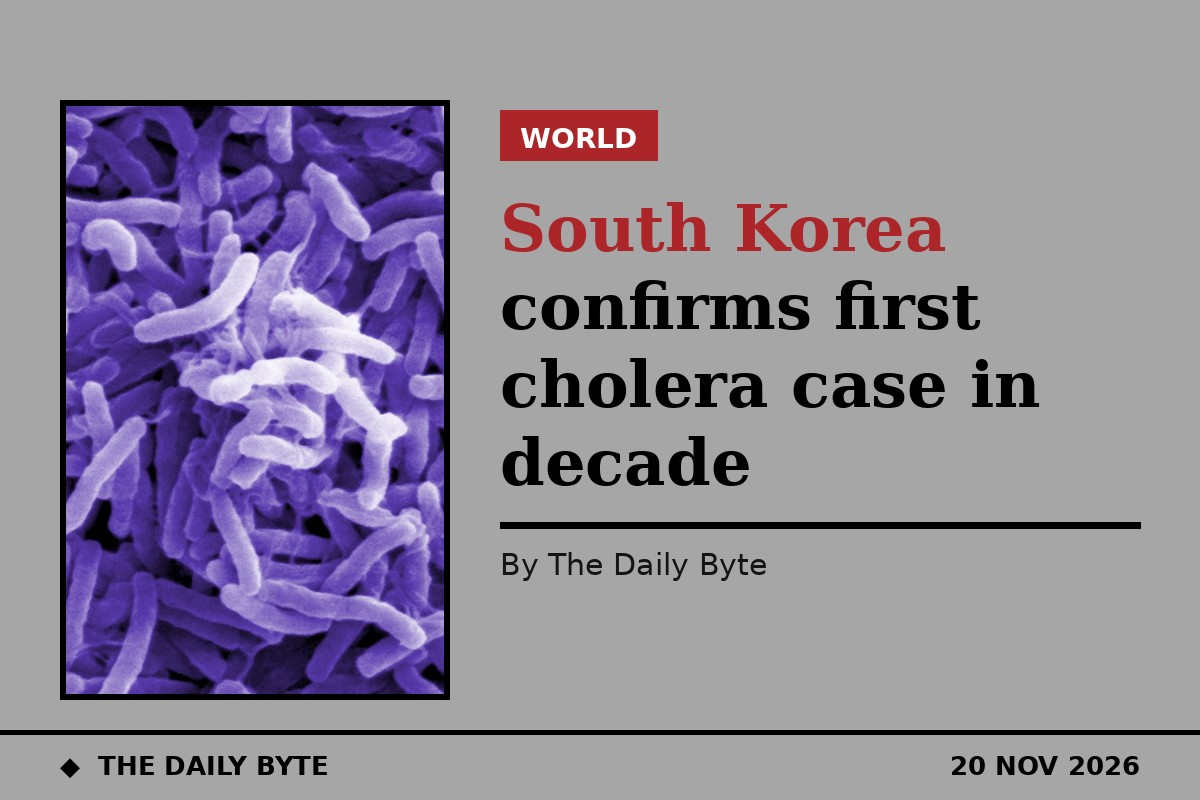
South Korea has confirmed its first case of cholera in a decade, after a patient in the south-eastern port city of Changwon tested positive for the disease, health authorities said on Friday, 20 November.
The Korea Disease Control and Prevention Agency (KDCA) said the case was presumed to have been contracted inside the country, the first domestic infection since 2016. The agency is carrying out an epidemiological investigation to trace how the patient was infected and is monitoring close contacts for symptoms.
How the case was found
The patient visited the emergency room of a medical institution in Changwon, in South Gyeongsang Province, on 6 November with vomiting and diarrhoea. The hospital suspected cholera, reported the patient on 9 November and carried out testing. A first test on 16 November came back negative, but when the Gyeongnam Institute of Health and Environment retested a specimen collected before antibiotics were given, the result came back positive on 18 November.
The KDCA confirmed the presence of toxigenic Vibrio cholerae, the bacterium that causes cholera, in the early hours of 19 November. The strain was identified as Vibrio cholerae O1 Ogawa. The patient's symptoms improved and they were discharged from hospital on Tuesday, 17 November, but remain in isolation until two consecutive follow-up tests come back negative.
Crucially, the patient had not travelled overseas in the past two months, which is why the agency believes the infection was acquired in South Korea rather than imported. Health workers are now tracing the patient's food intake and movements in the days before falling ill.
What cholera is
Cholera is an acute diarrhoeal infection caused by eating food or drinking water contaminated with Vibrio cholerae. It is typically transmitted through contaminated water or food, including undercooked seafood, and can also spread through contact with an infected person's stool or vomit. Diarrhoea is the most common symptom, and severe illness can lead to dehydration or shock that can be fatal if treatment is delayed.
KDCA Commissioner Lim Seung-gwan urged the public to follow basic precautions: wash hands properly, drink safe water, cook food thoroughly, and wash and peel fruit and vegetables. He also advised anyone who develops watery diarrhoea after travelling overseas or eating seafood to seek medical care promptly, and called on medical facilities to test and report suspected cases without delay.
The last time it happened
The previous domestic cases in South Korea were reported in 2016, when three people were confirmed infected in South Gyeongsang Province, the same province as the new case, although the source of that infection was never identified. Those cases were suspected to have been caused by contaminated seafood.
South Korea's last large cholera outbreak was in 2001, when at least 162 people fell ill. Since then the disease, once a regular threat in the country, has effectively disappeared from domestic life, which is why a single locally contracted case after ten years has drawn a swift public health response.
The agency stressed that there is no sign of wider spread at this stage. The investigation will focus on what the patient ate and drank, and on whether anyone else who shared the same food or water has developed symptoms. For now, officials say the message is precaution, not alarm: safe water, cooked food and clean hands remain the best defence against a disease that modern sanitation had pushed out of South Korea for a decade.
Sources: MedicalXpress (Associated Press) and Aju Press.


