South Korea's Lee Urges Bipartisan US Congress Support
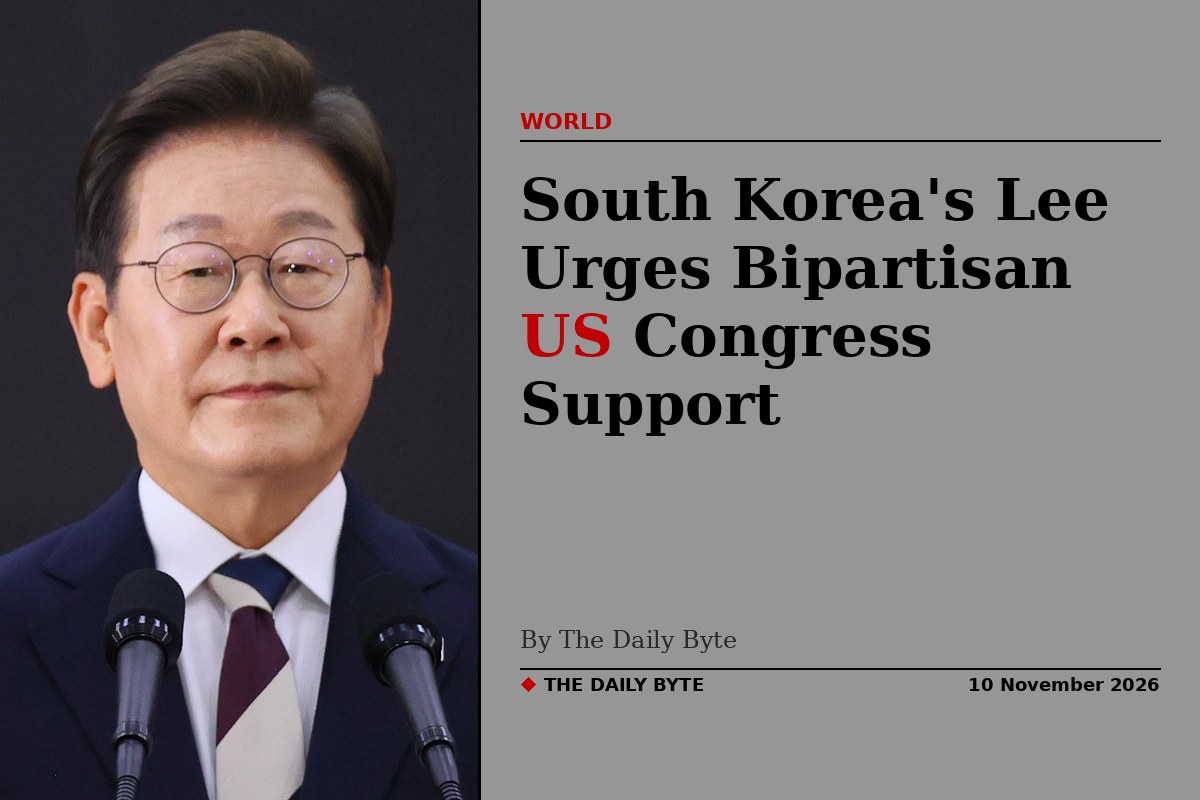
South Korean President Lee Jae Myung has told his government to build bipartisan support in the United States Congress, as Seoul adapts to the new political landscape in Washington after last week's midterm elections.
Lee gave the instruction at a cabinet meeting at Cheong Wa Dae in Seoul on Tuesday, 10 November 2026, saying South Korea must keep working closely with the US administration while also widening its contacts in Congress, with state governments and with American businesses.
"The most important thing is to focus our diplomatic efforts on strengthening and expanding trust and cooperation between South Korea and the United States from a mutually beneficial perspective," Lee said, according to Yonhap news agency.
He told officials to watch financial markets closely and to prepare contingency plans to limit any economic fallout from changes in Washington, adding that the utmost attention should be paid to minimising negative effects from external uncertainties on the domestic economy.
Democrats take both chambers
Lee was speaking after the opposition Democratic Party in the United States won control of both the Senate and the House of Representatives in last week's midterm elections, a result widely seen as a rebuke to President Donald Trump.
South Korean officials are now assessing how the changed balance in Congress could affect a crowded bilateral agenda, from trade and investment to defence cooperation and the treatment of South Korean companies operating in the United States.
Finance Minister Lee Hyoung-il told lawmakers on Monday that investment in artificial intelligence in the real economy remained robust despite stock market concerns following the midterms, citing expert assessments. Industry Minister Kim Jung-kwan said the election result was unlikely to slow such investment.
Investment and nuclear issues on the agenda
The two allies are working through a large South Korean investment package in the United States, while progress has been slow on the transfer of wartime operational control and on Seoul's push to acquire nuclear-powered submarines.
Analysts have said cooperation on South Korea's nuclear initiatives, including its push for uranium enrichment and spent fuel reprocessing, could face closer scrutiny in a Democratic-controlled Congress.
Lee stressed that protecting national interests and the investments of South Korean firms was particularly important, and he called for efforts to ensure that bilateral diplomatic and security agreements already reached are carried out.
Ambassador stresses trust
US Ambassador to South Korea Michelle Steel said in an interview published by the embassy on Monday that the alliance depended on working through bilateral differences thoughtfully.
"As leaders, we owe it to them to follow through on our commitments, handle sensitive conversations responsibly and keep the trust that is the foundation of our alliance," Steel said.
Lee also stressed the importance of consistency and flexibility amid global uncertainties, pledging to focus on diplomacy that prioritises national interests and policies benefiting the people.


