South Korea Passes Democracy Merit Act After 26 Years
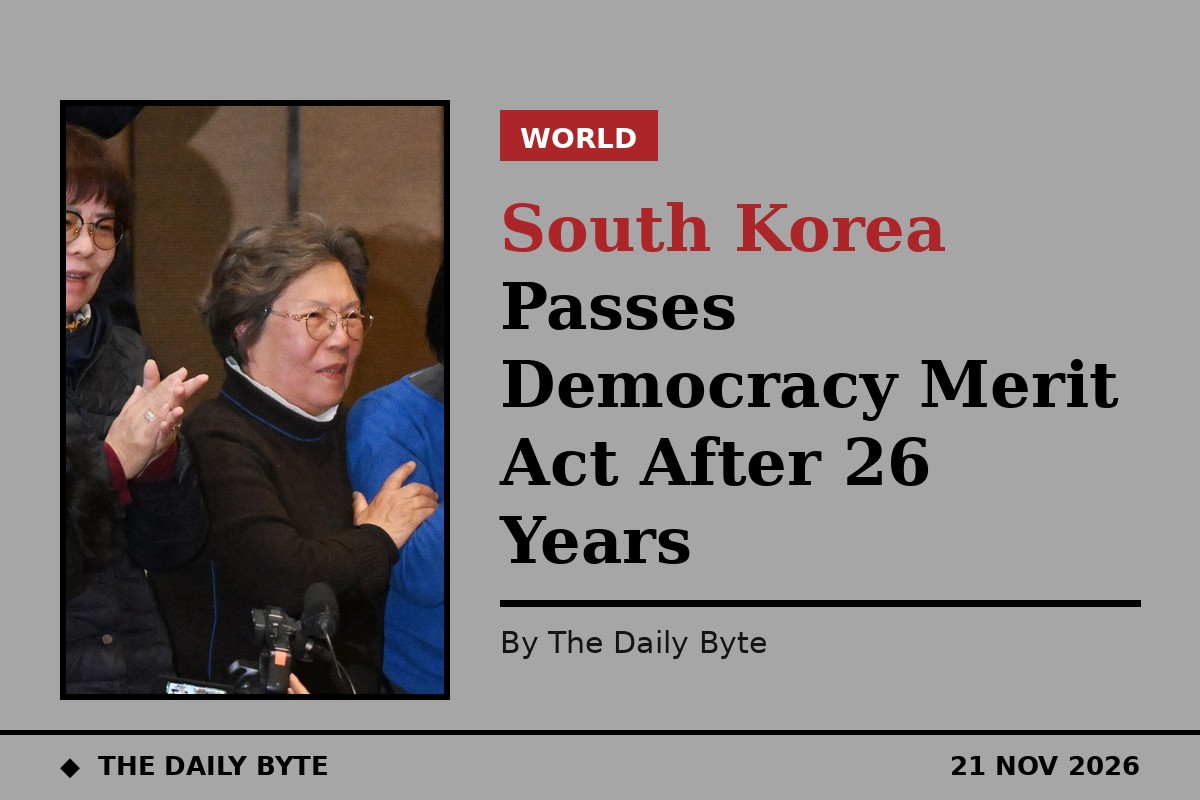
South Korea's National Assembly has passed a law recognising hundreds of people hurt in the country's pro-democracy struggles, ending a campaign that began 26 years ago. The Democratic Merit Act cleared a plenary session in Seoul on Friday, 20 November, with all 178 lawmakers present voting in favour.
The bill extends official recognition and welfare support to people who were killed, went missing or suffered injuries during pro-democracy movements that had never been covered by the existing law. It is the first time since 2000 that a bill of this kind has passed parliament.
Who the new law covers
Until now, only people involved in two movements qualified for state recognition: the April 19 democratic uprising of 1960 and the May 18 Gwangju Democratization Movement of 1980. The new law adds two more chapters of South Korea's democratic history: the 1979 Busan-Masan protests and the June 10 democracy uprising of 1987, along with resistance against the Yushin regime.
The Ministry of Patriots and Veterans Affairs estimates that as many as 635 people may be eligible for recognition and benefits under the new law. Support will focus on medical and welfare help, including nursing and long-term care costs for the recognised individuals and their families, as well as memorial projects.
The bill deliberately excludes benefits that critics said could look like favours, including education fee support, employment benefits, college admission preferences and cash compensation. The law takes effect six months after it is promulgated.
A bill vetoed once before
A similar bill passed the National Assembly in May 2024 but was scrapped after then-President Yoon Suk Yeol exercised his veto. It was revived in the 22nd National Assembly by the ruling Democratic Party, which pushed it through this week.
The main opposition People Power Party launched a filibuster as soon as the bill was tabled on Thursday, but the Democratic Party moved to end the unlimited debate. Under the National Assembly Act the debate closed after 24 hours, and the bill then passed. The opposition boycotted the vote in protest at what it called forced passage, arguing that the criteria for recognition are unclear and could favour former activists.
Bereaved families of democracy movement victims had come to the chamber for the vote, some after staging overnight sit-in protests in cold weather for weeks. The Speaker told them they had stood outside the National Assembly for a long time with earnest hearts, and said he hoped the decision offered a small comfort for those long years. Some family members were seen in tears as the result was announced.
Why it matters now
The vote lands in a year when South Korea is still working through the aftermath of the December 2024 martial law crisis. Former President Yoon was sentenced to life in prison in February for leading an insurrection, and the courts are still hearing cases against officials involved in the attempt.
For the families, the law is less about money than about the state formally recording what happened to them. The Democratic Party has framed it as the state accepting responsibility towards those who sacrificed themselves for democracy. The opposition's objection is not to honouring victims in principle, but to who decides who qualifies, and it has warned that vague standards could be applied unevenly.
With the bill now passed, the veterans ministry will draw up the registration process. The first names are expected to be confirmed once the law comes into force next year.