Abyei Election Dispute Puts Sudan and South Sudan at Odds at UN Security Council
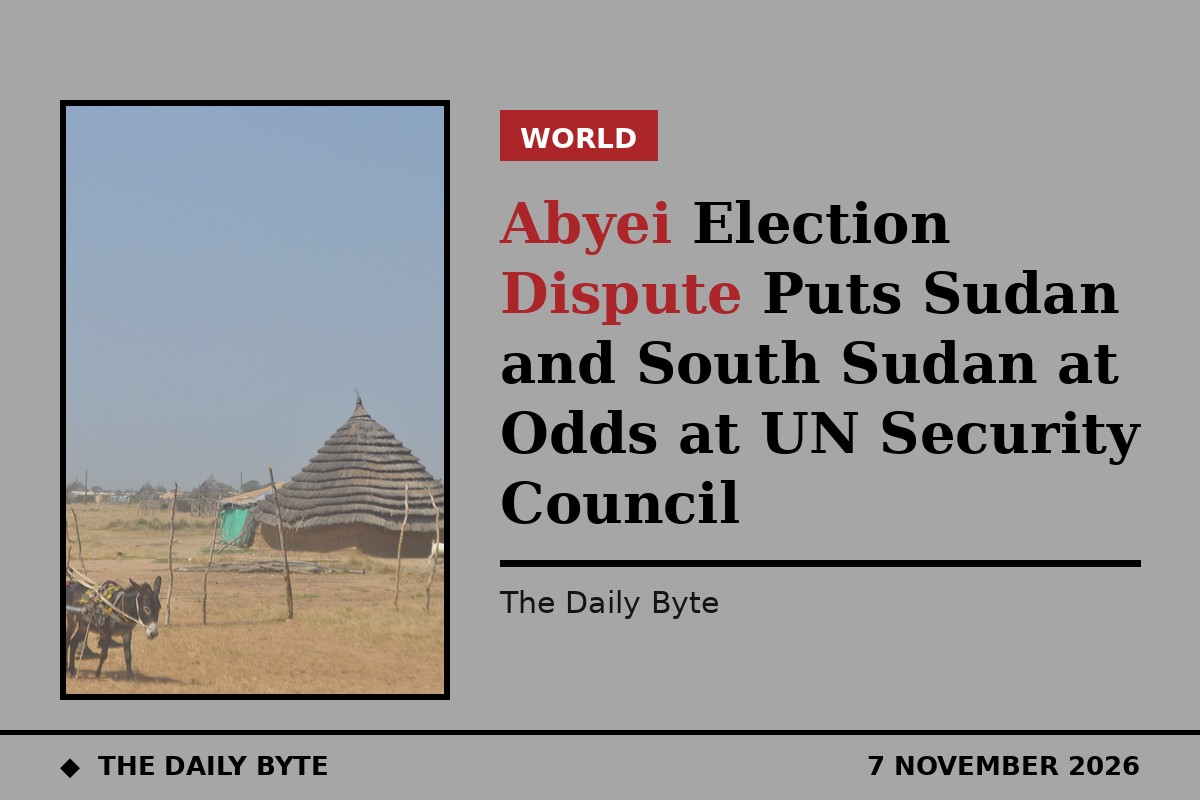
Sudan and South Sudan have clashed at the United Nations Security Council over plans to include the disputed Abyei region in South Sudan's December 2026 general elections, raising fears of fresh tensions. The disagreement emerged during a Security Council meeting in New York on Thursday, 5 November, where the two countries presented opposing positions on the electoral plans and the future administration of the territory.
What each side said
Sudan's representative, Al-Harith Idriss Al-Harith Mohamed, objected to South Sudan's decision to include Abyei in its electoral constituencies, arguing that it violates agreements signed between the two countries and undermines Abyei's existing legal status. Khartoum had formally rejected the plan in a statement issued on 13 July. South Sudan's representative, Sabino Edward Nyawella Amaikwey, defended Juba's position, saying the electoral question could not be separated from the territory's unresolved status and its people's rights.
UN warning
UN Secretary-General Antonio Guterres warned that including Abyei in South Sudan's electoral districts was "likely to significantly increase political tensions as the elections approach". His special envoy for the Horn of Africa, Guang Cong, told the Council the dispute had contributed to tensions between the Ngok Dinka and Twic Dinka communities. The UK's deputy ambassador, Kate Foster, told the meeting that continued violations of Abyei's demilitarised status were unacceptable, citing 19 October drone attacks near Amiet Market and Todach that killed and injured civilians and displaced thousands.
A dispute decades old
Abyei, an oil-producing border area, was given special administrative status under the 2005 Comprehensive Peace Agreement, with a referendum planned on its future that has never been held. The UN Interim Security Force for Abyei has patrolled the demilitarised area since 2011. South Sudan is preparing for its first general elections since independence in 2011, on 22 December.