South Sudan Elections Risk Fragile Peace, Envoys Warn
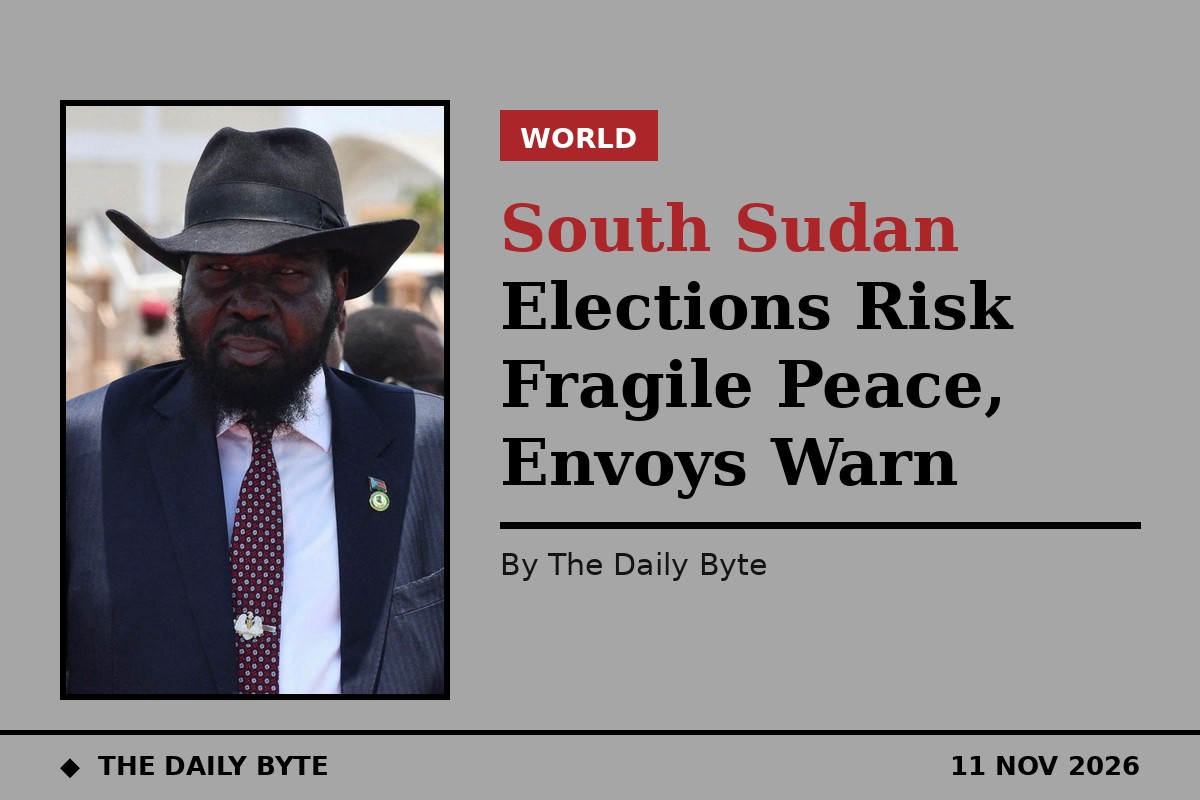
South Sudan's planned election on 22 December risks unravelling the country's fragile peace, envoys have warned the United Nations Security Council. The African Union's top representative for South Sudan, Jakaya Kikwete, urged the UN to help ensure the vote in the conflict-torn East African nation passes peacefully and without violence.
The warnings, delivered to the Security Council on Tuesday 10 November, come just six weeks before what would be South Sudan's first national election since independence from Sudan in 2011. Despite a 2018 peace agreement that ended a five-year civil war, the country still sees armed fighting, violence and displacement, and there are growing concerns that a rushed election could make matters worse.
What the envoys told the Security Council
Kikwete, Tanzania's former president and the AU's high representative for South Sudan, pressed for security reforms and dialogue among all parties after the election to "help heal the nation". He warned that if the vote is not conducted properly and peacefully, "you cannot contemplate what would happen", adding that the country could face an even "bigger political and security crisis".
Anita Kiki Gbeho, the UN secretary-general's special representative and head of the UN Mission in South Sudan (UNMISS), also expressed doubts about the election. She told the Council that while President Salva Kiir's party, the Sudan People's Liberation Movement, was conducting nationwide primaries, other parties had shown "very limited electoral activity".
"These developments are creating momentum toward elections," Gbeho said, but whether the vote can be held on the planned date remains uncertain, as does its inclusivity. In her remarks to the Council, she stressed that elections must be a milestone in the transition, not its conclusion, and cannot substitute for political dialogue and continued implementation of the peace agreement.
Why the vote is so contested
South Sudan has repeatedly delayed elections since independence. A civil war erupted in 2013 and some 400,000 people were killed before the 2018 peace agreement brought Kiir and his rival Riek Machar into an interim, power-sharing government.
That arrangement has now broken down. Kiir dissolved the transitional government in September, removed his deputies and appointed a caretaker administration. The national legislature and state governments were also dissolved. Machar remains under house arrest and on trial on charges including treason over an attack on a military garrison that the authorities allege he helped orchestrate. His allies deny the allegations.
Murithi Mutiga, the International Crisis Group's Africa director, told the Council that the rushed vote could be "a final blow" to the 2018 peace agreement and "would open the door to a return to sustained large-scale violence". Last month, UN Secretary-General Antonio Guterres said in a report to the Security Council that the electoral framework could "alter the foundations of the transition" agreed by the peace deal's signatories.
Gbeho also noted that recent political changes fall short of the peace agreement's 35 per cent quota for women's representation, and that Machar's party maintains his release from house arrest is a prerequisite for its participation in dialogue.
Juba defends the 22 December date
South Sudan's deputy UN ambassador, Sabino Amaikwey, defended the timetable, saying it was time to stop further postponements. "Elections are not an obstacle to peace. They are an essential part of its consolidation and provide the people of South Sudan with the opportunity to determine their political leadership and future," he said.
The chairman of the National Elections Commission, Gabriel Bol Deng, said in a statement shared with The Associated Press on Tuesday that the commission would treat all parties fairly and remain impartial. However, the commission has not announced a start date for parties to register for the elections, or responded to questions about whether preparations for the vote can be completed before 22 December.
A worsening humanitarian crisis
The political standoff is unfolding alongside a deepening humanitarian emergency. Gbeho told the Council that more people are at risk of famine, with 10 million people in need of assistance in a country with an estimated population of 12.5 million, including an estimated 7.5 million people facing food insecurity.
Frequently asked questions
When is South Sudan's election? The vote is planned for 22 December 2026. It would be the country's first national election since independence in 2011.
Why are envoys worried about the election? They say preparations are incomplete, opposition parties have barely campaigned and former first vice-president Riek Machar is under house arrest, raising fears the vote could reignite large-scale violence.
What happens next? The African Union and the UN are pressing for dialogue between the parties and for the election to be held peacefully, with the AU's high representative, Jakaya Kikwete, seeking UN support to keep the process on track.
Sources: Associated Press and UN Mission in South Sudan (UNMISS).


