South Sudan Validates New Immunisation Guidelines
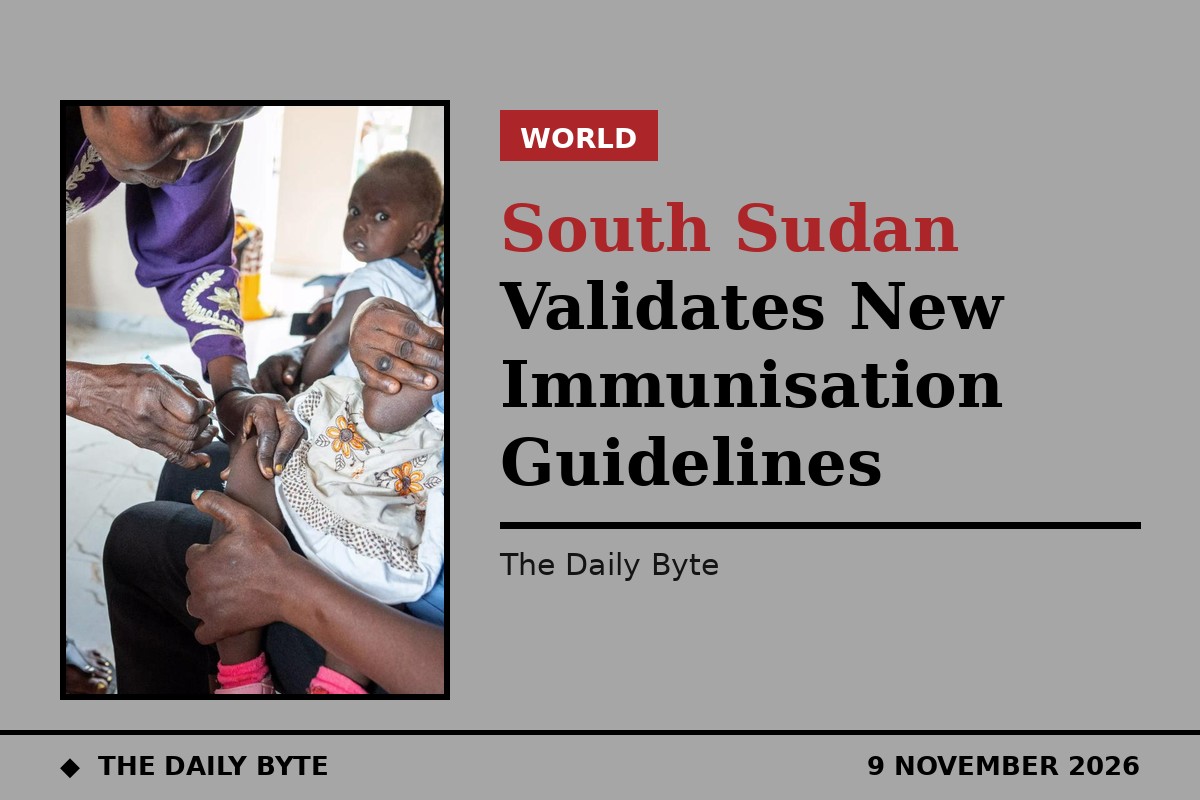
South Sudan has developed and validated new National Expanded Programme on Immunization (EPI) Policy Guidelines, marking an important milestone in strengthening immunisation services and protecting children and communities across the country.
The guidelines were developed by the Ministry of Health in collaboration with partners and with support from the World Health Organization (WHO). They provide a comprehensive framework for planning, governance, financing, implementation, regulation, monitoring and continuous improvement of immunisation services nationwide.
Replacing the 2009 policy
The new guidelines replace the 2009 National Immunization Policy. They reflect significant developments since then, including the introduction of new vaccines, advances in vaccine science and digital health, growing humanitarian challenges, and evolving global commitments such as the Immunization Agenda 2030, the Sustainable Development Goals and Universal Health Coverage.
The policy is also aligned with the country's constitution and key health sector documents, including the National Health Sector Strategic Plan, the Primary Health Care Strategy and the National Immunization Strategy for 2023 to 2027.
Reaching children who miss out
Despite persistent challenges, including low and uneven immunisation coverage in some areas, a high number of children who have received no vaccines at all, children dropping out part-way through their vaccine schedules, recurrent disease outbreaks, insecurity, population displacement, weak health infrastructure, shortages of skilled health workers and heavy reliance on external financing, the country has made progress in its immunisation programme.
In recent years South Sudan has introduced new vaccines into routine immunisation, including malaria and measles vaccines, expanded routine immunisation services, improved disease surveillance, strengthened cold chain systems and deepened collaboration with national and international partners. The malaria vaccine was added to routine childhood vaccination in July 2024, starting in the 28 counties with the highest malaria burden, and extended to the remaining 52 counties in August 2025. It is given in four doses, at five, six, seven and 18 months. A post-introduction evaluation published in October 2026 found that completing all four doses remains the challenge, particularly the final dose in a child's second year.
What the guidelines aim to do
The key aims of the policy are to strengthen governance and sustainable financing; ensure equitable immunisation services for people of all ages; improve immunisation systems, the workforce, the supply chain, surveillance and data systems; increase vaccine demand and community participation; and promote research, innovation and evidence-based decision-making.
Dr George Awzenio Legge, Extended Programme on Immunization Manager in the Ministry of Health, said: "We thank all the stakeholders who supported the development of this policy. It establishes a clear vision of a South Sudan where everyone, everywhere, at every age enjoys equitable access to safe, effective, high-quality, and sustainable immunization services, free from vaccine-preventable diseases." He added that the policy is guided by principles of equity, country ownership, evidence-based decision-making, quality, accountability, community participation, integration within primary health care, sustainability, innovation and resilience.
Dr Mutale Nsakashalo, Cluster Lead for Health Programme at WHO South Sudan, said: "Immunization protects lives. South Sudan has made important progress in expanding vaccination services and introducing new vaccines. Yet many children still miss protection because of distance, disrupted services and limited resources. This policy must help us close the gaps in vaccination. It provides practical direction for delivering services, managing vaccines, coordinating partners and monitoring results, with clear responsibilities at every level."
Through the validation process, stakeholders are contributing to a policy framework that will guide the strengthening of immunisation services and help ensure that no one is left behind.


