SpaceX $32bn AI Chip Debt in Focus After Bank Warning
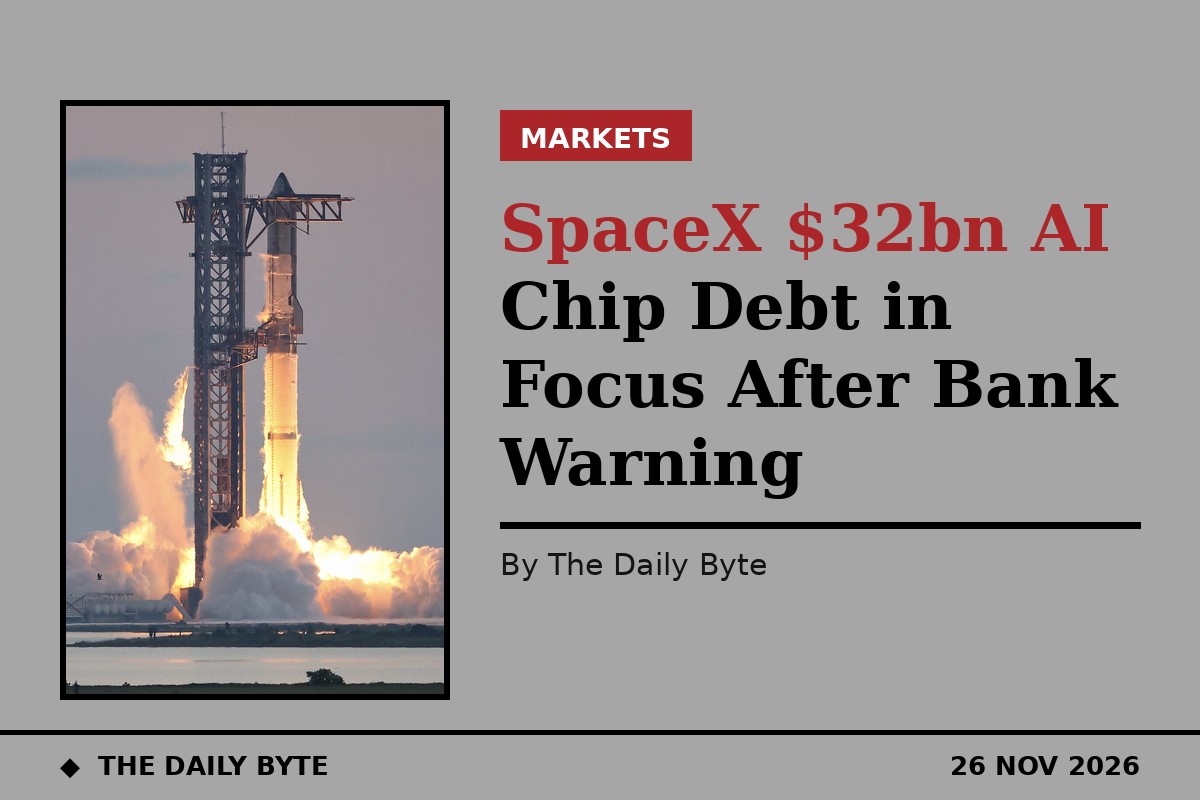
SpaceX's $32bn bond sale to buy Nvidia's AI chips is back in the spotlight after the Bank of England warned that the financing behind the AI buildout had become “increasingly complex, circular and opaque”. The Bank's Financial Stability Report named SpaceX among the hyperscalers driving the boom, and flagged AI-related borrowing as a growing risk to the financial system.
The deal was struck a week earlier. On Thursday 19 November, SpaceX sold $32bn of bonds in three parts, Bloomberg reported, the bulk of a financing package of more than $40bn announced in October. Goldman Sachs and Apollo Global Management led the transaction.
How the chip financing works
Instead of borrowing directly, SpaceX used a separate trust to sell the bonds and buy the chips, then leases it back. The structure keeps the debt off its balance sheet and protects its investment-grade rating; the lease payments repay bondholders. Reports put the bill at about $47bn of Nvidia hardware, with deliveries from January and payments from the first half of 2027. The leases run about five years.
Why lenders demanded more than 8%
The biggest slice, about $25.2bn of Class A3 notes, was priced at a yield of 8.259%. That is roughly 2.3 percentage points above the 5.95% average yield on high-grade US corporate debt that day, and close to the 8.3% average for junk-rated bonds. Investors charged SpaceX almost junk-bond rates for supposedly investment-grade paper, a sign of market doubt over AI's returns.
Lenders also sought guarantees that the chips would stay on Earth, the Financial Times reported. The bonds are secured by the hardware, so if SpaceX ever defaulted, lenders would want to repossess and sell the chips, a near-impossible task if they were in orbit. It is unclear whether the restriction made it into the final deal; SpaceX says the chips are for its terrestrial data-centre buildout.
Shares slid as the market sold off
Investors were unimpressed. SpaceX shares fell about 7.5% on Friday 20 November, closing below the $135 listing price, while Nvidia dropped almost 14% the same day. The sell-off spread across the AI trade: CoreWeave fell 12%, Nebius 16%, Hut 8 and Applied Digital more than 17%.
The numbers explain the nerves. SpaceX's AI division nearly tripled its revenue between the second and third quarters, from $2.6bn to $7.6bn, but spent $16.4bn on capital expenditure in the third quarter. The chief financial officer has said infrastructure investments are paying back in under a year; the bond market is less convinced.
Why the Bank of England is watching
The Bank's report said hyperscaler bond issuance was set to exceed $305bn in 2026, about 8% of all global investment-grade issuance, with total exposure to the sector past $4tn. It warned that some AI companies were lending to each other in deals linked to future revenue, and that complex, circular financing hid where risk ultimately sat. Spreads had already widened sharply for lower-quality AI borrowers, it noted.
The Bank did not predict a crisis. It said spillovers from the recent AI sell-off had been limited and the UK financial system remained resilient. But it said the speed and breadth of AI financing meant stress in one corner of the market was now more likely to spread to others, and SpaceX's $32bn deal shows how that financing works.
What happens next
The chips arrive from January, and the lease clock starts in the first half of next year. The test for SpaceX, and for the lenders who charged it 8.259%, is whether the AI division's revenue keeps growing fast enough to cover the lease bill. If it does, the deal looks like clever engineering. If it does not, the bond market will have priced the risk correctly.
Frequently asked questions
Why did SpaceX borrow to buy chips instead of paying for them outright?
The lease structure keeps the borrowing off its balance sheet and protects its investment-grade rating, while still giving it the computing power it needs. The trade-off is a higher interest cost.
Why did lenders care whether the chips went to space?
The bonds are secured by the chips. If SpaceX defaulted, lenders would want to seize and sell the hardware. Recovering chips from orbit would be practically impossible, which is why lenders asked for guarantees they would stay on Earth.
What exactly did the Bank of England warn about?
That AI financing had grown rapidly, spread across equity, bond and private-credit markets, and become increasingly complex and circular, with companies in the sector financing each other. That hides where exposures sit if the boom turns.
Sources: Nasdaq / Motley Fool; Investor's Business Daily; Bank of England Financial Stability Report, November 2026 (bankofengland.co.uk).


